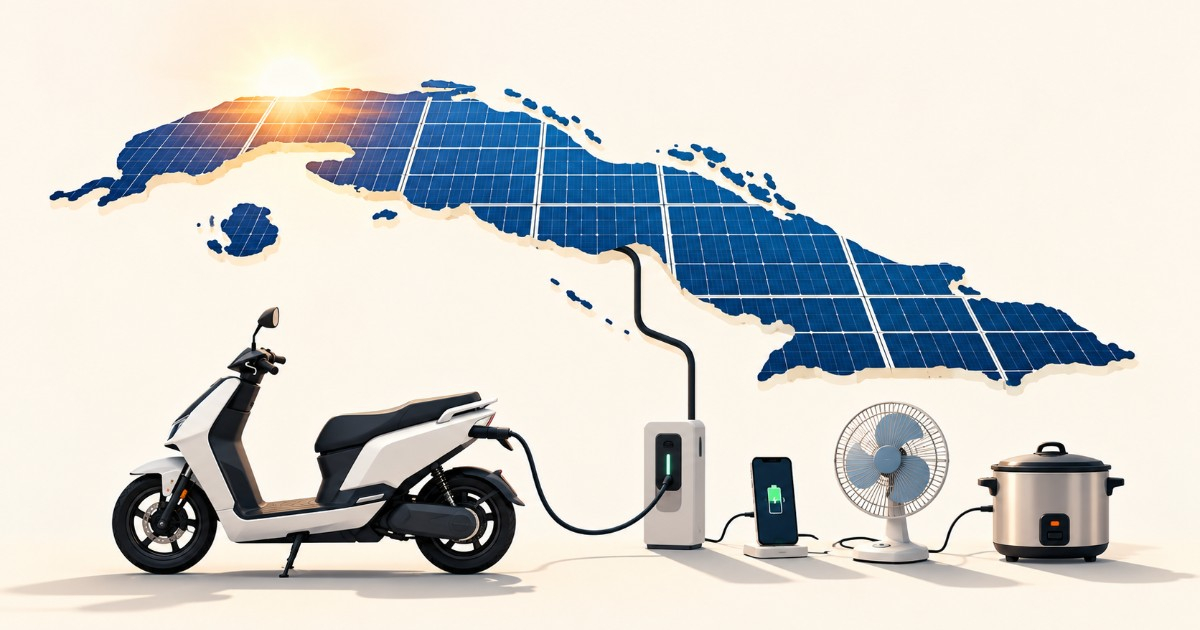
In a matter of months, the so-called "solineras" have evolved from isolated facilities for recharging electric vehicles into small energy hubs. These stations provide essential services for Cubans, such as charging phones, powering fans, or cooking during prolonged blackouts.
However, there's no consistent national network or standardized pricing. Each station varies in capacity, ownership, and costs, and official statistics often conflate solineras with solar charging stations and community service centers.
Tracing the Energy Landscape: Where Are They?
A review of official reports, local publications, and operational projects helps create an approximate map of this new energy model and its associated costs.
Villa Clara: Known for the highest documented concentration, Villa Clara boasts 50 solineras and charging stations across its 13 municipalities, aiding roughly 5,000 families daily. A typical installation here offers around 10 kilowatts of power and 20 kilowatt-hours of storage, although larger centers exist. Community services like phone charging and cooking are generally free, while charging motorbikes, tricycles, and cars incurs a fee.
Holguín: A Case Study in Private Enterprise
Holguín illustrates the private solinera business model. The El Girasol station, launched by the small enterprise Frenas Conmigo in Alcides Pino, features 30 kilowatts of inverters and 60 kilowatt-hours in battery backup. Charging a motorbike costs 250 CUP per hour, while an electric tricycle is 300 CUP per hour. Smaller devices range from 50 CUP per hour to 500 CUP for high-power portable stations, but phone and fan charging remains free. Pricing has sparked debate as fees are based on connection time, not actual energy used.
Guantánamo: Community-Centric Solutions
Guantánamo is developing a unique model with community centers powered by solar panels and batteries. Initially planning 20 centers, by September at least six were operational, offering services from motorbike and phone charging to food preparation. Some installations provide free services to vulnerable populations, and the model combines private and state ownership.
Havana: A Mix of Dreams and Reality
Havana's solinera projects display a range of characteristics. A private venture in Playa Mégano can accommodate up to 60 vehicles daily, charging between 2 to 5 USD per vehicle. Meanwhile, a proposed solinera in El Vedado remains incomplete, still relying partially on the electrical grid. As such, it cannot yet be classified as fully operational like those in Villa Clara or Holguín.
Emerging and Unfinished Projects
Las Tunas: The province is still constructing its first solinera at the Ferro-Ómnibus terminal, part of a broader effort to revitalize the area. No pricing or service details have been finalized yet.
Matanzas: In May, nine solar points were announced to aid during blackouts, but the current operational status of these projects is unclear, leaving them out of the verified count.
No consistent national tariff for solineras exists, with prices varying widely: from 250 CUP per hour in Holguín to 2-5 USD in Havana. Villa Clara offers many community services for free, with vehicle charges depending on the operator.
A Government-Endorsed Future
Though private initiatives drive many installations, Cuba's government has formally included solineras in its 2026 economic and energy reforms. Encouraging solinera installations and requiring photovoltaic systems in service centers are among the proposed measures.
While solineras address specific issues like keeping devices charged or enabling transportation, they are not a solution to the national electrical crisis. Their rise highlights the extent to which families and small businesses seek decentralized electricity sources for everyday activities, once reliant on the national grid.
FAQs about Solineras in Cuba
What services do solineras offer in Cuba?
Solineras provide charging for electric vehicles like motorbikes and tricycles, as well as community services such as phone charging, powering fans, and cooking during blackouts.
How much does it cost to use a solinera?
Costs vary widely. In Holguín, charging a motorbike can cost 250 CUP per hour, while in Havana, vehicle charging ranges from 2 to 5 USD. Community services often remain free.
Are solineras part of Cuba's national energy plan?
Yes, the Cuban government has incorporated solineras into its 2026 economic and energy reforms, promoting their installation and the use of photovoltaic systems in service centers.