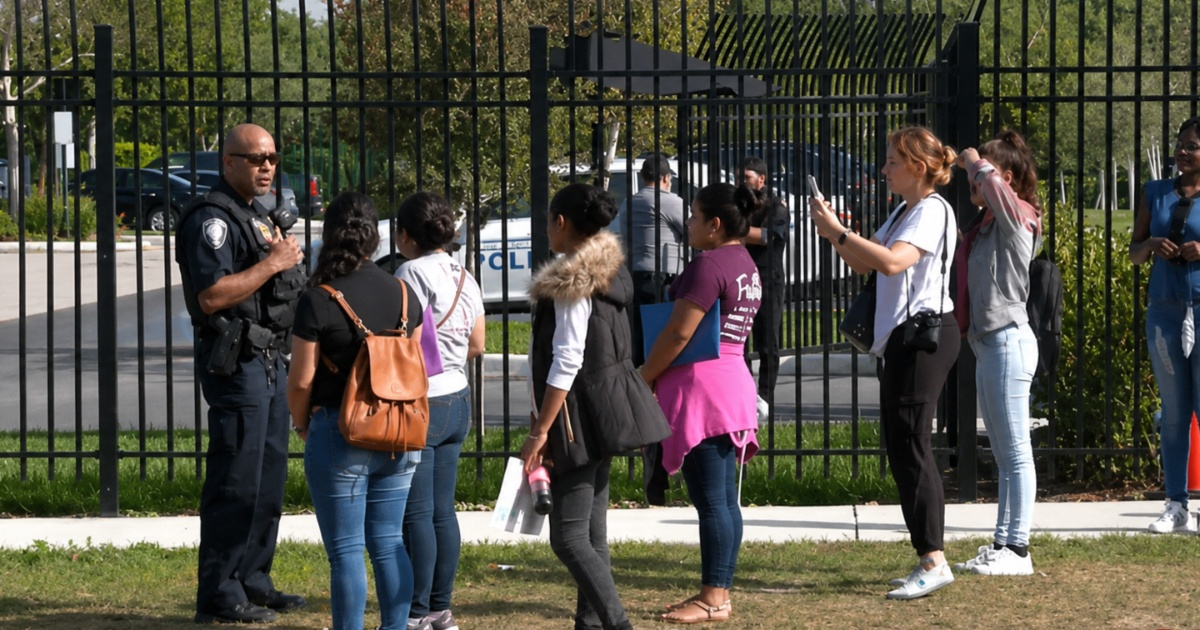
The Southern Poverty Law Center (SPLC) alongside Americans for Immigrant Justice have initiated a federal class-action lawsuit against ICE due to the conditions at its Miramar Field Office in Florida. This administrative center has effectively become a detention facility where thousands of Cubans holding the I-220A form attend routine check-ins.
The lawsuit, filed on behalf of all detainees at the site, claims that ICE has consistently breached the Fifth Amendment by detaining individuals for days under conditions deemed "inhumane and hazardous" by attorneys. Furthermore, it alleges that ICE has violated its own internal policy that restricts such detentions to a maximum of 12 hours.
Detainees are reportedly forced to sleep on concrete floors with only aluminum blankets, endure severely overcrowded cells, use toilets exposed to surveillance cameras, and experience a lack of food and water over extended periods, along with a complete absence of medical personnel.
Compounding these issues are blocked phone calls, denial of attorney visits, and an unupdated ICE detainee locator, making it impossible for families and legal representatives to locate their loved ones.
"We urge the court to compel ICE to cease using Miramar as a detention center for which it was never designed. Denying basic needs such as beds, food, water, and medical care is inhumane and dangerous, and ICE must be held accountable," stated A.J. Hernandez Anderson, Deputy Legal Director of the SPLC.
Paul R. Chavez, Director of Litigation at AI Justice, commented that "families comply with immigration law requirements, only to be detained for days in deplorable conditions including overcrowded floors without beds, no medical support, exposed toilets, and restricted access to legal counsel."
For Cubans with I-220A—an order of supervision allowing them to remain free while their immigration cases progress—Miramar is the primary check-in location in South Florida.
Since 2025, numerous Cubans have been detained when attending these appointments, with a 463% increase in such detentions in Florida between late 2024 and early 2026.
Documented cases include that of a Cuban with HIV, referred to as "Mayito," who reported sleeping on the floor with 60 men without receiving his antiretroviral medication. Another case involves 27-year-old Christian Omar González, with no criminal record, detained since August 5th, with his mother publicly pleading, "Help me get my child out of there, because I can't take it anymore."
Leaked photos by an anonymous informant in September revealed that the facility, designed for 50 to 56 individuals, housed 342 detainees at once.
If the judge certifies the class-action, its impact would extend to all detainees at the facility, not just those named in the lawsuit.
The U.S. Supreme Court is set to review this month whether ICE can detain migrants categorized as "arriving aliens" without bond, a decision that could profoundly affect many Cubans detained in Florida and potentially alter their legal landscape.
This lawsuit is part of a continually evolving immigration scenario affecting thousands of Cubans in Florida. Stay informed on deportations, detentions, and rights in our U.S. Immigration section.
Frequently Asked Questions on ICE Detentions in Florida
What are the main allegations in the lawsuit against ICE?
The lawsuit alleges that ICE has violated the Fifth Amendment by detaining individuals in inhumane and dangerous conditions beyond its internal policy limits.
How have the conditions at the Miramar facility been described?
Detainees have reportedly been forced to sleep on concrete floors, experienced overcrowding, lacked access to food, water, and medical care, and faced surveillance issues.
How might the Supreme Court's decision impact Cuban detainees?
The decision could redefine the conditions under which ICE can detain migrants without bond, which may significantly alter the legal situation for many Cuban detainees.