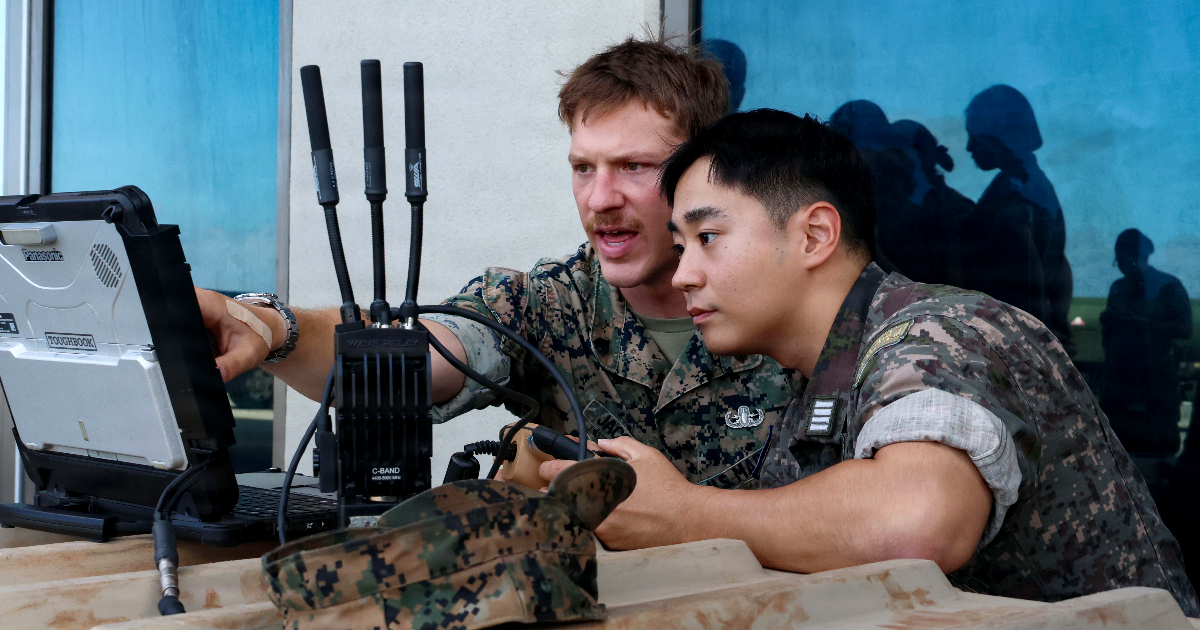
The United States Department of Defense has issued a directive to expedite the deployment of anti-drone systems across military bases, forces, and facilities. This decision takes on added significance for Cuba in light of recent reports suggesting the Cuban regime may have acquired drones.
The memorandum, titled "Accelerating the Deployment of Counter-Unmanned Aircraft Systems to Protect U.S. Airspace Sovereignty," calls for the removal of internal obstacles delaying the use of these systems, known as c-UAS. Any delays in their approval are now considered operational risks.
While the directive does not specifically mention Cuba or alter existing legal frameworks for using these systems, it coincides with Washington's push to enhance both drone dominance and its ability to neutralize unmanned aircraft used by adversaries for surveillance or attacks.
Streamlining Anti-Drone Approvals
The memo mandates the creation of a unified process within the Department to cut the authorization times for tested and validated anti-drone systems from months to mere days or weeks. It also requires documentation of any refusal to deploy a c-UAS capability, with such refusals sent to the Joint Interagency Task Force-401 (JIATF-401) for centralized coordination.
Four critical areas are identified: operational and connection authorizations, spectrum and frequency certification, weapon safety reviews, and legal analyses. Legal evaluations for anti-drone weapons and systems must now be fast-tracked, typically within ten days of receiving necessary information.
Additionally, the memorandum supports Project Spectrum Strike, an AI-powered tool by the Defense Innovation Unit to streamline coordination and authorization while preventing interference in radio spectrum use by these systems.
Expanding the Defense Perimeter
The Pentagon had already been extending commanders' authority to safeguard sensitive sites. Pete Hegseth highlighted a prior guideline from December 2025 clarifying that a base's perimeter line shouldn't limit anti-drone defenses, a point especially crucial for places like Guantánamo Bay Naval Base.
The text also references joint tests between the Federal Aviation Administration and the Department of Defense that confirmed the safe use of certain high-energy laser anti-drone systems in national airspace.
The memorandum's central message is clear: an anti-drone solution that can't be deployed is not a capability. Merely acquiring or testing a system is insufficient if bureaucracy hinders its use when threats emerge.
The Cuban Context: Drones from Russia and Iran
The announcement follows a May report by Axios citing U.S. intelligence suggesting that the Cuban regime has acquired over 300 military attack drones from Russia and Iran since 2023. These drones are reportedly stored strategically on the island, with discussions on their use against U.S. interests like the Guantánamo Bay Naval Base and even Key West, Florida.
Although the Cuban regime has dismissed these accusations as fabricated, the reports have heightened Washington's concerns about the potential use of unmanned platforms from Cuban territory against nearby U.S. interests.
Shahed, Geran, and Asymmetric Warfare
Concerns have intensified due to the technology mentioned in these reports. In July, a replica of the Iranian Shahed-136 drone was displayed in Miami by United Against Nuclear Iran (UANI) to highlight concerns linking Cuba with Russian and Iranian drones.
The Shahed-136, used by Russia in Ukraine, symbolizes a persistent, low-cost warfare strategy that's challenging to counter. Its Russian version, the Geran, has been used in long-range attacks on infrastructure and military targets.
Russian propaganda has also addressed the issue. Pro-Kremlin channel Rybar proposed a hypothetical scenario involving Geran drone attacks from Cuba on U.S. targets, including military facilities and government buildings.
While there's no public evidence that Cuba possesses operational Shahed or Geran drones, the combination of intelligence reports, military cooperation with Russia and Iran, and proximity to Florida make the issue a growing concern for the United States.
Guantánamo's Strategic Role
The anti-drone memorandum aligns with another recent move: designating Guantánamo Bay Naval Base as the first training and mission support site for the SOUTHCOM Autonomous Warfare Command (SAWC). This regional structure focuses on integrating drones, autonomous systems, data, and communications.
Guantánamo thus occupies a dual role in the new U.S. military doctrine: as a potential target in drone reports from Cuba and as a regional platform for autonomous warfare training and support in the Caribbean.
The base, leased from Cuba since 1903 and denounced by the Cuban regime as an illegal occupation, has been described by SOUTHCOM as a "vital operational and logistical hub" for U.S. operations in the hemisphere. The SAWC adds a technological dimension to its strategic importance.
This context includes other recent precedents: the FLEX2026 exercise in Key West, which integrated AI, long-endurance drones, and unmanned maritime vehicles 90 miles from Cuba; and the DASH experiment, where the island featured prominently in AI-driven battle management scenarios.
Venezuela, Nicaragua, and the Regional Pattern
U.S. concerns extend beyond Cuba. CiberCuba has documented Venezuela's military drone development with Iranian technology and assistance, including programs linked to models like the Mohajer-2 and its local version, the ANSU-100.
Alerts have also been raised about the Punta Huete airbase in Nicaragua, where China reportedly invests heavily in a facility capable of accommodating strategic bombers, as highlighted by Congresswoman Maria Elvira Salazar.
Together, these cases reflect a broader U.S. concern: the possibility of Russia, China, and Iran's allies in the hemisphere providing infrastructure, intelligence, logistics, or platforms to challenge the United States from the Caribbean and Central America.
Drones play a central role because they allow governments with limited resources to acquire surveillance, pressure, and attack capabilities that previously required modern aircraft, costly missiles, or large military deployments.
Reading Between the Lines
The new memorandum does not accuse Havana, announce deployments against Cuba, or authorize legal or security breaches. Its stated goal is to legally, safely, and effectively accelerate the use of anti-drone systems to protect U.S. airspace.
However, its strategic reading shifts when viewed alongside recent moves: reports of over 300 Russian and Iranian drones allegedly acquired by Cuba, potential scenarios against Guantánamo and Florida, exercises with autonomous systems near the island, SAWC's growth in the Caribbean, and increased concern over hostile platforms 90 miles from U.S. shores.
For the Cuban regime, mired in a severe economic crisis while maintaining military ties with Moscow and Tehran, the message is hard to ignore: the United States is not only developing more drones and autonomous capabilities but is also speeding up mechanisms to neutralize them before they pose a real threat to its bases, ships, or territory.
Understanding U.S. Anti-Drone Strategies and Cuban Relations
What prompted the U.S. to accelerate its anti-drone defenses?
The U.S. accelerated its anti-drone defenses following reports of Cuba acquiring military drones from Russia and Iran, potentially posing threats to nearby U.S. interests.
How does the U.S. plan to streamline anti-drone system approvals?
The U.S. Department of Defense is creating a unified process to reduce authorization times for anti-drone systems from months to days or weeks, ensuring rapid deployment when needed.
What role does Guantánamo Bay play in the U.S.'s new military strategy?
Guantánamo Bay has been designated as a key site for training and supporting autonomous warfare missions, making it central to the U.S.'s strategy of utilizing drones and autonomous systems in the Caribbean.