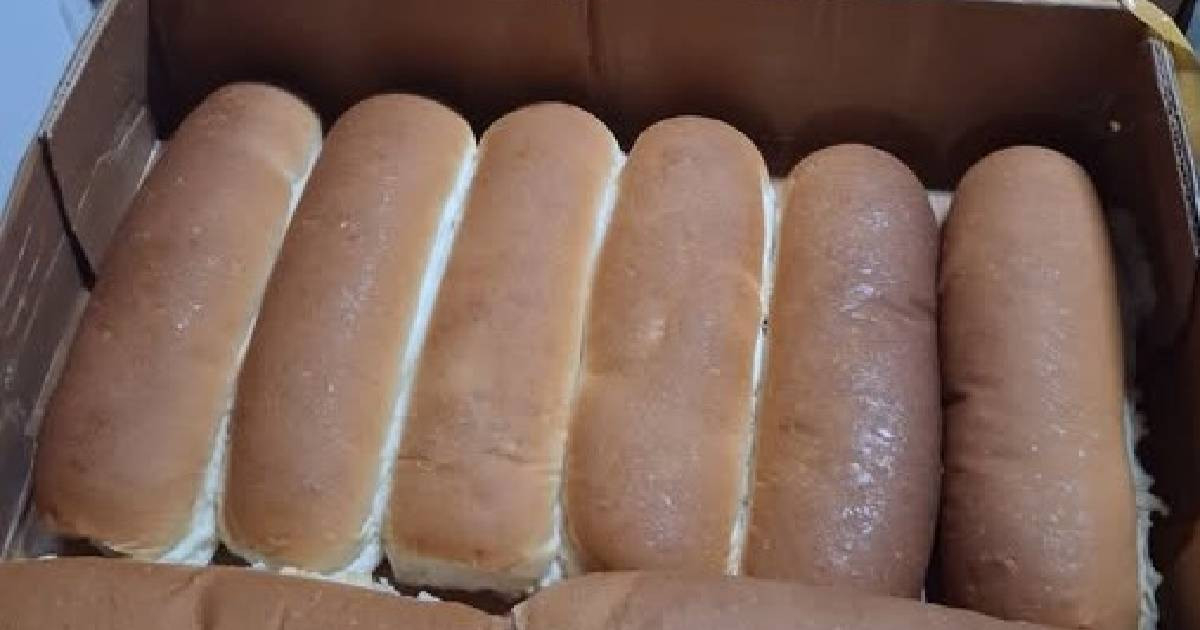
State-run bakeries in Las Tunas are grappling with severe challenges in ensuring an orderly distribution of bread. Customers often endure long hours of waiting, while resellers manage to purchase large quantities of the product.
A report in the official newspaper 26 highlighted the situation at La Colmena, located in the historic center of the city, where around 50 people lined up under the scorching sun. Among them were elderly individuals with canes, visually impaired persons, and parents striving to secure bread for their families.
The report noted that three resellers consecutively bought quantities of bread equivalent to what the entire line of customers had hoped to acquire. For those left waiting, the remaining supply proved to be "insignificant."
Customer complaints regarding the need for better organization went unanswered by the store attendant, who reportedly stated, "I don't organize the line."
The criticism is not about banning self-employed workers from purchasing bread, but rather establishing a system that alternates between these buyers and regular customers. The aim is to prevent those who wait for hours from being overshadowed by individuals buying in bulk.
Adding to the issue is the limitation of buying through digital platforms. At La Colmena, only two loaves can be purchased via Transfermóvil or EnZona, while at Tunas II, located on Colón Street, the limit is three loaves. In other bakeries, the purchase of small rolls is restricted to four.
According to the press, these limits may be insufficient for large families. This is contrasted with the bakery at Intalsur, near the Casa Iberoamericana de la Décima El Cucalambé, where up to 10 loaves can be purchased digitally.
In September, residents in Cojímar reported that resellers were clearing out the state-run bakery La Aguja to sell the product at significantly higher prices, impacting especially retirees. Theater director Hugo Vargas described it as happening "in plain sight of everyone in line."
In Guantánamo, Governor Alis Azahares Torreblanca acknowledged in the same month that state bakeries were using power outages as an excuse not to produce, despite having flour available. She ordered production to be reorganized into several shifts.
Cuba requires around 20,000 tons of wheat flour monthly to ensure regulated bread supply. However, in June, Food Industry Minister Alberto López Díaz admitted that out of the six wheat shipments contracted for 2026, only one had arrived, and a shipment of 5,000 tons was withdrawn before setting sail.
At that time, the only operational mill in Cienfuegos was producing 250 tons per day, far below the needed 700 tons; meanwhile, the mills in Guantánamo and Santiago de Cuba remained inactive.
Since September 2024, the official weight of regulated bread was reduced from 80 to 60 grams, and in some provinces, it has dropped to 40 grams this year.
In Villa Clara, regulated bread has been restricted since February to only those under 13 and over 65. In Havana, the price of 400-gram bread rose from 240 to 500 pesos in July—a 108% increase. The minimum wage of 3,210 pesos barely covers about six loaves per month.
Understanding Bread Distribution Challenges in Cuba
Why is there a shortage of bread in Las Tunas?
Bread shortages in Las Tunas are primarily due to inefficient distribution and resellers acquiring large quantities, leaving little for individual customers.
What measures are being proposed to improve bread access?
There are calls for a more organized system that alternates between regular customers and self-employed buyers to ensure fair distribution.
How has digital purchasing impacted bread availability?
Digital purchasing is limited, with caps on the number of loaves that can be bought, which may not suffice for larger families.