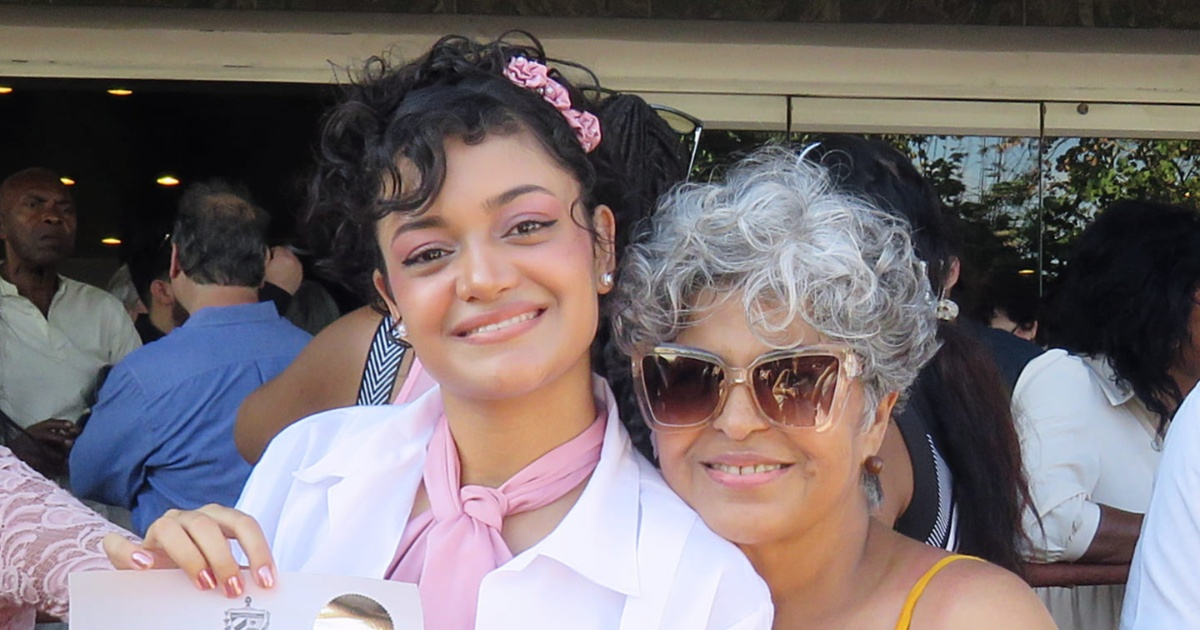
The Cuban poet Irán Caballero, who resides in Miami, shared a poignant poem on his Facebook page this past Friday, dedicated to Anna Bensi—Ana Sofía Benítez Silvente, a 21-year-old activist. This came a day after the Popular Municipal Court of East Havana sentenced her and her mother to two years of restricted freedom.
Caballero noted that he had previously penned the poem but felt it was the right moment for its publication. The verse casts Bensi as a symbol of defiance, drawing parallels with Mariana Grajales, a celebrated figure in Cuba's independence movement known as the "Mother of the Nation." His words resonate: "As if there were a Mariana / Without a homeland, but not a slave / Reincarnating in her demand / For Cuban freedom."
The full poem exalts Bensi as a "girl with nerves of steel / Stirring up the hive / Against tyranny / An example of courage / And human dignity." By evoking Mariana Grajales—born on July 12, 1815, in Santiago de Cuba and mother to Antonio Maceo—the piece gains historical and patriotic weight, which resonates deeply with the Cuban exile community.
Poetic Resistance from Exile
Caballero's composition joins another poem shared on Friday by poet and improviser Juan Carlos García Guridi, who also addressed the case with the line: "Dignity cannot / fall into a gray slumber." Previously, in September, García Guridi wrote "Without Another Party" in defense of political prisoner José Gabriel Barrenechea, highlighting a continuous poetic response from both exile and within the island against the regime's repression.
The case sparking these poetic outcries began in March when MININT officer Yoel Leodán Rabaza Ramos visited Anna Bensi and her mother, Caridad Silvente Laffita, at their home in Alamar to deliver a State Security summons. Mother and daughter recorded the interaction and shared it online. According to Bensi, the officer demanded "a public apology video to restore his honor."
Legal Struggles and Global Outcry
After facing charges on March 25 and being placed under house arrest, the case was initially shelved but later reopened in July following a complaint by the same officer. The October 1 trial, overseen by Judge Zamira Marrero Morgado—criticized for her role in the July 11, 2021, protest trials—culminated in a conviction under Article 393 of the Penal Code, concerning "acts against personal and familial privacy."
Human rights organization Cubalex highlighted that this law is meant to protect individuals' private lives, not the actions of state officials.
Upon hearing the verdict, Anna Bensi stated outside the court: "They found my mother and me guilty of the alleged crime." She asserted, "We are not criminals." Only one defense witness was allowed into the trial; meanwhile, evangelical pastor Rolando Fidel Pérez Lora and activist David Espinosa Martínez were detained while attempting to attend.
The sentencing ignited international solidarity. Cuban-American legislators Mario Díaz-Balart, María Elvira Salazar, and Carlos A. Giménez demanded both women's immediate release. Salazar described the trial as "a desperate act by a dying dictatorship trying to intimidate and silence the Cuban people."
The U.S. Embassy in Havana summed up its stance with the statement "Thinking differently is not a crime," while Deputy Assistant Secretary for Western Hemisphere Affairs Juan Pablo Segura tweeted, "The cowardice of the Cuban regime knows no bounds."
The décima—an intricate ten-line verse deeply rooted in Cuban culture—emerges as a tool for protest, used by exiles to keep alive the memory of those the regime seeks to silence.
In-Depth Look at the Cuban Judiciary's Actions
What charges were Anna Bensi and her mother facing?
Anna Bensi and her mother were charged under Article 393 of the Cuban Penal Code, which pertains to "acts against personal and familial privacy," a charge criticized for protecting state officials' actions rather than private individuals.
What was the international response to the trial?
The trial sparked international condemnation, with Cuban-American lawmakers calling for the activists' release and the U.S. Embassy in Havana emphasizing that "thinking differently is not a crime."