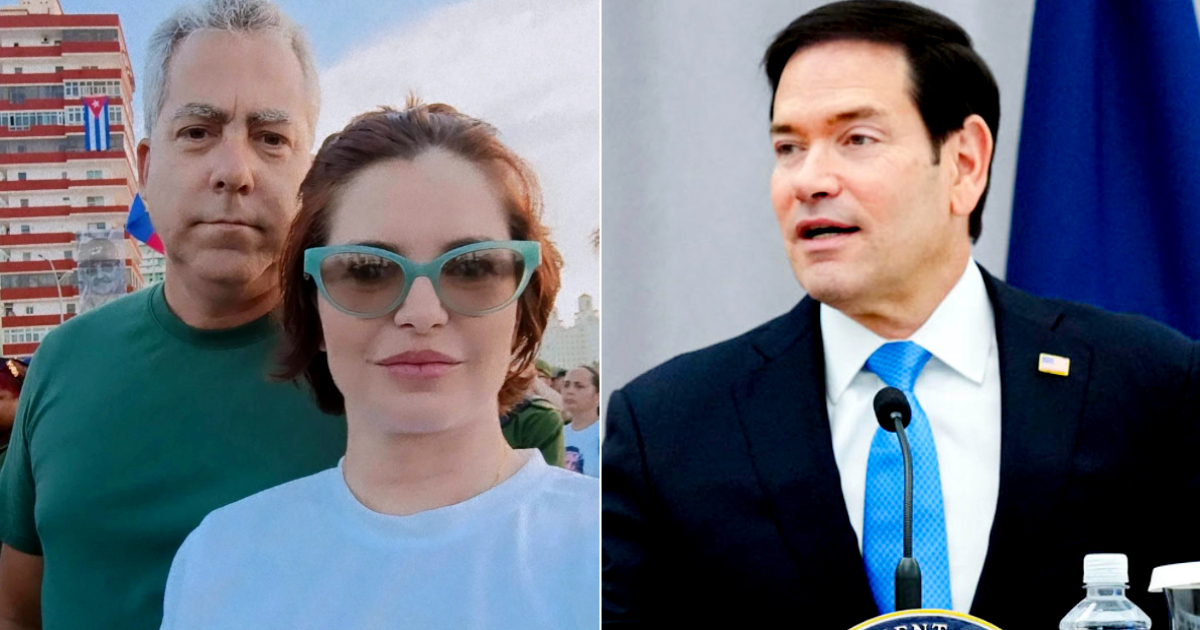
In a matter of days, Ana Hurtado transitioned from mocking leaked reports about U.S. military preparations to cautioning that any action against Cuba might result in a situation akin to Iraq.
The Spanish propagandist, a frequent advocate for the Cuban regime, released a piece titled "The Living Will Envy the Dead," featuring an image of coffins of American soldiers who perished in Iraq. The political target of her message is clear: Marco Rubio, whom she refers to as "Blondie." For Donald Trump, she reserves the nickname "carrot-topped."
Her writing aims to counter the increasing pressure from Washington on Havana. Hurtado references Rubio's statement about steering Cuba towards an "irreversible path to a very different future" and interprets this caution as a sign of weakness. In her view, if Rubio were confident in overthrowing the Cuban government, he would openly declare it.
Shifts in Rhetoric and Strategy
However, the argument lacks substance. In pressure politics, ambiguity can be a strategic tool. Rubio doesn't need to announce an intervention to maintain the threat. He only needs to keep the option on the table while Washington ramps up sanctions, energy pressure, aerial surveillance, military maneuvers in the region, and leaks like the CBS report on support units for the Southern Command.
What's noteworthy is not just Hurtado's words but her shift in tone. Just a few days ago, her stance was that everything was merely a U.S. "psychological war." Now, she goes beyond ridicule, attempting to counter the threat with bravado. She warns that if the U.S. intervenes, it won't know how to exit.
From Mockery to Dire Warnings
Hurtado's rhetoric has evolved from dismissive to invoking the specter of Iraq. From "nothing is happening" to "the living will envy the dead," as if a U.S. military action in Cuba would doom its troops to a "hell on earth."
This shift reveals more concern than calm. If the CBS leak were just an inconsequential maneuver, there would be no need to evoke coffins, prolonged warfare, moral defeat, and dead American soldiers. Propaganda first reassures its followers; when that fails, it threatens the opponent.
Lack of Realistic Analysis
Conspicuously absent from Hurtado's narrative is a realistic analysis of the conflict. She doesn't question why Cuba has reached this point, nor does she consider the costs of the regime's entrenched power. Economic decline, energy shortages, international isolation, and the risk of worsening living conditions for Cubans due to the regime's refusal to explore a political exit remain unaddressed.
She also ignores the option any responsible government should consider before spiraling into confrontation: a transparent consultation, international observers, free elections, a referendum, or any verifiable mechanism to ascertain the true desires of the Cuban people.
This debate doesn't fit her propaganda. Acknowledging it would mean admitting that the dilemma isn't between Cuba and the U.S., but between the closed power of an elite and the Cuban people's right to shape their future.
A Message of Defiance
Hurtado also sidesteps questioning Havana's role in the Venezuelan affair. In a previous post, she spoke of the "kidnapping of Maduro/Cilia" and the "murder of 32 Cuban heroes." These phrases romanticize the deaths of Cubans linked to protecting Chavista power but avoid the fundamental question: What were they doing there? Who sent them? Why are Cubans still paying with human lives for the obsessive and criminal will of a minority elite to cling to power?
Propaganda doesn't question. It canonizes, ridicules, or threatens, depending on convenience.
Now, the message to Rubio attempts to project strength: Cuba would be a trap for Washington, a difficult war to conclude, a politically unsustainable cost. Yet, it also suggests that the regime continues to improvise a narrative of resistance in an increasingly undeniable scenario.
There's no evidence of an imminent intervention in Cuba. However, it's undeniable that Washington has been sending increasingly conspicuous signals for months.
Invoking Iraq doesn't bolster her argument; it exposes it. If Washington were merely bluffing, ridicule would suffice. But Hurtado can no longer settle for that; she now feels the need to promise Rubio an unbearable cost.
Understanding U.S.-Cuba Tensions
What did Ana Hurtado warn Marco Rubio about?
Ana Hurtado warned Marco Rubio that any U.S. action against Cuba could lead to a situation similar to the conflict in Iraq.
How has Ana Hurtado's rhetoric changed?
Hurtado shifted from downplaying U.S. threats as psychological warfare to issuing dire warnings about the consequences of military intervention in Cuba.
Why is the U.S.-Cuba tension escalating?
Tensions are rising due to increasing pressure from Washington, including sanctions, military movements, and political rhetoric aimed at changing Cuba's political landscape.