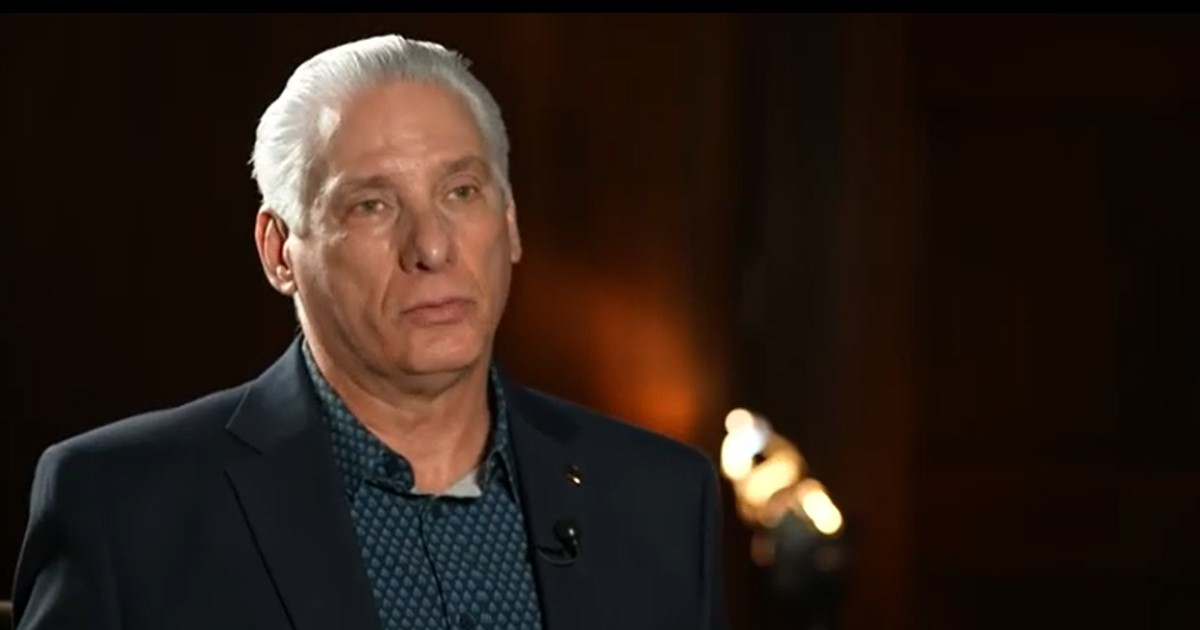
A Cuban citizen's poignant question, "How can we rely on those who brought us here?", encapsulated the skepticism that greeted the return of the official podcast "From the Presidency" on Friday. After a hiatus of over 15 months, Miguel Díaz-Canel and Prime Minister Manuel Marrero Cruz were back on camera discussing the nation's challenges.
This pointed comment was a public reaction to the announcement of the podcast's second season, which initiated with an episode focused on the 176 economic and social transformations promoted by the Cuban government.
Joining Díaz-Canel and Marrero was the Minister of Justice, Rosabel Gamón Verde. The program aired at 10:00 a.m. on the Presidency Cuba YouTube channel and was later broadcast by state media outlets such as Cubavisión, Radio Rebelde, Radio Habana Cuba, Cubadebate, and the Mesa Redonda.
During the broadcast, Marrero confidently stated that the effects of these measures would become apparent next year, asserting that by 2027, the public would witness their benefits. However, these assurances come amid a severe economic crisis and waning trust in the leadership.
A nationwide survey published in April 2026 highlighted this distrust, with Díaz-Canel receiving an average score of 1.11 out of 5, and 93.7% of respondents giving him the lowest possible rating.
Overall confidence in the government was at a dismal 1.09 out of 5, with 94% expressing "no confidence at all". Marrero Cruz fared similarly poorly, with an average score of 1.13.
The regime itself admitted in internal opinion studies that a portion of the population believes the benefits of these transformations are only reaching those with financial means, fueling discontent due to rising inequalities.
The reform package, organized into 23 thematic axes, includes measures such as private banking, private exchange houses, opening up to foreign investment in the non-state sector, and lifting the cap of 100 workers for micro, small, and medium-sized enterprises (MSMEs). By September 2026, Cuba had over 16,100 MSMEs, 448 non-state cooperatives, and more than 385,000 self-employed workers.
Economist Elías Amor offered a blunt assessment of these measures, calling them "a complete sham," arguing they do not signify genuine liberalization but rather a reshuffling of control within the same state apparatus.
The podcast's revival follows just nine days after Díaz-Canel debuted another communication format, the radio program "Shared Criteria" on Radio Rebelde. The inaugural broadcast was dominated by citizen calls regarding inadequate wages, low pensions, and fuel shortages.
Understanding Cuba's Economic and Political Challenges
What are the new economic measures introduced by the Cuban government?
The Cuban government has introduced a series of reforms under 23 thematic axes, including private banking, private exchange houses, opening to foreign investment in the non-state sector, and lifting the limit on employees for MSMEs.
Why is there skepticism about the Cuban government's reforms?
Skepticism arises because many citizens perceive that the reforms benefit only those with financial means, leading to increased inequalities. Additionally, the government's approval ratings are extremely low, which undermines trust in their initiatives.
How have Díaz-Canel and Marrero been received by the Cuban public?
Both Díaz-Canel and Marrero have received low approval ratings from the public, with many expressing no confidence in their leadership. Recent surveys reflect a significant lack of trust in their ability to address the country's issues.