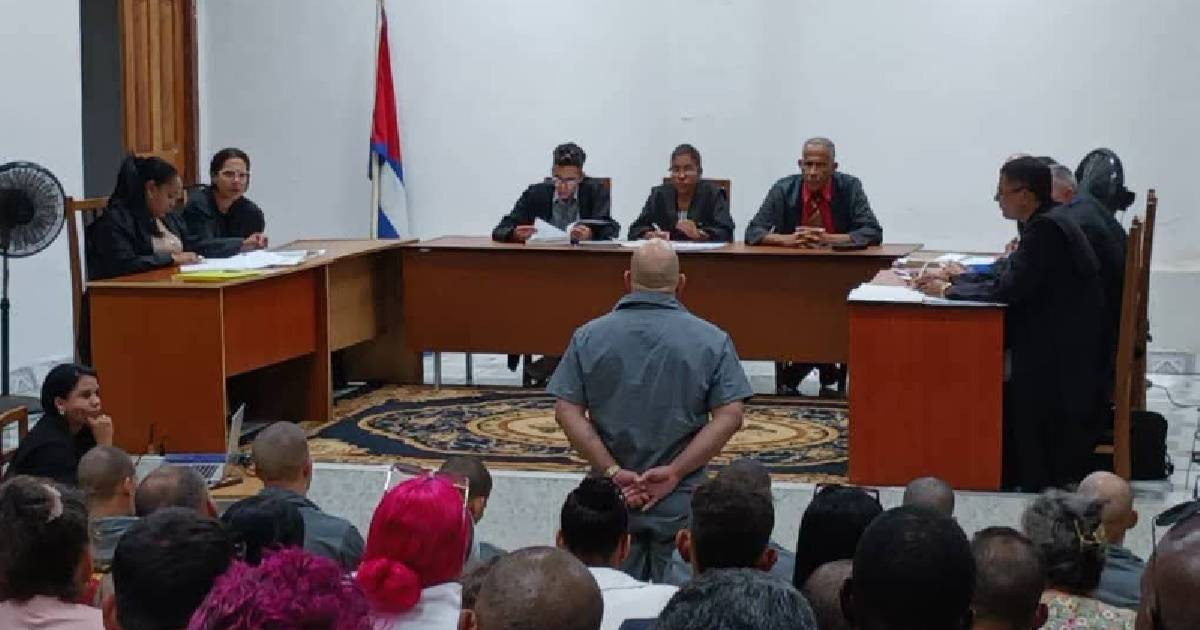
A court in Holguín has handed down prison sentences ranging from 12 to 15 years to seven individuals involved in the theft of dielectric oil from a transformer at the Moa Nueva substation. This crime resulted in the destruction of the transformer, leaving 6,184 homes without electricity during the early hours of March 12 to 13.
The case was tried by the Second Criminal Chamber of the People's Provincial Court of Holguín, functioning as the State Security Crimes Chamber of the People's Provincial Court of Santiago de Cuba. It was processed as an act of sabotage under Article 125-1 of the Penal Code, as reported by the official newspaper ¡Ahora! on Thursday.
Theft Operation in Moa
A group of four young men from the Punta Gorda neighborhood in eastern Moa orchestrated the theft, removing 1,248 liters of dielectric oil from one of the transformers across two separate trips during the night. While one acted as a lookout, the others extracted and stored the oil in containers for transport.
Additionally, three individuals from Sancti Spíritus, who were passing through Moa on business related to their agricultural cooperative, facilitated transportation and purchased a portion of the stolen oil. The operation used a state-owned truck to move the oil to a location known as Pan y Dulce, where the vehicle owner later paid 960,000 Cuban pesos to the operation's leader, who divided the money among the four primary perpetrators. Unfortunately, the stolen oil was never recovered.
Impact and Consequences
The removal of the oil caused a short circuit in phase B of the transformer, leading to a structural explosion that rendered the equipment permanently inoperable. Dielectric oil is essential for cooling and insulating transformers, so its theft severely compromised the transformer's functionality.
The incident left 6,184 homes across circuits four and 11 in Moa without power and disrupted the secondary power supply to the local hospital. As a result, transformer number one at the substation had to take on the full load, causing further damage to the equipment.
The financial losses reported by Moa's Electric Company amounted to 138,054.49 Cuban pesos, accounting for the stolen oil and the damaged transformer.
Legal Proceedings and Broader Issues
The verdict is not yet final, as the convicted individuals have a 10-day window to appeal to the Supreme People's Court. Described as "exemplary," this is the second trial this year in Holguín related to dielectric oil theft. In a similar case in September, a 19-year-old and his uncle received 8 and 10 years in prison, respectively, for a theft in Urbano Noris that left over 4,000 customers without electricity.
Fabián Vega Genicio, director of distribution at the Holguín Electric Company, highlighted the growing issue, noting 65 incidents against the electrical system this year compared to 42 during the same period last year, with dielectric oil theft being the most prevalent.
Among the 65 cases reported this year, 36 involved the theft of dielectric oil, up from just four in the same timeframe in 2025. Vega indicated that the surge in oil thefts is exacerbated by the fuel crisis, as many use the oil as a fuel substitute, disregarding the damage to transformers.
Three substations in the province remain affected by such crimes, leaving over 800 customers in the Frank País municipality without power for over a month due to damage to the La Camaronera substation. Meanwhile, Farallones de Moa and Juan Paz in Sagua de Tánamo await oil delivery for restoration.
In early September, Cuban authorities acknowledged over 460 criminal investigations into offenses against the National Electric System between 2025 and the first half of 2026. The Minister of Energy and Mines, Vicente de la O Levy, admitted to the National Assembly in July that dielectric oil theft occurs "daily," with the amount stolen nearly matching Cuba's production during the same period.
Frequently Asked Questions About Dielectric Oil Theft in Cuba
What is dielectric oil, and why is it targeted for theft?
Dielectric oil is used in transformers for cooling and insulation. It is targeted for theft because it can be used as a substitute for fuel amid Cuba's fuel crisis, despite compromising the functionality of electrical equipment.
What were the consequences of the theft in Moa?
The theft caused a short circuit and explosion of a transformer, leaving 6,184 homes without electricity and impacting the power supply to a local hospital. It also led to further equipment damage due to increased load on remaining transformers.
How has the Cuban government responded to the rise in oil thefts?
The government has acknowledged the issue, with over 460 investigations into electrical system offenses and increased legal actions, including significant prison sentences for those convicted of theft.
Can the convicted individuals appeal their sentences?
Yes, the individuals sentenced in the Moa case have a 10-day period to file an appeal with the Supreme People's Court.