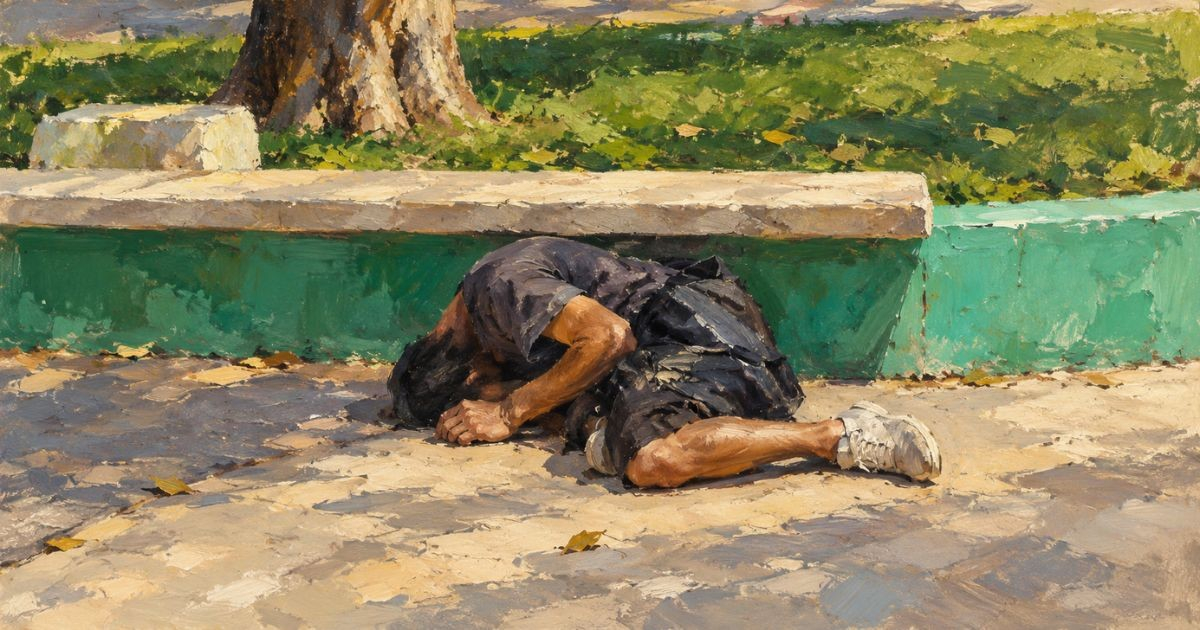
The Cuban writer, translator, and linguist Rodolfo Alpízar Castillo sounded the alarm on Facebook this Friday, highlighting the noticeable rise in the use of "el químico"—a street name for synthetic cannabinoids—in the Santos Suárez neighborhood of Diez de Octubre municipality in Havana.
Firsthand Accounts of the Drug Crisis
Alpízar shared two disturbing incidents he witnessed on consecutive days. On the morning of Wednesday, the 30th, he observed a young man curled up on the sidewalk at the intersection of Juan Delgado and Lacret, surrounded by onlookers. The only word he heard was "químico." The following day, in the late afternoon, another young man was found slumped against a wall at Lacret and Juan Bruno Zayas, showing signs of having urinated himself. Again, the word "químico" was whispered among bystanders.
He also reported similar occurrences in other parts of the same neighborhood. Residents informed him of drug-induced individuals appearing at night around Durege and General Lee, and he personally witnessed another incident on Flores Street, near Heredia High School. "Is more evidence needed?" he questioned. "The problem is spreading. How much longer must we wait?" he concluded in his post.
Widespread Concern Across Havana
This isn't an isolated concern. In late September, a Havana resident expressed her outrage on Facebook after capturing a photo of someone lying in a fetal position in the park at 23 and 14, in Vedado. She lamented how the stress of daily life, power outages, water shortages, and high costs are now compounded by a drug epidemic. "The 'paper' or 'químico' is gaining ground. What are the authorities doing about it? This is a problem that necessitates URGENT action," she wrote. One commenter cynically noted, "The authorities don't care. It doesn't affect them."
Statistics Reflect Growing Drug Use
Official statistics emphasize the urgent need for concern. According to data referenced by the AP, medical emergencies related to synthetic cannabinoids in Havana nearly doubled from 467 to 886 cases between 2024 and 2025. Cuban laboratories have identified at least 46 variants of these substances.
The drug is commonly distributed on strips of paper soaked in the substance—hence the nickname "papelito"—and sold for approximately 250 Cuban pesos per dose (around 0.50 USD), making it easily accessible to youth aged 14 to 25. Experts warn it can be 50 to 100 times stronger than marijuana and is often mixed with fentanil, formaldehyde, benzodiazepines, and veterinary anesthetics.
Government Response and Public Skepticism
The regime has sporadically responded with law enforcement operations. In September, the MININT dismantled a network in Centro Habana, arresting 13 individuals and seizing cocaine and 184 strips of synthetic cannabinoids. The same month, anti-drug operations in Guantánamo resulted in several arrests, including in homes with minors. In August, a man in Matanzas was detained with 30 "papelitos" and a significant amount of cash. Penalties for trafficking synthetic cannabinoids range from 4 to 15 years in prison.
However, citizens remain skeptical, arguing that these measures address symptoms rather than root causes. The social crisis driving youth to drugs—power cuts, food and medicine shortages, unemployment, lack of future prospects—receives no visible government response. One online commentator summed it up grimly: "This is a scourge that's here to stay… It's painful to admit, but there's no antidote for this poison— and I'm not just talking about the drug."
Frequently Asked Questions on Cuba's Drug Crisis
What is the "el químico" drug mentioned in the article?
"El químico" is a street name for synthetic cannabinoids, which are potent chemical compounds that mimic the effects of THC, the psychoactive component in marijuana.
How are synthetic cannabinoids distributed in Cuba?
Synthetic cannabinoids are typically distributed on strips of paper impregnated with the chemical, commonly referred to as "papelito," and sold at a low cost, making them accessible to young people.
What actions have Cuban authorities taken against drug trafficking?
The Cuban government has conducted sporadic law enforcement operations resulting in arrests and seizures of drugs. However, these actions are critiqued for not addressing the underlying social issues contributing to drug use.