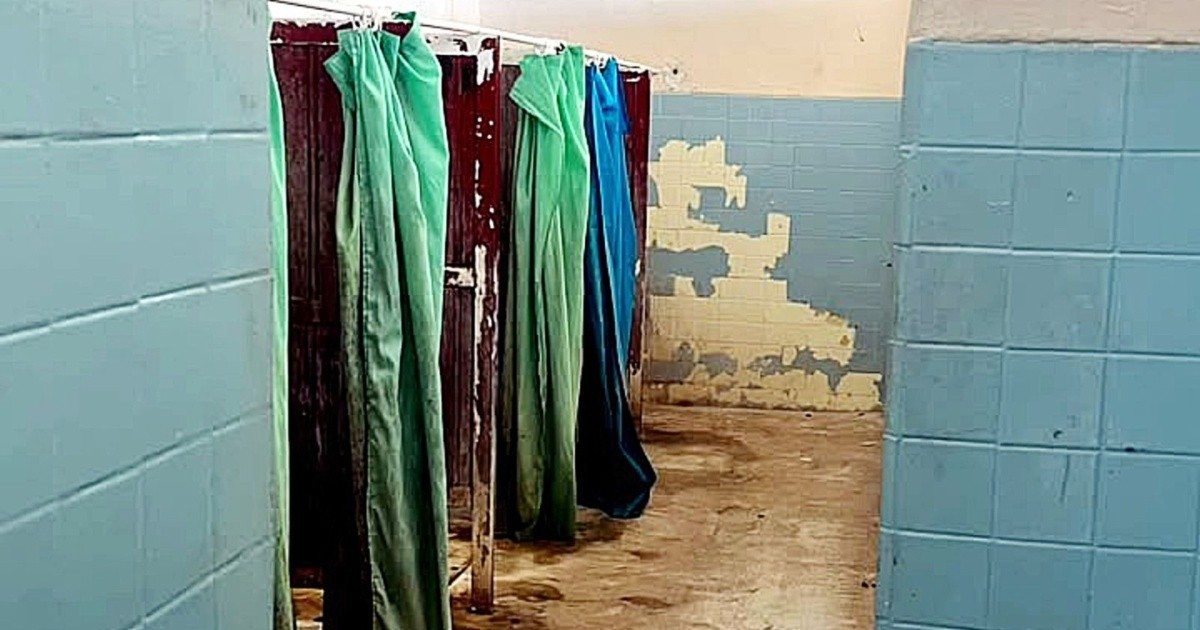
Medical students from South Africa studying in Havana are enduring harsh living conditions, sharing a single bathroom among 13 individuals, experiencing days without running water, and suffering from illness due to the cafeteria food, as revealed in a report by the Daily Maverick released this Wednesday.
These students are part of the Nelson Mandela-Fidel Castro (NMFC) program, initiated nearly thirty years ago under a 1996 bilateral agreement designed to provide medical education opportunities to young South Africans from disadvantaged backgrounds.
One student, who arrived in Havana in December 2024 and requested anonymity due to fear of repercussions, shared her ordeal from the moment she set foot in Cuba with the Daily Maverick: "I was passionate about studying medicine... we arrived at the school, were placed in quarantine, and it was horrific."
During this initial quarantine, she was unable to shower. "Water availability was intermittent, and there was just one bucket for us. We were seven girls. I became depressed. There was no food," she recounted.
Once out of isolation, the situation didn't improve. Regarding the shared bathroom facilities, she explained that flushing the toilet was impossible: "You have to fetch water with a bucket to flush the toilet."
The food situation was dire, consisting mainly of rice with a broth so diluted that she described it succinctly: "The water is the rice soup." The meat caused her skin rashes and gastrointestinal issues, prompting her to spend her own money on bread instead.
"I come from a poor home. I know what poverty is, but this is worse than my situation back home," she stated.
The monthly stipend of approximately $200, loaded onto a local card, loses significant value due to the unfavorable exchange rate.
When students requested an increase, the department paid two months' worth at once instead of raising the monthly amount. "Those $400 should cover one month, not two," the student remarked.
Foster Mohale, spokesperson for the South African Department of Health, acknowledged to the Daily Maverick that no oversight visit has been conducted since 2022.
"No supervisory visit has been conducted since 2022, primarily due to mounting financial pressures and strict austerity measures," Mohale stated.
Mohale attributed the challenging conditions to the U.S. embargo: "Cuba is currently facing significant difficulties, largely due to the intensified U.S. embargo, impacting nearly all aspects of daily life."
Nevertheless, the ongoing crisis in Cuba—characterized by power outages, and shortages of water and food—is a direct result of decades of the regime's mismanagement, affecting not only South African students but also Ghanaian graduates stranded in Cuba with six months of unpaid stipends and Jamaican students reporting up to eight-hour daily blackouts.
Parliamentary Scrutiny and Financial Concerns
The program is also under scrutiny in the South African Parliament. Democratic Alliance MP Haseena Ismail expressed concerns that reliance on the program "raises serious questions about cost, value for money, and whether public resources are being used most efficiently, especially given the deeply concerning conditions faced by some of our students."
Economic Freedom Fighters MP Noluvuyo Tafeni added that by 2025, there were 303 unemployed graduates despite a state investment estimated at 606 million rands.
"This situation reflects a failure of state planning and a massive waste of public investment," she declared, noting that South Africa's agreements with Cuba across five government departments total an estimated 1.425 billion rands.
Mohale mentioned that the stipend amount was discussed during a Joint Academic Meeting held in July 2026 and that consultations with decision-making bodies are ongoing, with no specific resolution date in sight.
Addressing the Challenges Faced by South African Medical Students in Cuba
What is the Nelson Mandela-Fidel Castro program?
The Nelson Mandela-Fidel Castro program is a bilateral initiative started in 1996 to provide medical education opportunities to South African students from underprivileged backgrounds.
Why have there been no oversight visits to the students in Cuba?
According to the South African Department of Health, no oversight visits have occurred since 2022 due to financial constraints and strict austerity measures.
How has the U.S. embargo impacted the living conditions of students in Cuba?
The U.S. embargo is cited as a major factor in the difficulties faced by Cuba, affecting nearly all aspects of daily life, including the living conditions of South African students.