This weekend, Saturn will take center stage in the night sky. On Sunday, October 4, 2026, the planet known for its stunning rings will reach opposition, offering one of the prime opportunities of the year to observe it from Earth, as highlighted in NASA's October skywatching guide.
During opposition, Saturn is positioned opposite the Sun in the sky, making it visible for much of the night. This celestial event can be witnessed from locations such as the United States, including Florida, Cuba, Spain, and other regions with clear weather conditions.
Understanding Saturn's Opposition
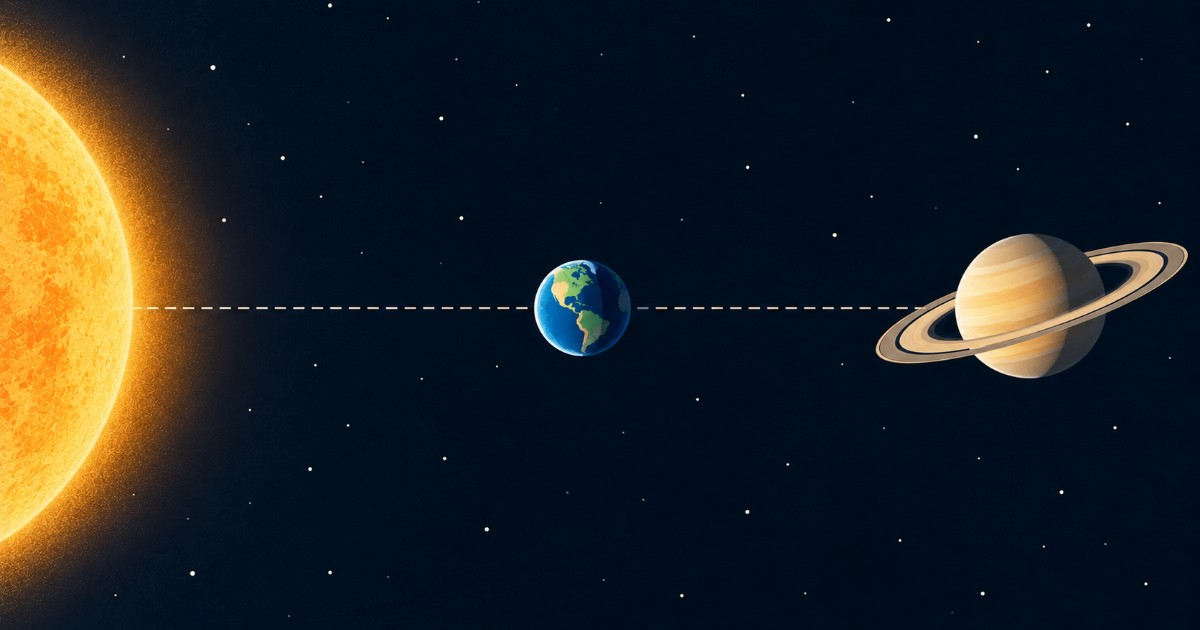
Opposition occurs when Earth is directly positioned between the Sun and Saturn. This alignment means that from our vantage point, Saturn is on the opposite side of the sky from the Sun.
This alignment is advantageous for skywatchers as Saturn rises around sunset and remains visible for a significant portion of the night. NASA acknowledges Saturn's opposition as one of the key astronomical events of October 2026, emphasizing it as an optimal time to observe the planet.
Spotting Saturn Without a Telescope
Yes, Saturn is visible without a telescope and will appear as a bright dot in the sky. Unlike many stars, planets like Saturn emit a relatively steady light, although atmospheric conditions can influence its appearance.
However, don't expect to see its iconic rings with the naked eye. A telescope is required to view such details. NASA's skywatching resources note that Saturn is one of the planets identifiable without magnification, but a telescope unveils features not visible otherwise.
Locating Saturn This Sunday Night
To find Saturn, begin your search after darkness falls by looking towards the eastern part of the sky. As the night progresses, Saturn will rise higher and seemingly move westward due to Earth's rotation.
Its precise position varies by city, date, and time, so there isn't a universal time reference for all viewers. The NASA/JPL Night Sky Planner is an excellent tool for checking the night sky and planning your observation session based on your location.
Viewing Saturn from Cuba
In Cuba, Saturn will be visible after sunset, appearing in the eastern sky and remaining observable for much of the night, weather permitting. From cities like Havana, Santiago de Cuba, and Camagüey, it can be seen as a bright point without needing a telescope, though a telescope is necessary to see the rings.
The planet's exact position will change depending on the time and location of observation. Using the NASA/JPL Night Sky Planner or an astronomy app configured for your location can be helpful.
Observing Saturn from Miami and Florida
In Miami and other parts of Florida, Saturn will emerge for viewing after sunset and stay visible for several hours. Finding a spot with an unobstructed view of the sky and minimal light pollution is crucial. Avoiding streetlights, well-lit parking lots, and tall buildings can aid in viewing.
Using a telescope, observers can achieve better results once Saturn climbs higher in the sky. When an object is low, its light passes through more atmosphere, which can make the image less stable. Before heading out, check the planet's position for your specific time and place using the NASA/JPL night planner or an astronomy app.
Observing Saturn from Spain
The same event can be seen from Spain. After sunset, Saturn will appear in the eastern sky and remain visible for much of the night. There is no single optimal time for all of Spain as positions vary between regions like Madrid, Galicia, Andalucía, and the Canary Islands. Consulting a star map configured for your specific location is more effective.
Weather conditions will be a decisive factor. If the sky is overcast, Saturn won't be visible even if opposition is occurring.
Essential Equipment for Viewing Saturn's Rings
To the unaided eye, Saturn appears as a bright point. Binoculars can assist in locating it but typically lack the magnification needed to clearly see the ring system. A small telescope and good viewing conditions can reveal the rings encircling the planet. Larger telescopes and stable atmospheric conditions can uncover additional details.
No special filters are needed to observe Saturn at night, unlike the protective equipment required to safely view the Sun.
Continued Viewing Opportunities
Although the opposition occurs on a specific date, Saturn will remain observable in the nights that follow. The favorable alignment of the Sun, Earth, and Saturn on October 4 offers a prime viewing opportunity, but even if clouds obstruct the view that night, there will still be chances to see it in the subsequent days.
Nasa's October 2026 guide provides insights into this and other astronomical events of the month, while the NASA/JPL Night Sky Planner assists in preparing your observation based on your location.
Skywatching Tips for Saturn's Opposition
What is Saturn's opposition?
Saturn's opposition occurs when Earth is directly between the Sun and Saturn, making the planet appear opposite the Sun in the sky, allowing it to be visible for most of the night.
How can I see Saturn without a telescope?
Saturn can be seen as a bright dot in the sky without a telescope. However, to view its rings in detail, a telescope is required.
What tools can help plan my Saturn observation?
The NASA/JPL Night Sky Planner or astronomy apps tailored to your location are useful tools for planning when and where to observe Saturn.