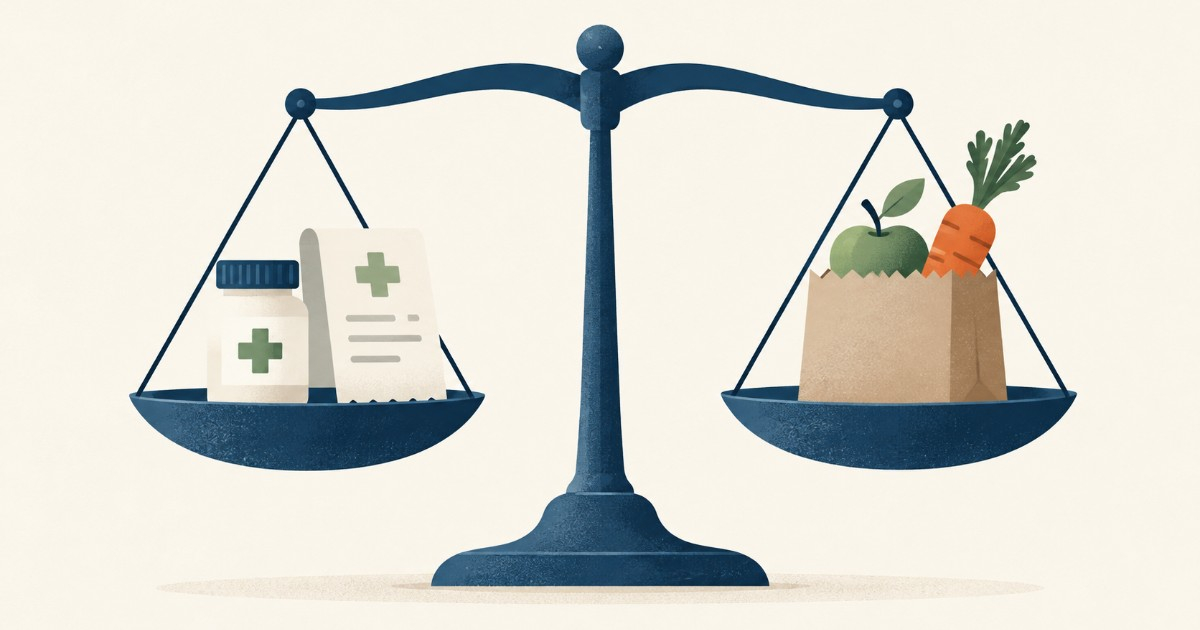
Individuals aged 60 and above, as well as those meeting the disability criteria under the Supplemental Nutrition Assistance Program (SNAP), commonly referred to as Food Stamps, are eligible to deduct specific medical expenses when determining the income used for their food assistance eligibility.
The United States Department of Agriculture (USDA) outlines that this deduction applies to qualified medical expenses exceeding $35 monthly, provided these costs are not covered by insurance or another non-household source. Accurately reporting these expenses can significantly affect the amount of food assistance a family receives.
Understanding SNAP's Medical Expense Deduction
This deduction is not a reimbursement for medical bills or a new form of assistance. It is a specific deduction within the SNAP calculation, distinct from the maximum Food Stamps amounts previously reported by CiberCuba.
Eligibility for Medical Expense Deductions
Under SNAP rules, a person is considered a senior starting at age 60, rather than 65. It also includes individuals of other ages who meet the federal disability definition of the program. Qualifying individuals may include those receiving Supplemental Security Income (SSI) or certain Social Security disability or blindness benefits. The rule also covers specific disability benefits for veterans.
Simply having a medical condition or facing high expenses is not sufficient; the individual must meet the age or disability criteria. The deduction applies to the expenses of the qualifying household member, not automatically to all family members.
What Medical Expenses Are Deductible?
Eligible expenses encompass doctor and dental visits, hospital treatments, and nursing care, provided they meet program conditions and the household's responsibility is clearly identified. Prescription medications are also included, while over-the-counter drugs require approval from a licensed healthcare provider.
The federal SNAP regulations further cover health and hospitalization insurance premiums, including Medicare, as well as certain costs borne by Medicaid beneficiaries. Admissible items include dentures, hearing aids, prosthetics, and prescribed eyewear, alongside necessary medical supplies and equipment rentals.
The list also considers reasonable transportation and lodging costs necessary for medical treatment, as well as specific in-home assistance services required due to age, illness, or disability. However, this does not extend to any travel or household service costs.
Non-Deductible Medical Expenses
According to the USDA guidelines, special diets do not qualify as deductible medical expenses. Additionally, expenses covered by insurance or another individual cannot be claimed as personal expenses.
For example, if a medical consultation costs $150 and insurance covers $120, the household's responsibility is $30, not the full consultation price. This amount is considered alongside other eligible medical expenses.
Moreover, declaring medications as an expense differs from purchasing them with food assistance. The Florida Department of Children and Families (DCF) emphasizes that SNAP benefits cannot be used to buy medicines.
Explaining the $35 Threshold
A hypothetical scenario can illustrate the difference between a deduction and a payment: if an eligible person incurs $135 in accepted monthly medical expenses, the first $35 would be subtracted under actual cost calculations. The resulting deduction would be $100.
This deduction does not mean an additional $100 will be loaded onto the EBT card. Instead, this amount is deducted when calculating the countable income. The final assistance amount also depends on household income, members, and other applicable deductions.
If a one-time medical bill arises rather than a recurring monthly expense, it's advisable to consult on how to include it in the file. SNAP's calculation rules allow, under certain circumstances, applying the expense in a single month or distributing it over the appropriate period. A single bill cannot be deducted twice.
Gathering Necessary Documentation
The USDA requires proof of medical expenses and any reimbursements received. Therefore, it's essential to keep bills, pharmacy receipts, premium statements, and insurance documents that differentiate between covered and household expenses.
To streamline the review process, organize documents by person and date, separate regular from one-time expenses, and mark amounts already reimbursed. When a medication or equipment needs professional authorization, retain that documentation as well.
The MyACCESS interview guide explicitly includes medical expenses for members aged 60 or older or those with disabilities among the relevant documents for SNAP. It also advises continuing the interview even if some documentation is missing, as the office can assist in obtaining it.
Filing or Requesting a Review in Florida
In Florida, the DCF handles these procedures. Their official application and benefit management page explain that MyACCESS allows users to review their file, report changes, and upload requested documents.
When applying for or renewing SNAP, report the medical expenses of eligible individuals and submit the requested documentation. If you are already receiving assistance and believe expenses are missing from the calculation, inquire about how to include them and request clarification on the deductions listed in your file.
Submitting a bill does not guarantee automatic approval. SNAP's verification rules require confirming relevant medical expenses, including reimbursements. An unverified expense may be excluded from the calculation until the necessary information is provided.
Assistance applications are free. Those needing guidance can visit a family resource center, a DCF partner organization, or call the support number at 850-300-4323, as published by MyACCESS.
The key is ensuring the file accurately reflects the documented and eligible expenses. Declaring them does not guarantee a specific increase but allows the agency to assess assistance based on each household's pertinent information.
Common Questions about SNAP Medical Deductions
Who qualifies for medical expense deductions under SNAP?
Individuals aged 60 or older and those who meet the federal disability definition under SNAP are eligible for medical expense deductions.
What types of medical expenses can be deducted?
Deductible expenses include doctor visits, hospital treatments, prescribed medications, health insurance premiums, and necessary transportation for medical treatment.
Are special diets considered a deductible medical expense?
No, special diets are not recognized as deductible medical expenses under USDA guidelines.
How does the $35 threshold work for medical deductions?
For accepted medical expenses, the first $35 is subtracted from the total, and the remaining amount is the deduction used in income calculations.
What documentation is needed for medical expense deductions?
Keep all relevant bills, receipts, premium statements, and insurance documents to prove medical expenses and any reimbursements received.