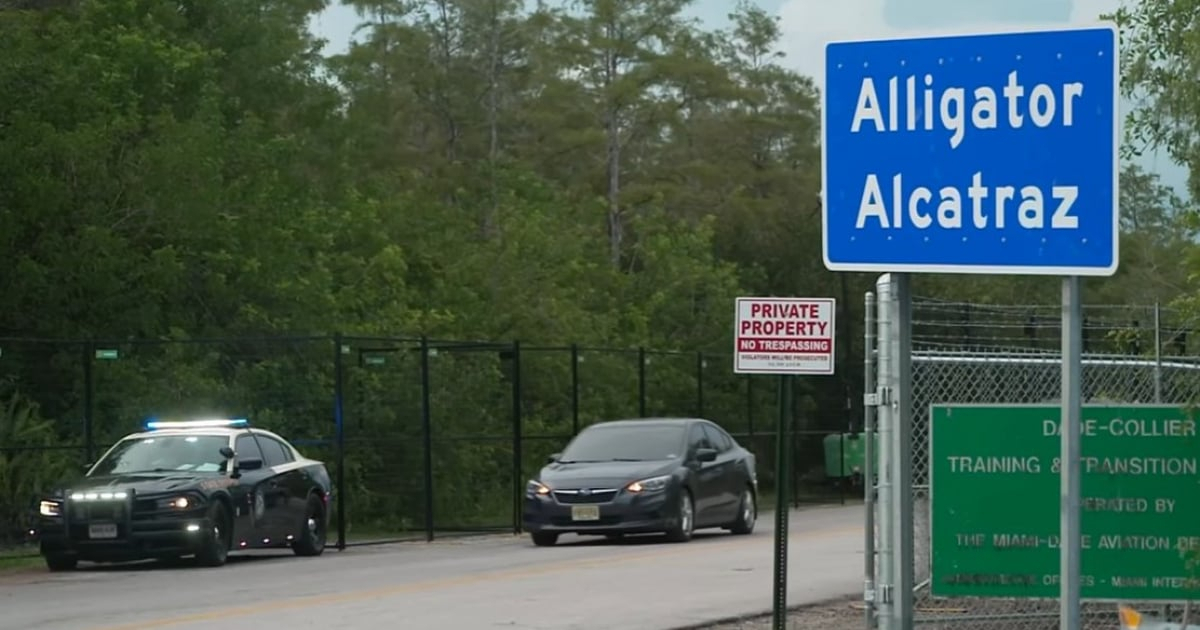
A detention facility dubbed Alligator Alcatraz in Florida's Everglades operated with an authorized daily rate of $249 per detainee, significantly exceeding the ICE median of $92 by about 171% during the fiscal year 2026. This startling figure was uncovered in a recent federal report.
The report, issued by the U.S. Government Accountability Office (GAO), an independent body that audits federal programs and spending, scrutinized several ICE initiatives aimed at swiftly expanding detention capacity. It raised red flags regarding planning issues, spiraling costs, and potential misuse of public funds.
ICE's Unusual Practices at Alligator Alcatraz
In the instance of Alligator Alcatraz, officially named the Florida Soft-Sided Facility, the GAO highlighted that ICE neither directed Florida to open the center nor established a prior contract or agreement authorizing its operation as a federal immigration detention facility.
ICE officials contended that an existing agreement under section 287(g) with Miami-Dade County justified the use of the space. However, the GAO pointed out that those documents did not mention the facility nor did they indicate ICE's approval for Florida to operate it as a detention center.
Financial Implications and Criticism
The report underscored the unusual way costs were determined. Typically, ICE negotiates rates before finalizing contracts with detention facilities. In this case, however, no such negotiation occurred, and the price was not predetermined, according to the report.
The $249 rate was authorized by the Detention Support Grant Program, intended to cover the cost of housing a detained adult for one day. Compared to ICE's median of $92 during fiscal 2026, this marked a stark 171% difference.
The Federal Emergency Management Agency (FEMA) allocated $608.4 million to Florida under this program to support the facility. By May 2026, around $58.2 million had been spent on eligible expenses, including staffing, supplies, food, and detainee services.
The investigation was also highlighted by the Tampa Bay Times, which noted that the lack of a prior agreement and the high costs prompted the GAO to warn about potential resource waste.
Broader Implications for ICE
PBS NewsHour placed the case within a broader examination of ICE's expansion plans, where the GAO questioned other costly initiatives and noted the agency's lack of a comprehensive strategic plan to manage its rapid detention capacity growth.
In Florida, the response to the report was vehement. Stephanie Hartman, spokesperson for Florida's Division of Emergency Management, dismissed the GAO's authority, arguing that illegal immigration imposes hundreds of billions of dollars in costs on U.S. taxpayers, as reported by International Business Times.
Detention Conditions Under Scrutiny
This report emerged shortly after another federal investigation criticized the detention conditions at Alligator Alcatraz. The Department of Homeland Security's Office of Inspector General documented overcrowding, cramped spaces, inadequate recreation, and the use of small metal cages.
The report confirmed numerous complaints previously raised by detainees and humanitarian organizations. One recent account came from Raúl Suárez Herrero, a Cuban detainee, who reported being confined in a small metal cage for over 15 hours without food, unable to lie down, and exposed to mosquitoes overnight.
Concerns about the facility's costs are not new. As early as June, estimates suggested Alligator Alcatraz's expenses far exceeded those of other detention centers, although those comparisons used different calculations from the specific rate now analyzed by the GAO.
Alligator Alcatraz opened in July 2025 at the Dade-Collier Training Airport in Ochopee and closed in June 2026. The GAO noted the facility housed an average of 1,386 detainees during fiscal 2026 and that Florida cited its temporary nature among the reasons for its closure.
The GAO recommended the Department of Homeland Security enhance planning for future detention capacity expansions to mitigate the risk of unnecessary expenses and poorly informed decisions.
Key Insights into Alligator Alcatraz's Operations
Why was Alligator Alcatraz's daily rate significantly higher than other ICE facilities?
The daily rate of $249 was set by the Detention Support Grant Program, which covered the costs for housing detained adults per day, surpassing ICE's median of $92 by 171%. The GAO highlighted a lack of negotiation on this rate, which is atypical for ICE contracts.
What issues did the GAO find with the operation of Alligator Alcatraz?
The GAO found that ICE did not follow standard procedures for contracting and did not have a prior agreement authorizing Alligator Alcatraz's operation as a federal facility. This lack of planning and oversight led to concerns about wasteful spending and management.
How did the federal report impact Florida's response to the detention facility's costs?
Florida's response was dismissive, with state officials criticizing the GAO's findings and arguing that the costs of illegal immigration are much higher for taxpayers. This reflects a broader disagreement on federal oversight and financial accountability.