The Ministry of Finance and Prices (MFP) announced on Thursday the implementation of Resolution 200/2026, which grants Cuban entities the ability to apply higher depreciation and amortization rates than usual for machinery and technology acquisitions related to food production and industrial processing.
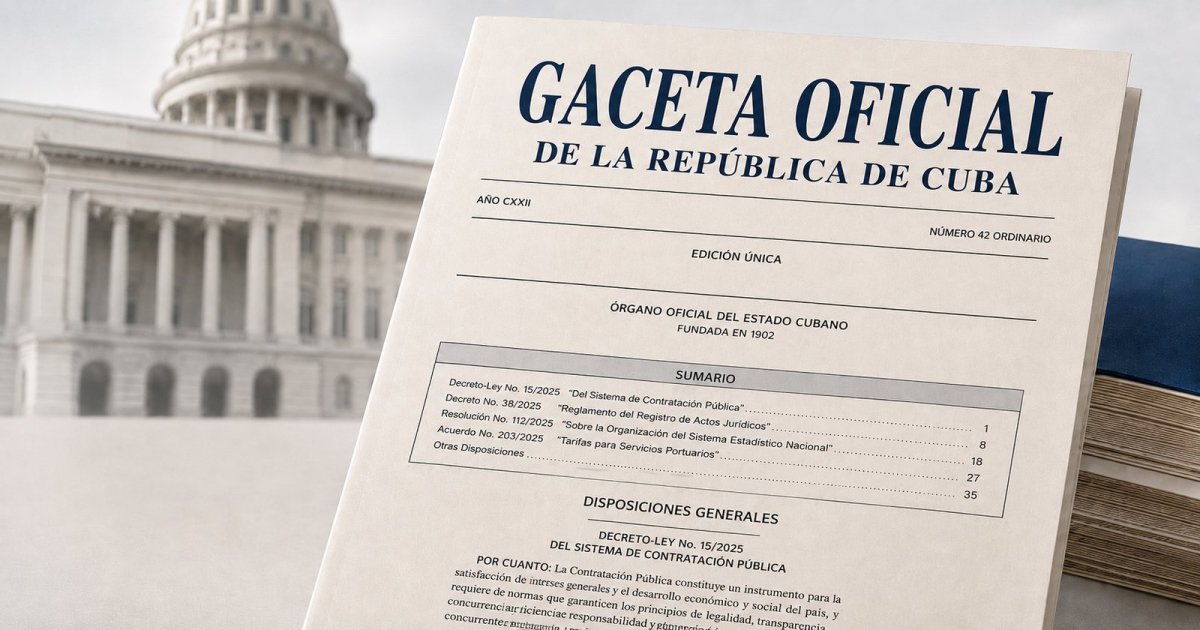
This regulation, signed on August 29 by Minister Vladimir Regueiro Ale, was officially published in Cuba's Official Gazette No. 81, Ordinary of 2026, appearing on pages 2 and 3, and took effect on the same date.
The resolution's sole article specifies that entities purchasing such equipment can "apply depreciation and amortization rates for tangible and intangible fixed assets that exceed those established by current legislation," with the additional expense being "considered deductible for the calculation of the Profit Tax."
In practical terms, this mechanism eases the tax burden during the initial years of an asset's life by allowing a faster deduction of its cost, thereby facilitating quicker recovery of the capital invested.
The standard depreciation and amortization rates in Cuba are dictated by Resolution 701 from September 2015.
The legal foundation for this new measure is Law 113, "The Tax System," from 2012, whose Second Final Provision authorizes the Minister of Finance and Prices to set maximum depreciation rates "when, in his judgment, economic and social circumstances so advise."
Resolution 200/2026 does not repeal existing norms but rather creates a sector-specific exception for food production and processing.
This initiative is part of a broader package of 176 economic and social reforms approved by the Cuban government in 2026, aimed at addressing the severe crisis affecting the island.
The resolution itself acknowledges that "the approved Economic and Social Transformations recognize the need to establish an accelerated depreciation regime for acquiring machinery, food production technology, and industrial processing, which facilitates investment recovery."
Prime Minister Manuel Marrero Cruz announced to the National Assembly on July 29 that this regime would be approved as part of efforts to boost investment in the food sector, one of the most critical areas due to the country's high dependence on food imports.
By the end of September, the government reported that 158 of the 176 transformations—representing 89%—were already underway, with Resolution 200/2026 being among the latest to be formalized through publication in the Official Gazette.
Understanding Cuba's New Depreciation Rules
What is the purpose of Resolution 200/2026?
Resolution 200/2026 allows Cuban entities to use accelerated depreciation and amortization rates for machinery and technology in food production and processing, easing the tax burden and enabling quicker investment recovery.
How does the new depreciation mechanism impact taxes?
The mechanism reduces the tax burden in the early years of an asset's life by allowing faster deduction of its cost, facilitating more rapid recovery of invested capital.
Does Resolution 200/2026 replace existing depreciation regulations?
No, the resolution does not replace existing regulations but introduces a sector-specific exception for food production and processing.