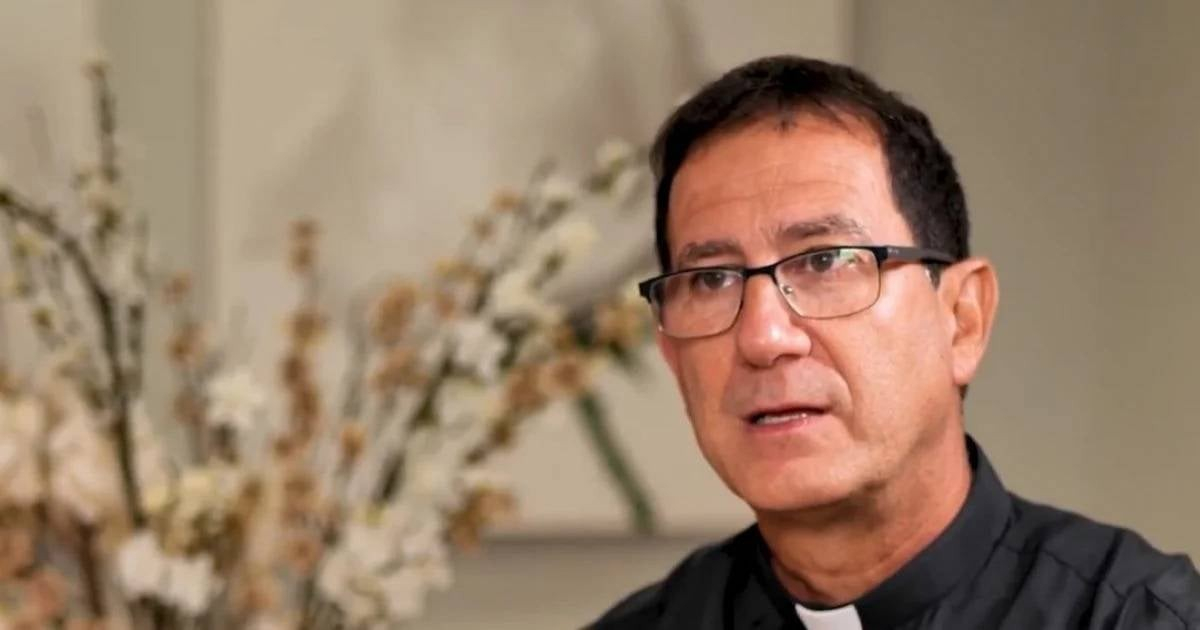
The Cuban priest, Alberto Reyes, known for his vocal criticism within the Catholic Church on the island, has highlighted the persistent desire among Cubans for an end to the current national plight, yet warned that the hope for change seen earlier this year has significantly diminished.
"It's no secret that we're living through a nightmare. But how are Cubans feeling right now? They desperately wish for this nightmare to end," Reyes expressed during an interview with journalist Alexis Boentes from Telemundo 51, while visiting Miami.
Reyes, who serves as a parish priest in Esmeralda, Camagüey, mentioned that during past crises, Cubans maintained a belief that conditions would eventually improve—a belief that he says has now weakened.
"In every crisis, there was always some hope that things would get better. That's no longer the case," he stated.
The priest referenced initial optimism sparked by statements from former President Donald Trump and Secretary of State Marco Rubio in early 2026, suggesting potential political changes within Cuba. However, as time passed without these expectations coming to fruition, the hope among many Cubans waned.
"Time has gone by, nothing has happened, and hope has significantly declined. Now, it's more like 'I don't know whether to trust or not,'" he explained.
Assessing Political Support and Dialogue
Reyes also shared his views on the level of support the Cuban political system retains among the population. "Finding someone in Cuba who genuinely believes that communism or the revolution is the solution is rare," he noted.
Addressing the potential for dialogue between Washington and Havana to resolve the crisis, Reyes advocated for establishing a negotiation table that would lead to concrete steps towards political transition.
"A dialogue table where concrete steps towards a transition are taken. By dialogue, I mean figuring out how this government will step down," he asserted.
The priest rejected the notion that such dialogue should aim to keep the current government involved in deciding the country's political future.
"It's not about 'how we all work together,' no, no, no. You've shown for nearly 70 years that you either can't or don't want to, and you don't care about the people. Therefore, the current Cuban government, the Castro family, etc., must go," he concluded.
International Dynamics and Perspectives
As Boentes pointed out at the report's conclusion, Reyes will return to Cuba, where many believe that the leaders in power are primarily responsible for the ongoing crisis.
This commentary comes as Washington has increased its public messaging towards Cuban authorities. In a recent interview with Sean Hannity on Fox News, Secretary of State Marco Rubio warned those within the Cuban government who think they can simply wait out the Trump administration, asserting they are mistaken.
"Unfortunately, too many people there still chanting revolutionary slogans believe they can just wait out this administration and avoid making changes. They are wrong and will learn the hard way if they don't change," Rubio declared.
Rubio also stated that Washington hopes Cuba will "choose a different path," emphasizing that economic freedom cannot be achieved without political freedom, suggesting any transformation process would require a transitional period.
From Havana, Deputy Foreign Minister Carlos Fernández de Cossío acknowledged ongoing communication between both governments but expressed skepticism about its outcomes. In a recent interview with Bloomberg, he noted a lack of "progress" in these contacts, predicting no tangible results as long as Washington continues to impose new sanctions and pressure measures.
Days earlier, Fernández de Cossío also acknowledged the existence of an official communication channel between Havana and Washington, though he dismissed any concrete progress.
"We have formal diplomatic relations with the United States, and therefore an official communication channel," he stated.
Throughout recent weeks, Reyes has insisted that Cuba's economic and social situation keeps deteriorating. In September, for example, he claimed the island was "infinitely worse," questioned whether the current system could provide a solution to the crisis, and advocated for a profound and peaceful political transformation.
He has also reflected on the Catholic Church's role in the Cuban reality and the tensions that arise from publicly taking critical stances. The priest described the Church as an "uncomfortable neighbor" when it decides to support the people's demands and needs.
Frequently Asked Questions on Cuba's Political Situation
What did Father Alberto Reyes say about the current hope for change in Cuba?
Father Alberto Reyes stated that the hope for change, which was present earlier in the year, has significantly diminished among Cubans.
How did Marco Rubio address the Cuban government in his statements?
Marco Rubio warned Cuban government officials that they are mistaken if they believe they can wait out the Trump administration without making changes, emphasizing that they will face harsh consequences if they do not adapt.
What role does Father Reyes believe the Catholic Church should play in Cuba?
Father Reyes believes the Catholic Church should act as an "uncomfortable neighbor" by supporting the demands and needs of the Cuban people, even if it results in tensions with the government.