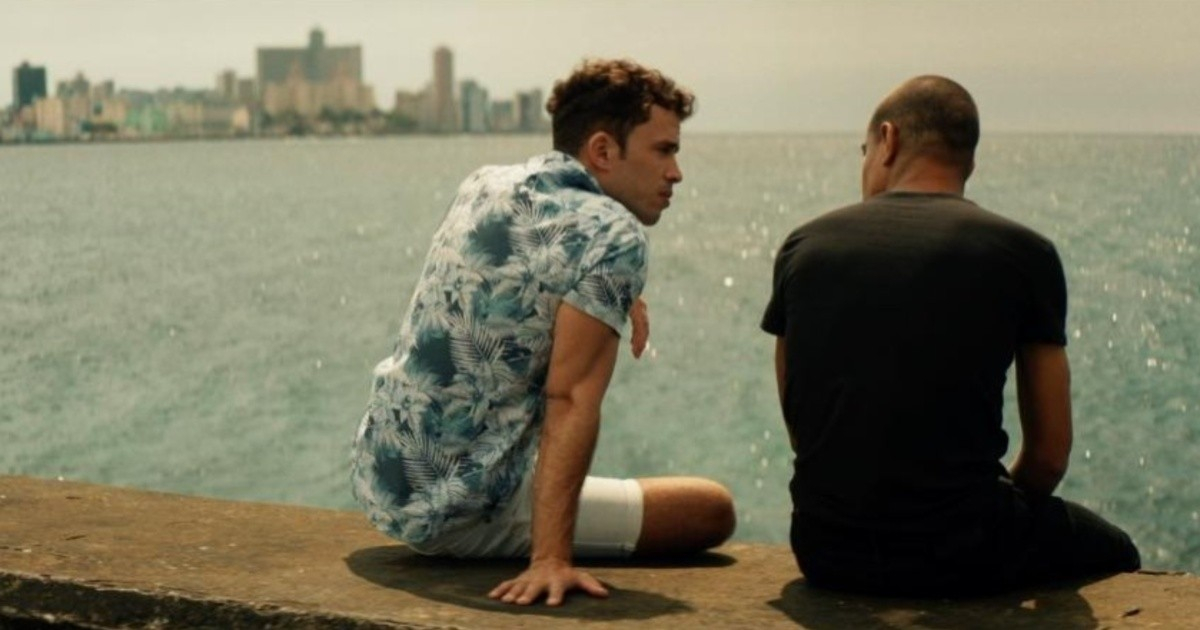
"Malecón," the debut feature by Spanish director Carlos Larrazábal, has been chosen by Cuba as its official submission for the Best International Feature Film category at the 99th Academy Awards, as exclusively reported by Variety on Thursday, September 25.
This announcement coincided with the San Sebastián International Film Festival and was accompanied by another development: Spanish platform Movistar Plus has acquired streaming distribution rights for the film in Spain.
According to Cinema Tropical, this selection marks Cuba's return to the international Oscar race after nearly a decade-long hiatus.
The film, a co-production between Cuba, Spain, and the United States, follows the journey of Elvis, a man returning to Havana after serving a ten-year prison sentence for killing his abusive stepfather in an attempt to protect his mother.
Upon his return to a drastically transformed city, the protagonist reconnects with childhood friends and becomes entangled in Havana's underground economy, facing the tough decision of whether to stay or emigrate.
Shot entirely in Havana using handheld cameras and natural lighting, the film was conceived by Larrazábal as a portrayal of Cubans' daily struggles and resilience, steering clear of political or nostalgic clichés.
The screenplay was co-written by Larrazábal and Cuban filmmaker Fabián Suárez, and developed through the Sundance Collab program. The cast is entirely Cuban, featuring César Domínguez, Camila Rodhes, Omar Rolando, Yordanka Ariosa, and Luis Alberto García.
Among the producers is Jorge Perugorría, the renowned Cuban actor who starred in "Fresa y Chocolate," adding a symbolic connection between Cuba's only Oscar nomination in this category—achieved precisely by that film in 1995—and the new entry.
Producers also include Inti Herrera from Cuban production company i4films, alongside Jaime Otero and Flavio Florencio.
"We aimed to create a film with the ambition to travel the world and the intimacy of a story told from within," Herrera stated. "Our Cuban cast and crew brought their own memories, humor, and daily realities to the screen. Seeing the film resonate with audiences in both Havana and beyond has been especially meaningful."
Larrazábal explained that "Malecón was born from a deep connection with Cuba and the need to tell a story about what it means to stay, leave, and envision a different future."
The Los Angeles-based director studied cinematography at ECAM in Madrid before furthering his education at the International Film and Television School in San Antonio de los Baños, Cuba.
The film had its world premiere at the Miami Film Festival in April 2025, served as the Closing Night selection at the Havana Film Festival New York, and competed at the Mar del Plata International Film Festival. Its Cuban premiere took place on August 27 at Havana's Yara cinema.
Cuba made its first Oscar submission in 1978 and has only secured one nomination in its history: "Fresa y Chocolate" by Tomás Gutiérrez Alea and Juan Carlos Tabío, nominated at the 67th edition of the awards.
More recent submissions included "El mundo de Nelsito" (Fernando Pérez), "Buscando a Casal" (Jorge Luis Sánchez), "Un traductor" (Rodrigo and Sebastián Barriuso), and "Sergio & Sergei" (Ernesto Daranas), after which Cuba had no official candidate for nearly a decade.
"Malecón" is scheduled to screen at the Seville Film Festival this November, further extending the film's international journey before the Academy announces its nominees.
Insights on Cuba's Oscar Submission
Why is "Malecón" significant for Cuba's Oscar race?
"Malecón" marks Cuba's return to the international Oscar race after nearly a decade, symbolizing a renewed commitment to showcasing Cuban cinema on a global stage.
What themes does "Malecón" explore?
The film explores themes of resilience, identity, and the choices between staying or leaving one's homeland, set against the backdrop of a changing Havana.
Who are the key contributors to "Malecón"?
Key contributors include director Carlos Larrazábal, co-writer Fabián Suárez, producer Jorge Perugorría, and a Cuban cast featuring César Domínguez and others.