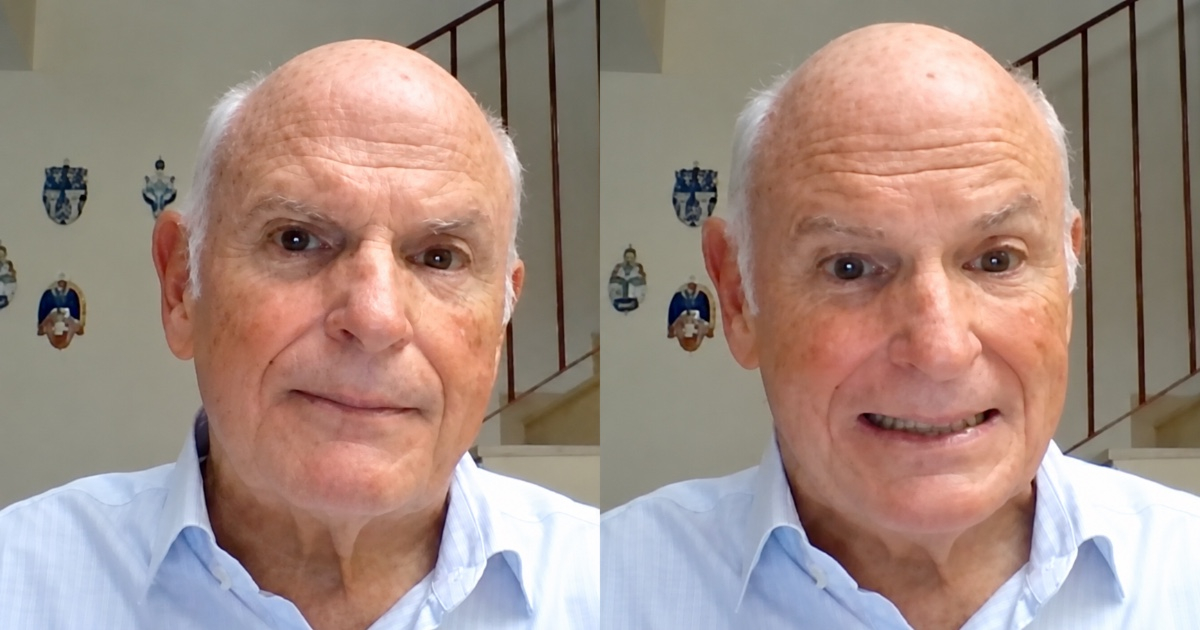
Economist Elías Amor voiced his support this week for Secretary of State Marco Rubio's remarks about the collapse of the Cuban system, stating that he "fully agrees with Marco Rubio's assertion that Cuba has already fallen." Amor shared his views in an interview with Tania Costa for CiberCuba, coinciding with the implementation of new OFAC sanctions against the Cuban regime.
Amor was straightforward: "It's over. There's no way to continue with the noise they've accustomed us to." His comments followed Rubio's description of Cuba as a "failed state" and assertion that "Cuba has already fallen," made a day earlier, and came a week after the Secretary of State declared before the UN that "the Cuban Revolution has failed."
The economist called for the regime to acknowledge its historical accountability. "Communists must realize they've failed, their time is up, and the best they can do is step aside to allow others to lead the Cuban economy," he urged.
Rejecting the Blame on the Embargo
In his weekly segment on CiberCuba, Amor dismissed the official narrative that the U.S. embargo is responsible for the crisis. "If the Cuban economy is stagnant and malfunctioning, it's not due to dealings with the United States. The blame lies with the government's poor management," he argued.
To bolster his argument, he pointed out that Cuba continues to trade with China, Russia, Spain, and France, still receives remittances and payments for exploited doctors, and that tourism, though diminished, persists. "They're given every opportunity to straighten things out, yet they fail," he added.
China's Potential Role
Amor speculated on China's potential to aid the island if it had the political will. "Can't China install nine million solar panels in Cuba?" Tania Costa asked. Amor dismissed this possibility, suggesting that perhaps Donald Trump and Xi Jinping discussed the issue and agreed the island is a lost cause.
The economist further warned that the current sanctions are merely a foretaste of what's to come. "They're showing their claws, but when they reveal their full force, Havana will be in chaos," he stated, expressing eagerness to witness the regime's panic.
Amidst Economic Reforms and Sanctions
This tightening of sanctions comes as Prime Minister Manuel Marrero claims that 158 of the 176 economic transformations are underway—a progress Amor sees as inadequate given the collapse's scale. Supporting his skepticism, data show that 348 out of 2,206 state enterprises recorded losses from January to July 2026, with overall sector profits dropping 69% from the previous year.
Meanwhile, Foreign Minister Bruno Rodríguez accused Washington on Wednesday of obstructing Cuban economic reforms with new sanctions, which include closing private Cuban entrepreneurs' bank accounts in U.S. banks, eliminating U-Turn transactions, and ending group educational "people-to-people" travel.
Elías Amor concluded his analysis with a stark warning to the regime: "Sanctions will only worsen and target the heart of the system."
Understanding Cuba's Economic Crisis
What did Elías Amor express about Marco Rubio's statement?
Elías Amor supported Marco Rubio's statement that Cuba has already fallen, agreeing with his description of the country as a failed state.
Why does Amor reject the embargo as the cause of Cuba's crisis?
Amor argues that the Cuban economy's issues stem from poor government management, not the U.S. embargo, as Cuba still engages in trade and receives remittances.
How does Amor view the role of China in Cuba's situation?
Amor believes that although China could potentially support Cuba, it lacks the political will to do so, as evidenced by the absence of significant aid like solar panels.