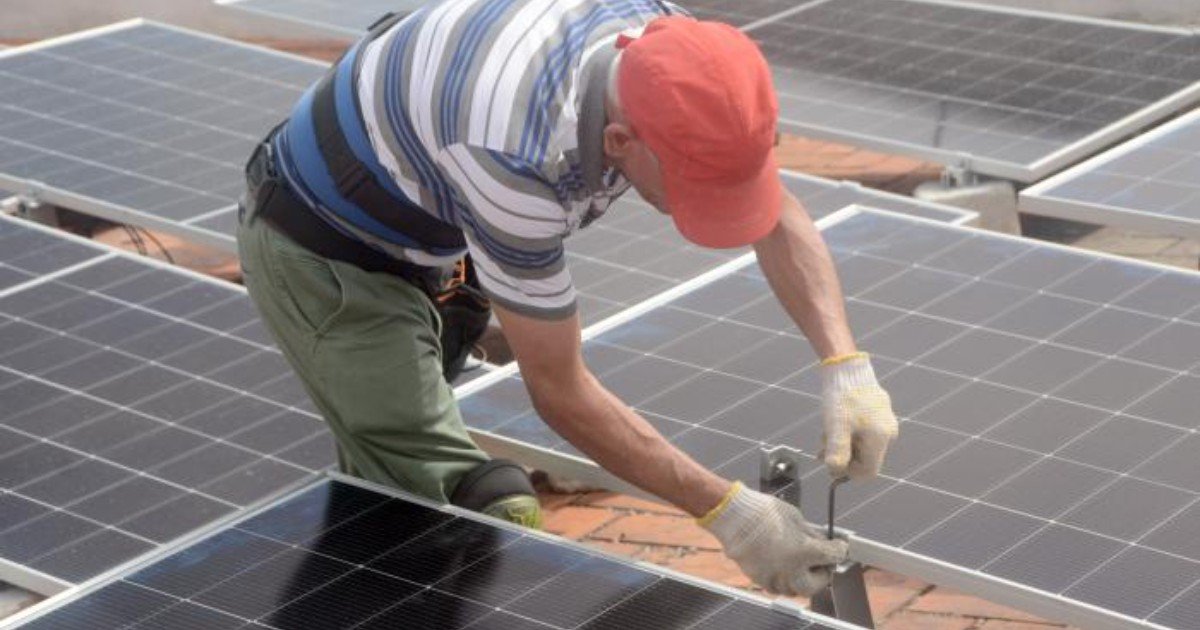
The Cuban government plans to allocate 200 megawatts (MW) of solar photovoltaic generation solely for water pumping in Havana, aiming to eliminate reliance on the National Electric System (SEN) by early 2027.
As reported by the official newspaper Granma, this initiative aims to mitigate the energy vulnerability of the capital's hydraulic system, where power outages directly impact wells, pumping stations, and boosters, leading to a severe supply crisis.
In anticipation of the solar parks scheduled for next year, authorities will turn to distributed generation as an immediate fix. The plan involves deploying generator sets to initially support 29 selected supply sources and boosters.
Approximately 70 facilities have been inspected thus far to determine the energy alternatives needed and the infrastructure required to maintain pumping during SEN disruptions.
Miguel Díaz-Canel highlighted that this would be a short-term solution, with the primary focus for 2027 being renewable energy sources.
"We plan to have 200 megawatts of photovoltaic parks dedicated solely to the water pumping system," stated the leader on Radio Rebelde's program, Criterio Compartido.
The project will also include solar complexes and energy storage systems to ensure that hydraulic installations can continue operating during outages or generation deficits.
Solar Pumping: A Strategic Move
Cuba's shift towards solar-powered pumping is not new. The country has been installing photovoltaic systems for water supply in various provinces, aiming to reduce fuel consumption and reliance on an increasingly unstable electrical grid.
For instance, in Santiago de Cuba, authorities reported as early as 2025 on using solar pumping to ease the water crisis affecting hundreds of thousands.
In July of this year, during the inauguration of a photovoltaic park with storage capabilities, it was noted that nearly 400,000 residents of the province had faced supply challenges.
Economic Incentives and Rising Challenges
The expansion of this technology has also been supported by economic incentives. The Ministry of Finance and Prices' Resolution 180/2026 continues to offer customs duty exemptions for importing photovoltaic solar systems, their components, and solar pumps, among other renewable energy-related equipment.
However, the spread of solar systems has been accompanied by a growing issue: theft and vandalism targeting panels, cables, and batteries, including equipment specifically designated for water pumping.
In September, three individuals were arrested for stealing 28 solar panels in Los Arabos, Matanzas. The equipment was intended for a water pumping system, and authorities reported recovering 21 of them.
In Holguín, the situation turned violent. In May, four individuals assaulted, gagged, and tied up the security guard of a pumping station to steal 32 solar panels powering the facility.
Two months later, four more panels were stolen from a potable water distribution point in Holguín, disrupting the system supplying residents of 18-story buildings.
Also in Holguín, the theft of 180 meters of cable left a solar-powered pumping station out of service for over two months, highlighting the vulnerability of these installations to vandalism.
In Las Tunas, repeated thefts have led authorities to experiment with an unusual identification method. In Jobabo, they began applying an invisible chemical marking gel to solar panels installed in pumping systems.
This substance can later be detected with ultraviolet light and adheres to the skin of anyone who comes into contact with the treated surfaces, aiming to facilitate the identification of potential perpetrators or handlers of stolen equipment.
Frequently Asked Questions About Solar Energy in Cuba
Why is Havana focusing on solar energy for water pumping?
The initiative aims to reduce the capital's energy vulnerability by decreasing reliance on the unstable National Electric System and ensuring a continuous water supply during outages.
What challenges has Cuba faced with solar energy installations?
Cuba has experienced issues with theft and vandalism of solar panels, cables, and batteries, which disrupts the functionality of these systems.
How is Cuba addressing the theft of solar energy equipment?
Authorities are experimenting with using invisible chemical marking gels on solar panels to help identify individuals who come into contact with stolen equipment.