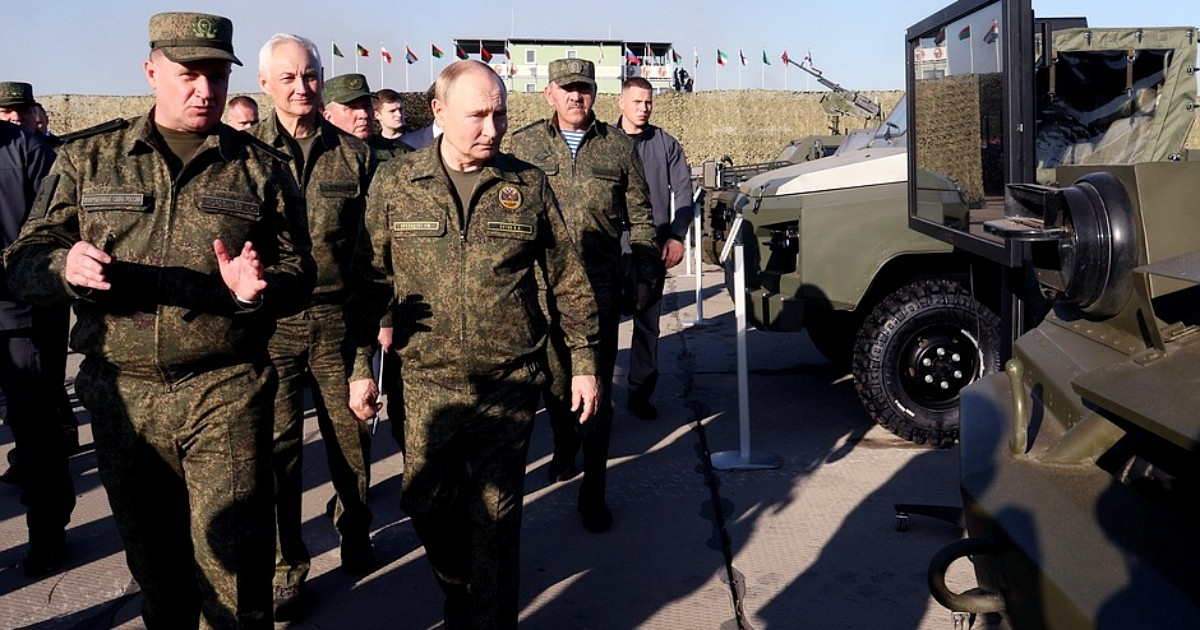
On Wednesday, Vladimir Putin officially opened the ninth session of the State Duma—the lower house of the Russian Parliament—by strongly advocating for the continuation of the war against Ukraine. He urged the newly elected deputies to dedicate their full efforts towards achieving military success.
"You are called upon to pay special attention to matters of national importance, such as strengthening the country's defense and doing everything for our victory," the leader declared from the parliamentary tribune, according to EFE.
This inaugural session comes just ten days after legislative elections held from September 18 to 20, in which the ruling party, United Russia, secured between 349 and 355 of the 450 seats, ensuring a constitutional majority.
The elections were condemned as fraudulent by international observers and opposition figures, who pointed out the lack of genuine competition and numerous irregularities, as reported by Infobae.
Putin had framed these elections as implicit support for the ongoing invasion and has now transferred this supposed popular mandate to the new chamber, despite the immense strain the war places on Russia.
In human terms, the numbers are staggering. The Ukrainian General Staff reported over 1.5 million Russian casualties—including dead, wounded, missing, and captured—by September 11, with British intelligence confirming that Russia had exceeded half a million soldiers killed in action.
A journalistic investigation identified at least 258,000 Russian soldiers who have died, with names and details documented, representing only individually verified cases.
In July alone, Russia recorded 42,860 casualties in a single month—the highest monthly toll since the invasion began in February 2022.
On Tuesday, Ukrainian President Volodymyr Zelensky disclosed that Russia had initiated a new covert mobilization following the elections, indicating the Kremlin's urgent need to replenish its forces.
Economically, the situation is equally dire. According to an analysis by El País, Russian spending on defense, security, and intelligence now accounts for nearly half of the total public budget, with a 30% increase in the first half of 2026 alone.
The revised fiscal deficit for this year is projected at 7.3 trillion rubles, equivalent to 3.2% of the GDP, while the Russian Central Bank lowered its growth forecast to between 0% and 1%, with inflation expected to range from 6% to 7%.
Meanwhile, Ukraine has systematically targeted Russian energy infrastructure, attacking 24 of the country's 34 major refineries between January and July, disabling over 45% of refining capacity.
On September 20—the same day as the final day of Russian elections—a massive drone attack completely halted the Kapotnia refinery in Moscow, the capital's largest.
Russian oil revenues plummeted by 45.4% year-on-year in the first quarter of 2026, and the nation's sovereign wealth fund dropped from 6.5% to 1.8% of GDP since the invasion began.
Throughout 2026, Putin has repeatedly dismissed any proposals for a ceasefire or direct negotiations with Ukraine, choosing instead to prolong a war that, according to the data, is mortgaging Russia's economic and human future.
Impact of the Ongoing Russia-Ukraine Conflict
What is the current status of Russian military casualties in the Ukraine conflict?
As of September 11, the Ukrainian General Staff reported over 1.5 million Russian casualties, including dead, wounded, missing, and captured. British intelligence has confirmed that Russia has exceeded half a million soldiers killed in action.
How has the war affected Russia's economy?
The war has severely impacted Russia's economy, with defense spending now accounting for nearly half of the total public budget. The fiscal deficit is projected at 7.3 trillion rubles, equivalent to 3.2% of GDP, and inflation is expected to range from 6% to 7%.
What actions has Ukraine taken against Russian infrastructure?
Ukraine has systematically targeted Russian energy infrastructure, attacking 24 of the country's 34 major refineries between January and July, rendering over 45% of refining capacity inoperative.