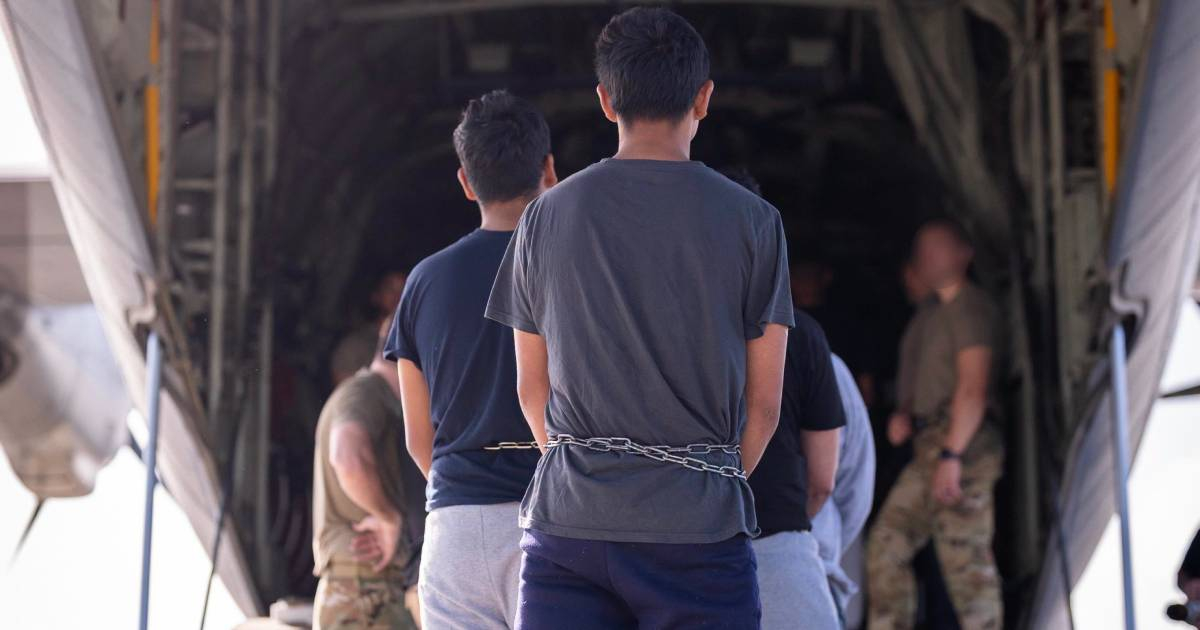
The United States Supreme Court granted permission on Tuesday for President Donald Trump's administration to proceed, at least temporarily, with the expedited deportation of immigrants to nations other than their own. This decision comes as the justices evaluate the legality of a policy that has already impacted thousands, including Cuban nationals.
According to the Associated Press, the ruling puts a hold on lower court decisions that required giving immigrants a fair chance to contest deportation before being sent to countries with which they have no ties. The Supreme Court has also agreed to review the case, Department of Homeland Security et al. v. D.V.D. et al., with arguments set for December. Therefore, Tuesday's ruling doesn't definitively deem the policy legal but allows the government to maintain it during ongoing litigation.
Legal Challenges and Implications
The dispute reached the highest court again after the Trump administration sought emergency intervention last week. The government claimed that restrictions imposed by lower courts had forced the cancellation of a deportation flight carrying approximately 70 individuals to three countries. Key issues for the justices to resolve include whether the courts had authority to intervene in the migrants' claims and if the guidelines used for deportations to third countries comply with federal law, due process, and protections under the Convention Against Torture.
Impact on Cuban Immigrants
This decision holds particular significance for Cuban immigrants. The Trump administration appealed to the Supreme Court after the First Circuit Court of Appeals challenged the procedure for these expulsions, arguing that migrants should receive prior notice and a meaningful opportunity to contest the destination country. Cubans have already been among those sent by the U.S. to nations where they had no previous connections.
In July 2025, the Supreme Court permitted the transfer of a group of immigrants, including two Cuban nationals, to South Sudan. Subsequently, other Cubans were relocated to African countries like Eswatini. Juan Carlos Font Agüero, one of those deported, reported from the Matsapha Maximum Security Correctional Center that he had been detained for months without charges or a release date following his deportation from the United States in November 2025.
Most recently, four Cubans were among the first immigrants deported by the U.S. to Guyana under an agreement allowing the South American country to receive nationals from third countries. The group, which included four Cubans and two Afghans, arrived on September 4, with records indicating none had criminal backgrounds.
Judicial Decisions and Ongoing Controversies
The policy has also sparked judicial rulings against the government. This month, a federal judge in Colorado ordered the return of Bryan Omar Sánchez, a Honduran deported to the Central African Republic despite having a pending asylum application and protection under the Convention Against Torture.
Based on figures reported by the Associated Press, the third-country deportation policy has been used for approximately 25,000 removals to over two dozen countries, though most of these expulsions have been to Mexico. The legal battle, however, is far from over. With Tuesday's decision, the Trump administration can continue deportations to third countries for now, while the Supreme Court prepares to hear arguments on the procedure's legality in December.
Frequently Asked Questions About U.S. Deportation Policies
What is the impact of the Supreme Court's decision on deportations?
The decision allows the Trump administration to continue deporting immigrants to third countries temporarily, pending a final ruling on the policy's legality.
How does this policy affect Cuban immigrants?
The policy has significant implications for Cuban immigrants, as many have been deported to countries where they have no previous ties, often without notice or a chance to contest the decision.
What are the legal challenges surrounding this deportation policy?
Legal challenges focus on whether the policy complies with federal law, due process, and protections under the Convention Against Torture, as well as the authority of courts to intervene in deportation claims.