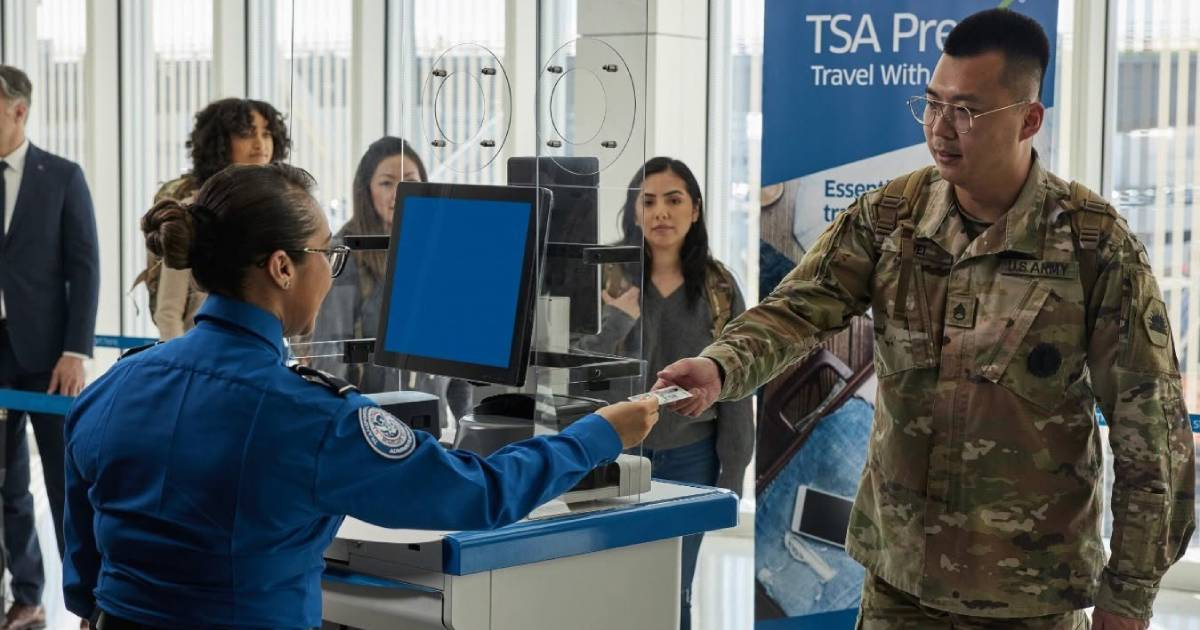
The Transportation Security Administration (TSA) has initiated a policy change requiring agents to stand while checking identification and travel documents at airport security checkpoints across the United States. This new protocol involves the removal of chairs from these stations.
This decision was confirmed on Tuesday by the agency to Fox News as it started being implemented in airports nationwide. The union representing TSA workers also acknowledged the change to CNN, indicating that the chair removal process is underway in most commercial airports.
The TSA explained to Fox News that the goal is to enhance vigilance and improve passenger interactions, as these document-checking agents are typically the first security personnel travelers encounter.
"This adjustment, aimed at providing a more welcoming environment, strengthens both our security posture and our commitment to hospitality by having these officers standing and alert," the agency stated in a release shared by Fox News correspondent Bill Melugin.
The policy does not mandate that agents stand for their entire shift, however. According to the TSA's explanation to Fox News, officers work in rotations. For about 15 minutes, they check IDs and assist passengers through security, a function now to be performed standing. Subsequently, they can spend around 30 minutes seated at the X-ray machine while inspecting luggage.
The decision has drawn criticism from worker representatives. The American Federation of Government Employees (AFGE) TSA Council 100 opposed the removal of chairs, arguing that they are essential ergonomic and safety supports for employees who spend significant parts of their shifts standing or walking on hard surfaces.
The union further stated that workers began learning of the change on Friday without any formal notice to the organization or its local chapters.
The controversy has also reached Congress, where House Homeland Security Committee Democrats have publicly criticized the decision and called for the chairs to be reinstated for workers.
The TSA defended the new policy, linking the Democratic criticisms to past disputes over federal government shutdowns, turning this administrative decision into a fresh point of political contention.
This change comes as the TSA develops an initiative called Horizon 25, spearheaded by its administrator, David Cummins, aiming to introduce airport security changes, expand TSA PreCheck, incorporate new technologies, and enhance the passenger experience. CNN noted that it remains unclear if the chair removal is directly part of this program.
Currently, there are no changes reported regarding the documents passengers must present or the requirements to pass security screenings. This new policy specifically affects how agents conduct ID and travel document checks.
Understanding TSA's New Standing Policy
What is the main reason for TSA's new standing policy?
The TSA introduced the standing policy to improve security vigilance and enhance interactions with passengers, as agents checking documents are typically the first security personnel travelers encounter.
How long are TSA agents required to stand during their shifts?
TSA agents are not required to stand for their entire shifts. They work in rotations, standing for approximately 15 minutes while checking IDs and assisting passengers, then sitting for about 30 minutes at the X-ray machine.
What has been the response from TSA workers and their representatives?
The response has been critical, with the American Federation of Government Employees TSA Council 100 opposing the chair removal, citing the importance of ergonomic support for workers standing or walking on hard surfaces.