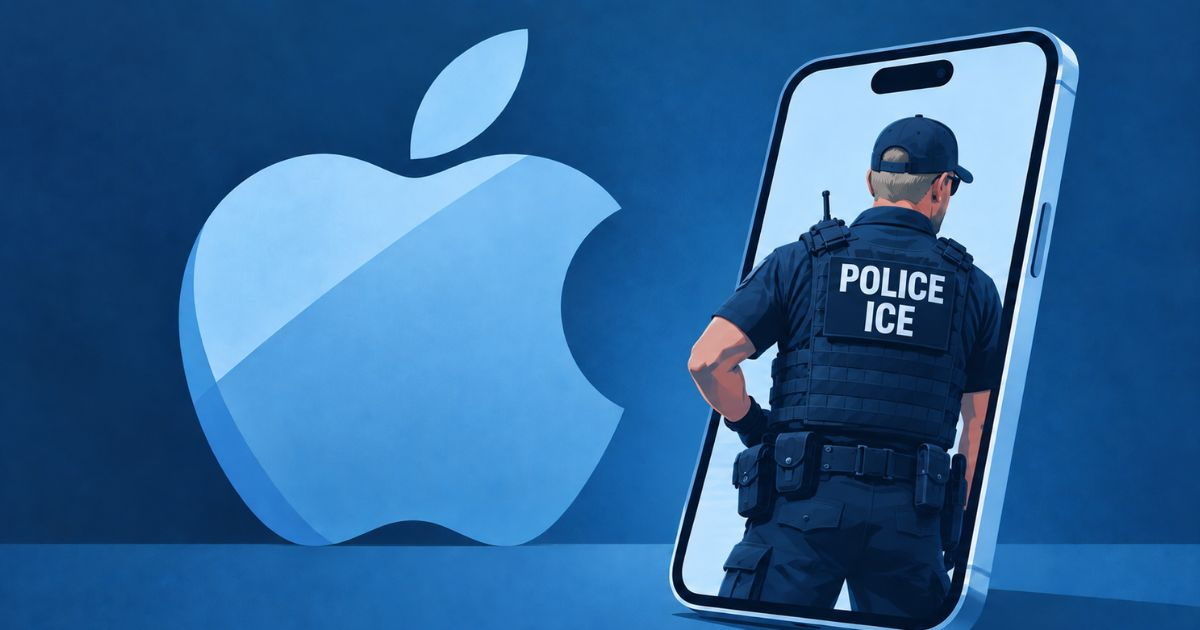
Apple is under renewed scrutiny from the U.S. Congress over its choice to remove ICEBlock and similar apps from the App Store that enabled users to report sightings of Immigration and Customs Enforcement (ICE) agents. This decision, enacted in 2025, followed government warnings regarding potential threats to federal officers.
The company outlined its rationale in a letter sent in July to Maryland's Democratic Representative Jamie Raskin, as reported by CNN on Tuesday. Raskin, the leading Democrat on the House Judiciary Committee, has since challenged Apple's justification and has requested an independent review of the decision.
According to Apple, ICEBlock was initially approved for the App Store in April 2025 after its developer, Joshua Aaron, addressed certain privacy concerns. The app functioned by allowing users to mark locations on a map where ICE agents were spotted, sending alerts to others within a roughly five-mile radius.
The controversy intensified following a September 24, 2025, shooting at an ICE facility in Dallas, Texas. During the incident, a 29-year-old gunman opened fire, killing two detainees, injuring another, and subsequently taking his own life.
In Apple's letter cited by CNN, the then Attorney General, Pam Bondi, communicated "serious concerns" about ICEBlock potentially posing a danger to federal officers. Administration officials also pointed out that the assailant had searched for apps related to tracking ICE agents.
Apple maintained that a subsequent evaluation confirmed these apps could accurately disclose the locations of immigration officers and nearby individuals, such as protesters or detainees, presenting a "significant risk of harm." The company stressed that it does not take app removals lightly but acts when there are severe safety concerns.
Raskin disputed this explanation, noting in his response that there was no evidence linking ICEBlock to the Dallas attack and arguing that the assailant did not require a specialized app to locate a fixed government building.
Furthermore, Raskin highlighted that other navigation apps available on Apple's own store allow real-time sharing of police presence. He has requested a comprehensive list of apps removed following Department of Justice actions and called for an independent review of these decisions.
To Raskin, the issue raises First Amendment questions and whether a tech company can remove tools used to observe and report on government actions at the government's behest. Apple, however, contends that its decision was based on safety protocols and the potential risks identified to officers and others.
This conflict began months earlier, as ICEBlock gained popularity in July 2025 as a tool for warning of nearby immigration agents. Subsequently, both Apple and Google removed apps offering such alerts after federal officials claimed they could endanger agents' safety.
In December, Aaron filed a lawsuit against Trump administration officials in federal court in Washington, D.C., alleging the government abused its power by pressuring Apple and infringing on his free speech rights. The officials named in the lawsuit have denied these accusations and sought dismissal of the case.
Despite the removal of these platforms, the development of tools to assist migrant communities continues. Another app, designed to help individuals detained by ICE and provide information to their families, was introduced in December 2025.
The ongoing tension between major tech companies and immigration operations continues to fuel debate in the United States. Stay updated on this and other related issues in our U.S. Immigration section.
Apple's App Removal and its Implications
Why did Apple remove ICEBlock from the App Store?
Apple removed ICEBlock following government warnings that such apps could pose a risk to federal officers by disclosing their locations, potentially endangering them.
What was Jamie Raskin's response to Apple's decision?
Jamie Raskin questioned Apple's justification for removing the app, pointing out a lack of evidence linking ICEBlock to any attacks and requesting an independent review.
What are the broader implications of this controversy?
The case raises important questions about the First Amendment and the extent to which tech companies can be influenced by government requests to remove tools used for monitoring authorities.