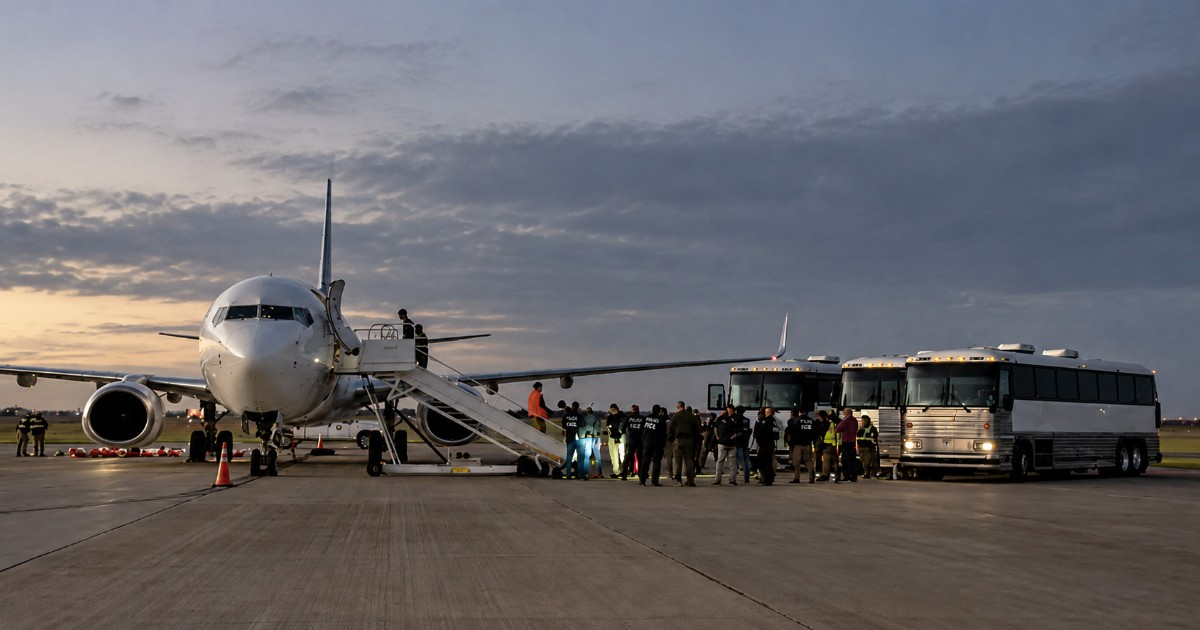
The United States has relocated at least 23,000 migrants from third countries to 29 different nations and territories. This policy, described by independent human rights experts, could potentially expose migrants and asylum seekers to torture, persecution, and other severe violations.
Concerns Over U.S. Migration Outsourcing
This alarming figure was disclosed by UN News on Monday, highlighting a statement from independent human rights experts. The statement warns that Washington's so-called "migration outsourcing" policy now involves more than 35 countries and territories.
"The harms inflicted by this U.S. government scheme are no longer theoretical," the experts noted, pointing to risks such as torture, forced disappearances, and violations of the non-refoulement principle, which prohibits sending individuals to countries where they could face significant harm.
The experts emphasized that this policy affects both asylum seekers and migrants at various stages of their migration processes. They criticized the lack of transparency in many of these agreements.
Human Rights and Legal Concerns
Risks associated with this policy include arbitrary or incommunicado detention, lack of legal assistance, denial of due process, family separation, human trafficking, discrimination, and restricted access to housing, healthcare, and essential services.
Particularly vulnerable groups, such as children, women, people with disabilities, victims of trafficking, LGBT individuals, human rights defenders, and stateless persons, are of special concern to the experts.
Another critical issue is that some agreements allow the receiving country to only temporarily host migrants, who may subsequently be sent to a third state. This creates a potential chain of expulsions that could ultimately return individuals to the countries from which they fled.
"States cannot contractually absolve themselves of their international legal obligations," the experts declared.
Call for Action from Human Rights Advocates
The experts urged the countries involved to suspend these agreements, re-establish fair and effective asylum procedures, and ensure independent oversight and accountability.
The practice of transferring migrants to third countries has become one of the most contentious aspects of Donald Trump's administration's immigration policy by 2026.
In April, it was revealed that over 13,000 migrants legally residing in the United States, awaiting decisions on their asylum applications, had been ordered to be sent to third countries, according to Mobile Pathways data. These were deportation orders, not yet executed transfers.
Impact on Cuban Nationals
This policy has also affected Cuban nationals. Human Rights Watch documented that between January 20, 2025, and March 9, 2026, the U.S. deported 18,453 individuals from third countries, with 12,977 sent to Mexico. Cubans made up the largest group, totaling 4,353 people.
In August, four Cubans refused to disembark in Liberia during the first flight executed under a deportation agreement between Washington and the African nation. The group, which also included a Brazilian and a Cameroonian, was later transferred to Equatorial Guinea.
Days later, four Cubans and two Afghan nationals arrived in Guyana, marking the first group sent under another third-country deportation agreement. According to reports, none had criminal records, and their stay was to be temporary.
The policy is also facing legal challenges in U.S. courts. On September 18, federal judge Regina M. Rodriguez ordered the Trump administration to return Bryan Omar Sánchez, a Honduran, to the U.S. after he had been sent to the Central African Republic on July 29, despite having a pending asylum application and protection under the Convention Against Torture.
Independent experts stressed that both the transferring and receiving states remain bound by international law, and bilateral agreements do not waive these responsibilities.
"Human rights must be at the forefront of migration governance and should not be sacrificed for deterrence," they concluded.
The U.S. government's immigration policies continue to stir international debate. Stay updated with all developments in our U.S. Immigration section.
U.S. Immigration Policy and Human Rights Concerns
What is the non-refoulement principle?
The non-refoulement principle prohibits sending individuals to a country where they may face persecution, torture, or other severe human rights violations.
How are migrants affected by the U.S. migration outsourcing policy?
Migrants may face risks such as torture, forced disappearances, arbitrary detention, and lack of access to essential services due to this policy.
Why are human rights advocates concerned about the U.S. policy?
Advocates are concerned because the policy may violate international human rights obligations and expose vulnerable groups to significant risks.