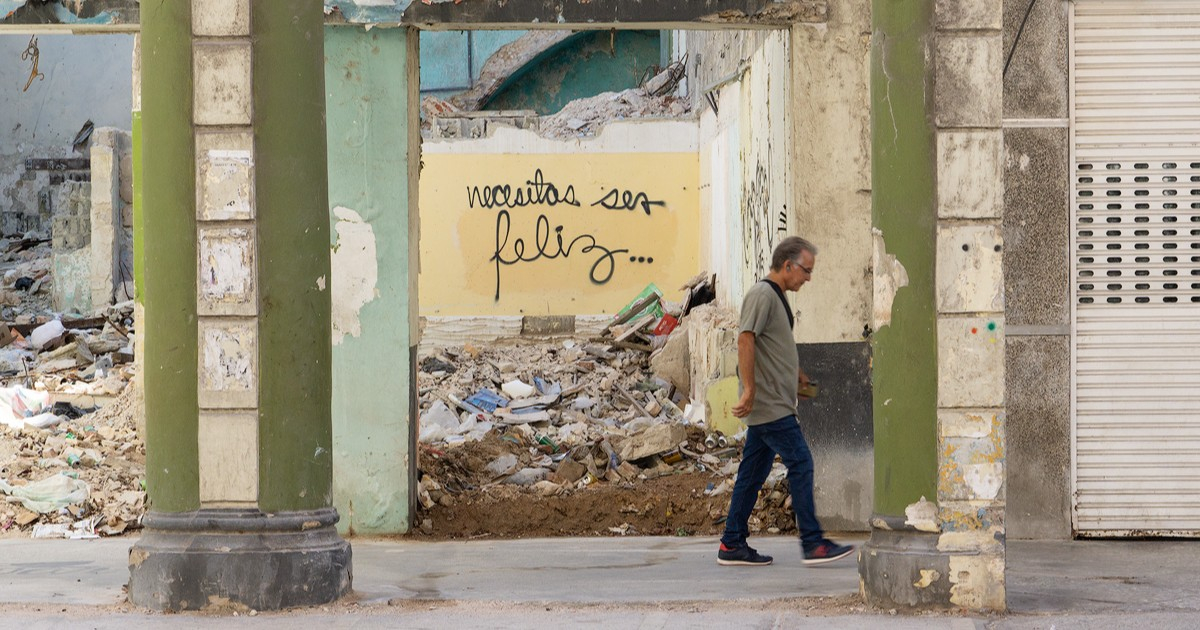
Cuban nun Sor Nadieska Almeida Miguel has coined the term "fallen hands syndrome" to describe the exhaustion, frustration, and resignation felt by many Cubans who have endured years of shortages, challenges accessing basic services, and a lack of hope for change.
This reflection was shared on Facebook by Father Alberto Reyes on Monday. Almeida, who leads the Daughters of Charity in Cuba, clarified that the term is not a medical diagnosis or study but rather a way someone described their own fatigue to her.
"Obtaining even the basics has become increasingly difficult, consuming all our energy and leading us to a difficult-to-digest resignation," Almeida wrote.
According to her account, someone defined this experience as "fallen hands syndrome": "It's not about a physical illness; it's about a weariness of reality that makes us say: I give up, I won't try anymore."
Almeida admitted she occasionally relates to this description due to the "despair," "frustration," and "weariness" accumulated after years of advocating for political and social changes.
"We've been speaking out for a long time, and [...] we are not a priority for this government," she stated.
The nun placed this sense of exhaustion amidst a decline in living conditions, which, she denounced, includes poor sanitation, difficulties in obtaining medicines and clean water, scarcity of hygiene products, and inadequate nutrition.
Almeida also addressed the epidemiological situation, stating that dengue, hepatitis, and other diseases are impacting the population.
Her denunciation aligns with recent acknowledgments by the Ministry of Public Health of an increase in diarrheal diseases, hepatitis, respiratory infections, and arboviruses, amid environmental sanitation issues, water treatment, and waste collection problems.
She cited the Parish of San Judas Tadeo and San Nicolás de Bari in Central Havana, where accumulated garbage has led to repeated fires this year, as an example.
However, Almeida believes the problem goes beyond this specific case. "Pain continues to gain ground," she noted, describing a growing sense of helplessness and fear among those who feel that publicly expressing dissent could have consequences.
"Protesting is a risk because fear grips us, and sadly, we are moving toward paralysis," she wrote, asserting that Cubans have been living "with fewer and fewer possibilities for a dignified life."
Her reflection then draws on a biblical passage about Moses, suggesting that those who feel drained need the support of others to carry on.
Almeida especially urged people to support those in desperate situations and families who cannot find alternatives to their struggles.
In her message on Monday, she called on her fellow Cubans not to be overcome by fear, advocating that everyone should claim their rights within their own circumstances. She urged support for the youth and those who have lost hope.
"Even when we feel our strength waning, let us choose good again and again," she concluded in a reflection that combined her criticism of the country's situation with a religious call to restore faith and support each other.
This message maintains a critical line that Almeida has publicly expressed on other occasions.
In August, she stated that Cubans were "dragging existence" and urged not to lose hope for change in the country.
Two months earlier, following the approval of 176 economic measures announced by the authorities, she questioned whether the reforms could address the structural problems she identifies in the Cuban system and called for more significant changes.
Understanding "Fallen Hands Syndrome" in Cuba
What does "fallen hands syndrome" mean?
"Fallen hands syndrome" is a term coined by Sor Nadieska Almeida to describe the exhaustion and resignation felt by many Cubans due to prolonged hardships and lack of change in the country.
How has the Cuban government responded to these concerns?
The Cuban government has recently acknowledged an increase in various diseases and issues related to sanitation and resources, but systemic changes addressing these underlying problems remain to be seen.