The U.S. Department of the Treasury announced updates to three significant licenses on Monday, governing operations in critical sectors within Venezuela, including oil, gas, petrochemicals, and electricity. Notably, Cuba remains excluded from these authorized transactions under the updated regulations.
Issued by the Office of Foreign Assets Control (OFAC), the new General Licenses 46E, 48D, and 49B, dated September 28, 2026, replace older versions of U.S. authorizations related to Venezuela.
Expanded Permissions with Notable Restrictions
The General License 46E allows specific U.S. entities to engage in activities related to Venezuelan-origin oil and petrochemicals, including exportation, re-exportation, sales, storage, marketing, purchase, delivery, transportation, and refining.
However, this authorization explicitly excludes transactions involving individuals or entities situated in, or governed by, the laws of Cuba, Russia, Iran, or North Korea, as well as those controlled directly or indirectly by them or through joint ventures.
Regarding China, the 46E introduces a distinct restriction targeting certain entities in Venezuela or the U.S. that are controlled by or participate in joint ventures with Chinese entities.
Technology and Services for Energy Sectors
On a different note, General License 48D authorizes the provision from the U.S., or by U.S. persons, of goods, technology, software, and services essential for the exploration, development, or production of oil, gas, and petrochemical products in Venezuela. This license also covers the generation, transmission, storage, and distribution of electricity.
OFAC's permissions include payment processing and certain logistics and transportation services such as vessel chartering, maritime insurance, and port services. Maintenance, repair, and refurbishment of equipment used in energy operations are also covered. However, it bans transactions involving entities in Cuba, Russia, Iran, North Korea, and China, as well as certain controlled entities or joint ventures.
Moreover, it prohibits the creation of new joint ventures for these sectors or operations related to the export or re-export of diluents to Venezuela. The 48D replaces the 48C dated August 27, 2026.
Conditional New Investment Opportunities
The third update, General License 49B, allows for negotiating and entering into contingent contracts for new investments in Venezuela's oil, gas, petrochemical, and electricity industries. This includes new exploration, development, and production projects, expansion of existing operations, and the formation of new joint ventures.
Preparatory activities such as commercial, legal, technical, environmental, and security assessments are also permitted. However, execution of these contracts requires separate OFAC authorization.
Cuba is once again excluded, with the 49B prohibiting transactions involving Cuban, Russian, Iranian, North Korean, or Chinese entities, and joint ventures under their control. This replaces the 49A, effective since March 13.
Cuba's Ongoing Exclusion
Though the newly issued licenses continue to exclude Cuba from authorized operations, this is not a new development. Previous versions of these licenses already contained restrictions involving Cuba. For instance, earlier OFAC documents related to license 46 excluded transactions with Cuban entities.
Similarly, a March version of license 48 explicitly listed Cuba among the excluded jurisdictions. OFAC reiterated in August that these licenses' restrictions apply to operations involving entities from Cuba, Russia, Iran, North Korea, and China.
These measures do not create a new general ban on energy relations between Cuba and Venezuela. Instead, they are part of the U.S. sanctions regime on Venezuela, deliberately keeping Cuban actors outside these exemptions.
Nonetheless, there remains an alternative route for specific cases involving Cuba: OFAC has suggested a favorable policy in evaluating specific license requests for the resale of Venezuelan oil for use in Cuba, provided U.S. conditions are met.
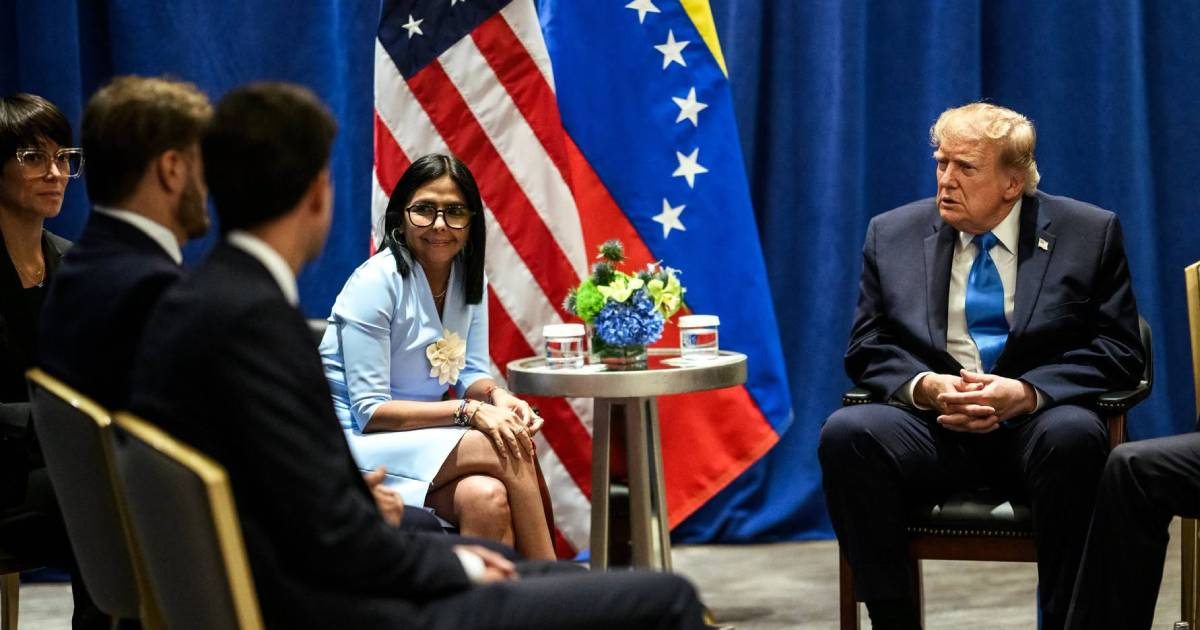
The license update follows closely on the heels of a meeting between President Donald Trump and Venezuela's interim President Delcy Rodríguez in New York, on the sidelines of the UN General Assembly. Rodríguez described the meeting as "historic," highlighting discussions on strategic cooperation in energy, mining, and security. Trump later emphasized the lucrative oil cooperation between the two nations, noting Venezuela's significant revenue influx from U.S. companies.
Frequently Asked Questions about U.S. License Updates in Venezuela
Why is Cuba excluded from these U.S. licenses?
Cuba is excluded due to longstanding U.S. sanctions and policies that restrict transactions involving Cuban entities, reflecting broader geopolitical tensions.
What sectors are impacted by the new U.S. licenses for Venezuela?
The updated licenses impact the oil, gas, petrochemical, and electricity sectors, allowing for specific operations while enforcing restrictions on entities from certain countries.
Can U.S. companies invest in new energy projects in Venezuela?
Yes, but while the licenses allow for negotiating and entering contracts for new investments, actual execution requires separate OFAC authorization.