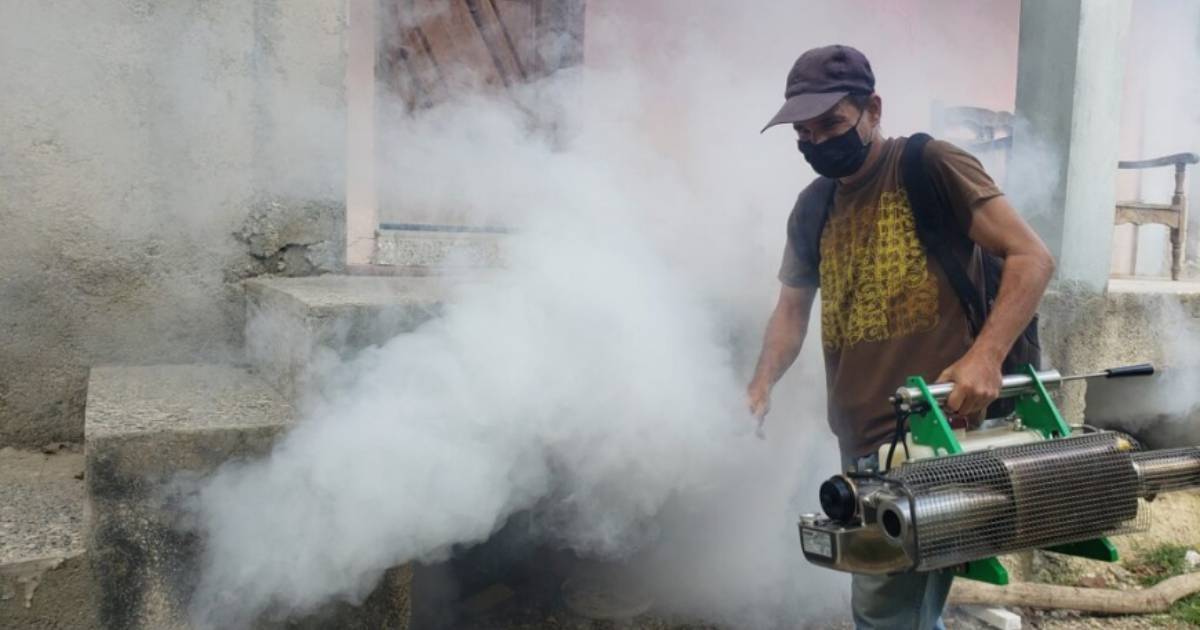
Santiago de Cuba is grappling with significant mosquito infestations, particularly of the Aedes aegypti species, as three municipalities report ongoing transmission. However, efforts to conduct essential fumigations are hampered by limited fuel availability.
Dr. Yaimara Gutiérrez de la Cruz, director of the Provincial Center of Hygiene, Epidemiology, and Microbiology, highlighted on Monday in the official newspaper Sierra Maestra that the province concluded epidemiological week 38 with persistent arboviral risk indicators.
Impact of Fuel Shortages on Mosquito Control
"Three municipalities continue to report transmission: Santiago de Cuba, Palma Soriano, and Contramaestre. Although the risk of illness has slightly decreased compared to the previous week, the infestation rate remains high," Gutiérrez explained.
In the Segundo Frente area, there has been a slight increase in cases of unspecified febrile syndrome, as reported by the official.
A major challenge in combating the mosquito proliferation is the ongoing fuel shortage. Gutiérrez acknowledged that adulticide treatments—fumigations aimed at eliminating adult mosquitoes—must be increased given the current infestation levels. However, she noted that these actions depend on the fuel availability in the municipalities.
Historical Context and Current Challenges
Back in April 2026, provincial authorities admitted to a deteriorating hygienic-epidemiological situation, with Aedes aegypti indices exceeding the average of the previous five years. At that time, they also faced challenges in fumigating and controlling breeding sites due to fuel scarcity.
The alert in Santiago de Cuba arises amid a challenging epidemiological situation across the country. Cuba has reported over 7,100 dengue cases in 2026, according to data from the Global Dengue Observatory at the London School of Hygiene & Tropical Medicine, far exceeding expected levels for this time of year.
Alternative Measures and Community Involvement
While Santiago struggles with fumigation limitations, Holguín recently received 50 fumigation units donated by the Pan American Health Organization. These devices use water instead of oil to prepare the emulsions needed for vector control.
Given the high prevalence of mosquitoes, Gutiérrez urged residents to inspect and clean containers that collect water, as well as maintain clean yards, rooftops, and streets to reduce breeding sites.
The specialist also warned about the approaching period of heightened respiratory illnesses and advised the public to resume practices from the Covid-19 pandemic, such as wearing masks, frequent handwashing, and avoiding large gatherings.
Addressing Mosquito Infestations in Santiago de Cuba
What is the current mosquito situation in Santiago de Cuba?
Santiago de Cuba is experiencing high levels of Aedes aegypti mosquito infestation, with three municipalities reporting active transmission.
How is the fuel shortage affecting mosquito control efforts?
The fuel shortage is limiting the ability to conduct necessary fumigations aimed at controlling the adult mosquito population in Santiago de Cuba.
What measures are being recommended to residents?
Residents are encouraged to inspect and clean water-collecting containers and maintain clean environments to reduce mosquito breeding sites.