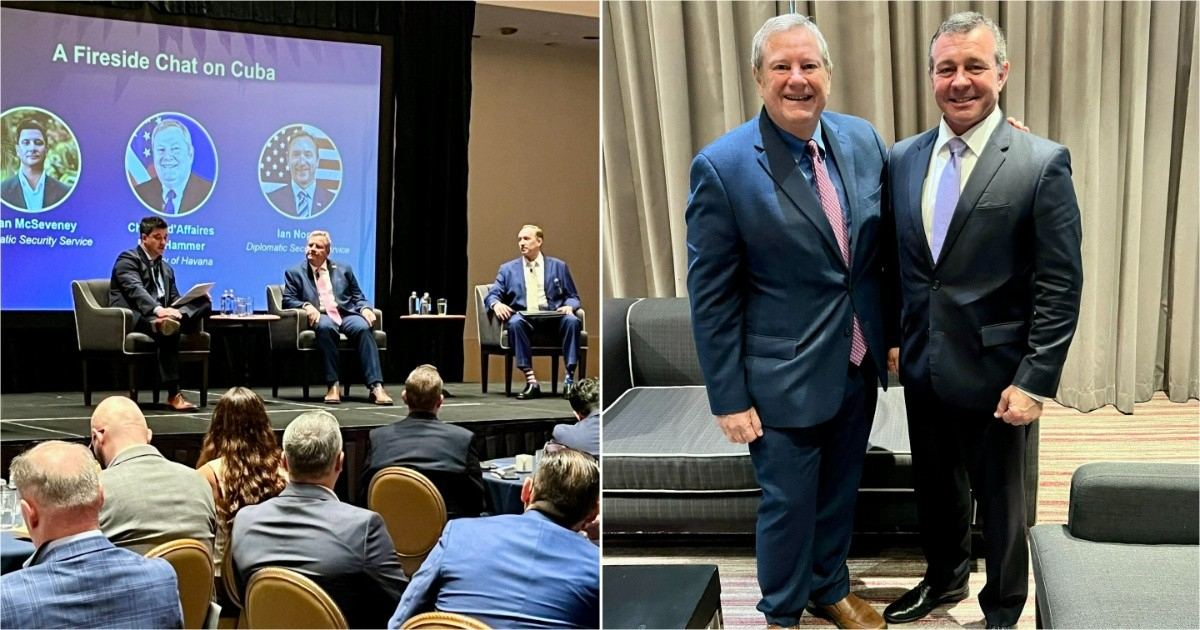
Mike Hammer, the Chief of Mission at the U.S. Embassy in Cuba, recently journeyed to Mexico City to attend the OSAC Americas Conference, a State Department forum focused on regional security and investment. His trip returned with a clear message: the desire for change in Cuba is resonating beyond the confines of the island.
The U.S. diplomatic mission in Havana announced on X that during Hammer's visit to the Mexican capital, there was "significant interest in the situation in Cuba and expectations for change."
In addition to his conference participation, Hammer engaged in discussions with Todd Wilcox, the Deputy Assistant Secretary for Diplomatic Security, and Ron Johnson, the U.S. Ambassador to Mexico. He took part in a panel discussion titled "A Fireside Chat on Cuba" alongside members of the Diplomatic Security Service, underscoring that Cuba remains a priority in Washington's regional security agenda.
This visit comes amid Hammer's increased diplomatic activities in Cuba. Just two days prior to his trip to Mexico, he met with citizens and activists in Santa Clara who are committed to envisioning a new future for the island.
In September, Hammer also oversaw the distribution of humanitarian aid to vulnerable households in Villa Clara and met with representatives of Caritas Cuba. Mid-month, he had a significant meeting with Guillermo "Coco" Fariñas, a highly regarded figure in the Cuban opposition movement.
Such close diplomatic engagements have upset the regime, which organized a campaign against Hammer during his visits to Villa Clara.
The regional context amplifies the expectations brewing in Mexico. Earlier this year, Mexican President Claudia Sheinbaum offered to mediate between Washington and Havana. However, the Trump administration's pressure has curtailed Mexico City's flexibility, resulting in reduced oil shipments to Cuba, down to just 900 barrels per day in the first quarter of 2026.
On the analytical front, Foreign Affairs published a study in September entitled "Cuba's Point of No Return" by Will Freeman of the Council on Foreign Relations, warning of the risk of irreversible state and economic collapse on the island.
Back in May, Hammer attended a pivotal meeting with Marco Rubio and the Southern Command to discuss the Cuban situation. In June, the opposition in Madrid reaffirmed a four-phase democratic transition plan: Liberation, Stabilization, Reconstruction, and Democratization.
Key Insights on Cuba's Potential Changes
What is the significance of Mike Hammer’s visit to Mexico?
Mike Hammer's visit highlights the increasing interest and anticipation for change in Cuba, reflecting a broader international concern beyond the island's borders.
How has the Cuban regime responded to Hammer's diplomatic activities?
The Cuban regime has been irritated by Hammer's close diplomatic engagements, leading to a campaign against him during his visits to regions like Villa Clara.
What role has Mexico proposed in the U.S.-Cuba relations?
Mexico, led by President Claudia Sheinbaum, has offered to act as a mediator between the U.S. and Cuba, although this role has been challenged by the Trump administration's policies.
What are the potential risks facing Cuba, according to recent analyses?
Analyses, such as the study by Will Freeman, suggest that Cuba faces risks of irreversible state and economic collapse if current trends continue.