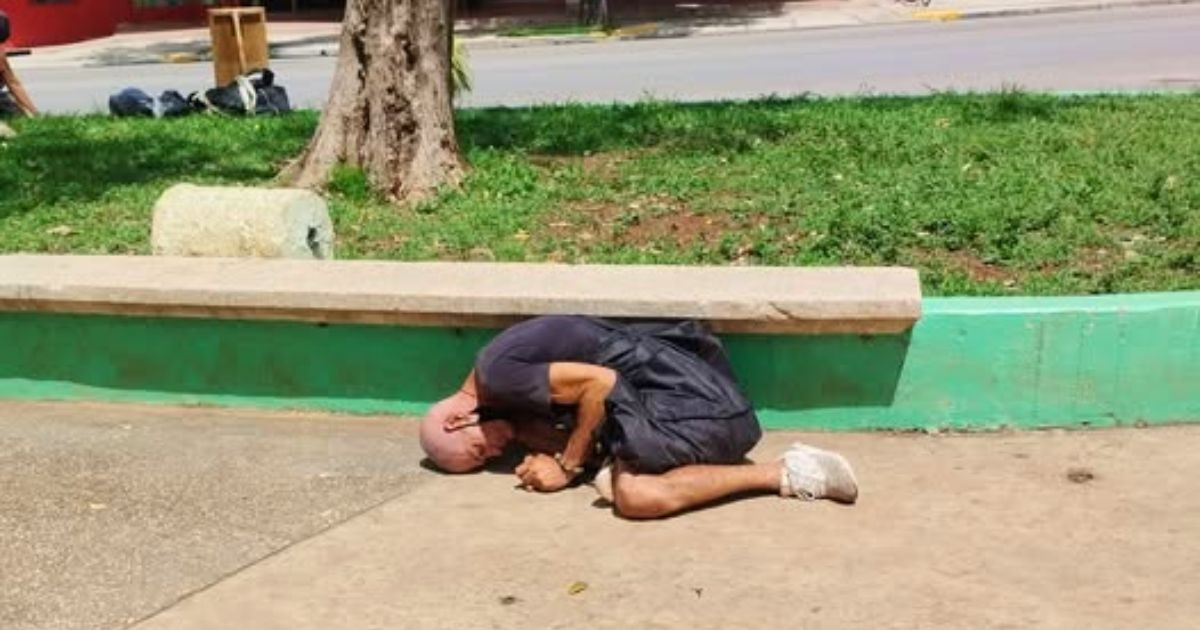
A resident of Havana sparked a social media storm on Thursday with a post that encapsulates the desperation felt by many Cubans. She shared a photograph of a person lying in a fetal position on the ground, allegedly in a park at the intersection of 23rd and 14th Streets in Vedado, seemingly under the influence of synthetic drugs.
Jarocha Reyes Vega, the author of the post, described the scene with a phrase that sums up the collective exhaustion: "To the stress, the blackouts, the water shortage, the high cost of living, and the hardships, now we add the drug epidemic... 'the little paper' or 'chemical' is gaining ground. What are the authorities doing about it? This is a problem that requires URGENT action."
The image and accompanying text provoked a flurry of outraged reactions. One user summarized the sentiment of many: "What horror, in broad daylight and in the park where children play and families stroll." Another criticized the government's inaction: "Authorities don't see this. It doesn't harm them, nor do they care." A third commenter pointed to complicity: "Unfortunately, they see and even know where it comes from and who sells it, but they turn a blind eye because they also profit from others' suffering."
Rising Concerns Over Synthetic Drug Use
The situation depicted in the post is neither new nor isolated. In Cuba, "the chemical"—a popular term for synthetic cannabinoids, also called "papelito"—is often sold in small paper fragments soaked with the substance, making it easy to hide and transport.
Cuban experts have warned that some of these cannabinoids can produce effects between 50 and 100 times stronger than THC. Their low cost makes them accessible; various sources have documented doses ranging from 150 to 300 Cuban pesos, with recent reports citing prices around 250 CUP. Consumption primarily affects teenagers and young adults, though cases have been reported in even younger children.
Statistics Highlight the Severity of the Issue
Official data, as reported by the AP, indicates that medical emergencies in Havana due to these substances nearly doubled between 2024 and 2025, rising from 467 to 886 cases. Cuban laboratories have identified at least 46 different synthetic cannabinoid variants circulating on the island. Drug-related crimes increased by 115% in 2025 compared to the previous year, according to the Cuban Citizen Audit Observatory (OCAC).
The government has responded with police operations in several provinces. This month, Interior Ministry forces dismantled a network in Centro Habana, resulting in 13 arrests, six house searches, and the seizure of cocaine and 184 strips of synthetic cannabinoids.
Addressing the Root Causes of Drug Use
Despite these efforts, citizens argue that the operations tackle symptoms rather than causes. The social crisis pushing young people toward drugs—extensive blackouts, food and medicine shortages, unemployment, and lack of prospects—remains unaddressed by the state.
Violence has also surged: murders increased by 42.9% in the first half of 2026 compared to the same period in 2025. The NGO Cubalex documented 52 homicides in August alone, marking it as the most violent month since monitoring began.
A social media user expressed the despair in the comments of the viral post: "This is a plague that's here to stay [...]. It's painful to admit, but there's no antidote for this poison—and I'm not just talking about drugs."
Frequently Asked Questions about the Drug Epidemic in Cuba
What is "the chemical" or "papelito" in Cuba?
"The chemical" or "papelito" refers to synthetic cannabinoids sold in small paper fragments that are easy to conceal and transport. These substances can have effects much stronger than THC.
What are the consequences of using synthetic cannabinoids?
Synthetic cannabinoids can cause severe health effects, including extreme intoxication and potential medical emergencies. Their low cost makes them accessible, particularly to young people.
How is the Cuban government responding to the drug crisis?
The Cuban government has conducted police operations to dismantle drug networks, resulting in several arrests and seizures. However, many citizens believe these efforts address the symptoms rather than the root causes of the crisis.