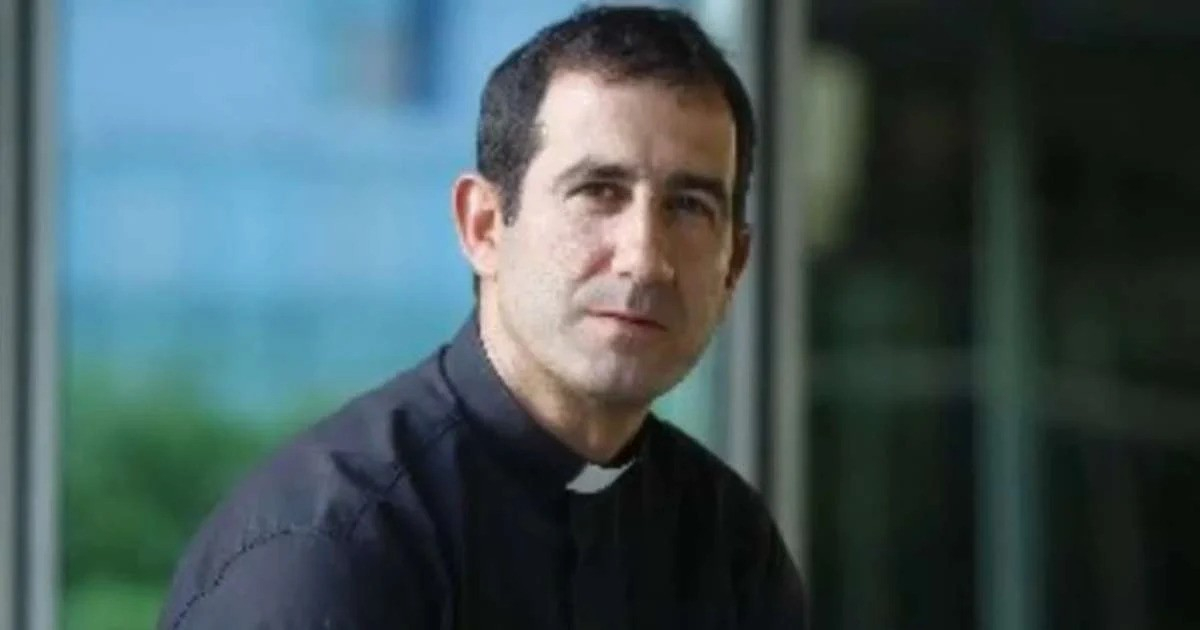
Father Alberto Reyes Pías, the parish priest of Esmeralda in Camagüey and a prominent religious figure in Cuba, shared a profound spiritual reflection on his Facebook page this Sunday. This meditation, inspired by the Gospel of Matthew's parable of the two sons (21:28-32), coincides with the 26th Sunday in Ordinary Time.
In the parable, one son initially refuses his father’s request but later repents and fulfills his duty. Using this story as a foundation, Father Reyes delved into how individuals inflict spiritual harm on themselves by labeling, giving up, or endlessly postponing necessary changes.
"Just as there are many ways to harm others, there are also numerous ways to harm ourselves, to stifle our best potential," Father Reyes wrote at the outset of his message.
Identifying Forms of Spiritual Harm
Father Reyes outlined three major ways people engage in spiritual self-sabotage.
The first is by labeling oneself as beyond change: "Unwittingly, we harm ourselves by saying ‘this is just who I am,’ ‘I can’t be fixed,’ ‘it won’t work,’ ‘it’s not worth trying,’ or ‘I don’t have the strength for this.’"
The second involves denying the need for personal transformation: "We also inflict harm when, perhaps to silence our conscience, we try to convince ourselves ‘I don’t need to change,’ ‘I’m fine as I am.’"
Thirdly, he discussed the fear of breaking the image others have of us: the anxiety that a shift in our lives might "surprise" or "disappoint" those who have always known us a certain way.
Biblical Examples and the Fear of Change
To illustrate this point, Father Reyes referenced biblical figures: "Do we really believe it was easy for Mary Magdalene and Matthew to leave their old lives and follow the Lord?" he asked, reminding us that society continued to see them as a prostitute and a tax collector, even after their transformation.
Father Reyes also addressed procrastination as a form of self-harm: the constant deferral of taking "a first step," thereby perpetually feeding "a tomorrow that never arrives because we do nothing to make it happen."
Amid these forms of paralysis, Father Reyes emphasized that divine invitation remains open, yet never coercive: "God will always ask us to go to His vineyard, to rise above mediocrity, to bring out the best in ourselves, but He will never force our freedom."
"And to be true to our yes, and to change the no we once gave, it’s best not to wait until tomorrow, for every journey begins with a single step," Father Reyes concluded in his Sunday reflection.
Father Reyes: A Voice of Resilience
This reflection is part of his weekly column "I've Been Thinking," which he began in 2020 and has published over 176 installments on Facebook. Throughout September, Father Reyes has been publicly active, offering reflections on forgiveness, calling for hope, and describing the Church as an "uncomfortable neighbor" to the Cuban regime.
Father Reyes has faced consequences for his outspoken stance: in January, he was summoned by State Security and received a warning, and in July, authorities prevented him from traveling to Miami. Despite these pressures, he has not ceased his weekly writings nor softened his critical tone.
Exploring Spiritual Self-Reflection
What is the main message of Father Reyes' reflection?
Father Reyes emphasizes the importance of recognizing and overcoming spiritual self-harm, encouraging individuals to take proactive steps towards personal change.
How does Father Reyes relate his message to the Gospel?
He uses the parable of the two sons from the Gospel of Matthew to illustrate how change is possible through repentance and action, even if initially refused.
What consequences has Father Reyes faced for his views?
Father Reyes has been targeted by the Cuban authorities, receiving a warning from State Security and being barred from traveling to Miami.