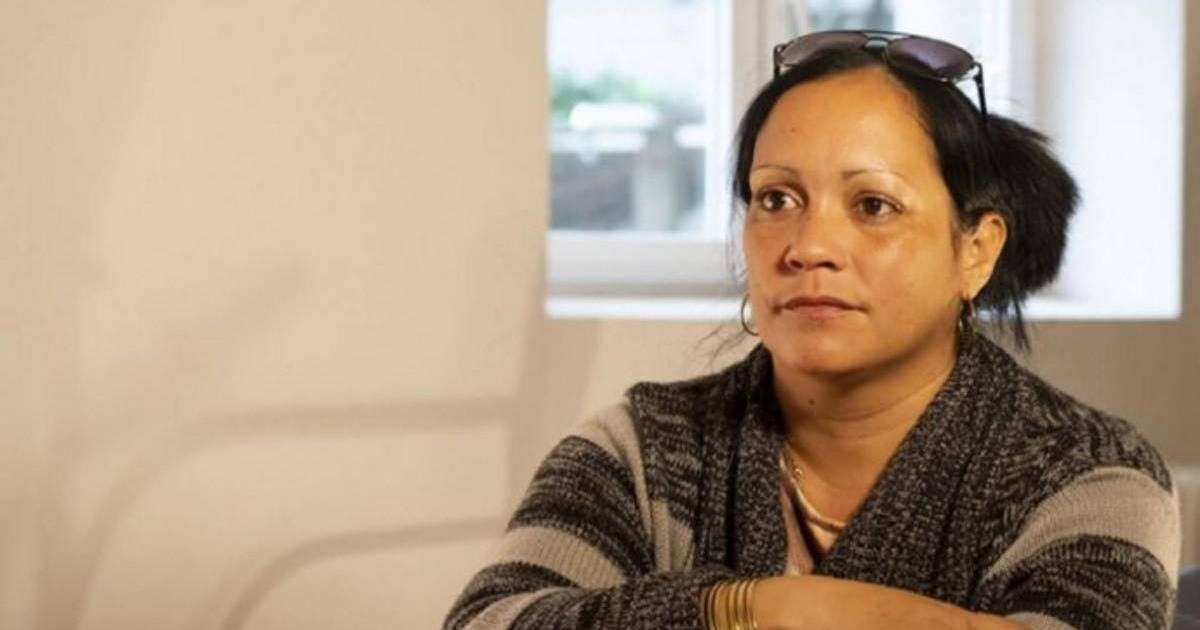
Cuban independent journalist Yunia Figueredo Cruz took to Facebook to share a poignant testimony highlighting the harsh reality of the ongoing crisis in Cuba. By 9:00 PM, she still hadn't managed to prepare the day's only meal. Struggling with subpar charcoal that extinguishes frequently, a rechargeable bulb nearing depletion, and merely three hours of electricity throughout the day, her plight is evident.
"It's nine at night, and I still can't finish the only meal of the day. The charcoal is so bad that lighting it is an ordeal, and it keeps going out," Figueredo wrote from her home in Jaimanitas, Playa municipality, Havana.
"What a miserable existence. Using a rechargeable bulb that's about to die, just three hours of power in 24 hours. This is not life. We're being slowly destroyed. Down with the dictatorship," she emphasized.
The accompanying image speaks volumes: an improvised metal stove, a blackened pot over embers, a large bag of charcoal prominently displayed, and stone walls in the background, set in a dark, rudimentary space.
Escalating Energy Crisis and Public Dissent
The scenario depicted by Figueredo is not an isolated case. Cuba experienced at least eight nationwide blackouts in 2026, the latest occurring on September 18, when the collapse of the National Electric System left nearly nine million people without power for approximately 32 hours.
Electric power shortages have exceeded 2,000 MW on several occasions, with outages in some provinces lasting up to 87 hours straight. With the inability to cook using electricity or the equally scarce liquefied gas, thousands of families have reverted to using charcoal, firewood, and makeshift stoves.
Jaimanitas, where Figueredo resides and works with her husband, fellow journalist Frank Correa, has become one of Havana's most active protest hubs. On July 6, residents took to the streets after more than a day without electricity.
On August 24, they blocked Fifth Avenue due to an extended blackout and water shortages, and on August 29, Figueredo reported a military presence in the neighborhood, with black berets and dark vehicles, amid fears of further protests.
Repression and Legal Threats
Yet, the energy crisis is just one battle for this journalist. The Cuban Institute for Freedom of Expression and Press (ICLEP) documented 22 repressive incidents against Figueredo and Correa between April 2025 and early September 2026, including surveillance, arbitrary detentions, interrogations, threats, and confiscations.
In March, she was detained in Jaimanitas after participating in a cacerolazo—a protest involving banging pots and pans—against the blackouts, in front of her young daughters. In July, she and Correa were arrested without a warrant on their way to a reception at the U.S. Embassy and were held incommunicado for over 16 hours.
The repression extended to her daughter as well. On September 4, State Security agents visited the University of Havana to inquire about the enrollment of Beily Mariam Correa in the Faculty of Foreign Languages.
That same day, a police sector chief imposed a precautionary measure on Figueredo, requiring her to report to the station to sign on the 10th of each month, warning her to maintain "zero contact with the American embassy" and to "think about her daughters."
This crackdown is supported by legal measures, reinforced with Decree 160/2026, which bans non-state actors from practicing journalism or operating news agencies in Cuba, effective August 4.
In response, the ICLEP issued an urgent call to the international community after documenting the systematic harassment of independent journalists like Figueredo: "International visibility can be an essential form of protection."
Understanding Cuba's Energy Crisis and Its Impact
What is causing the frequent blackouts in Cuba?
The blackouts in Cuba are primarily due to the collapse of the National Electric System, resulting in severe power shortages exceeding 2,000 MW on several occasions. This has led to prolonged outages affecting millions.
How are citizens coping with the lack of electricity?
To cope with the lack of electricity, many Cuban families have turned to using charcoal, firewood, and makeshift stoves for cooking, as electric and liquefied gas alternatives are scarce.
What legal measures are affecting journalists in Cuba?
Journalists in Cuba are impacted by Decree 160/2026, which prohibits non-state actors from engaging in journalism or running news agencies, further stifling independent reporting in the country.