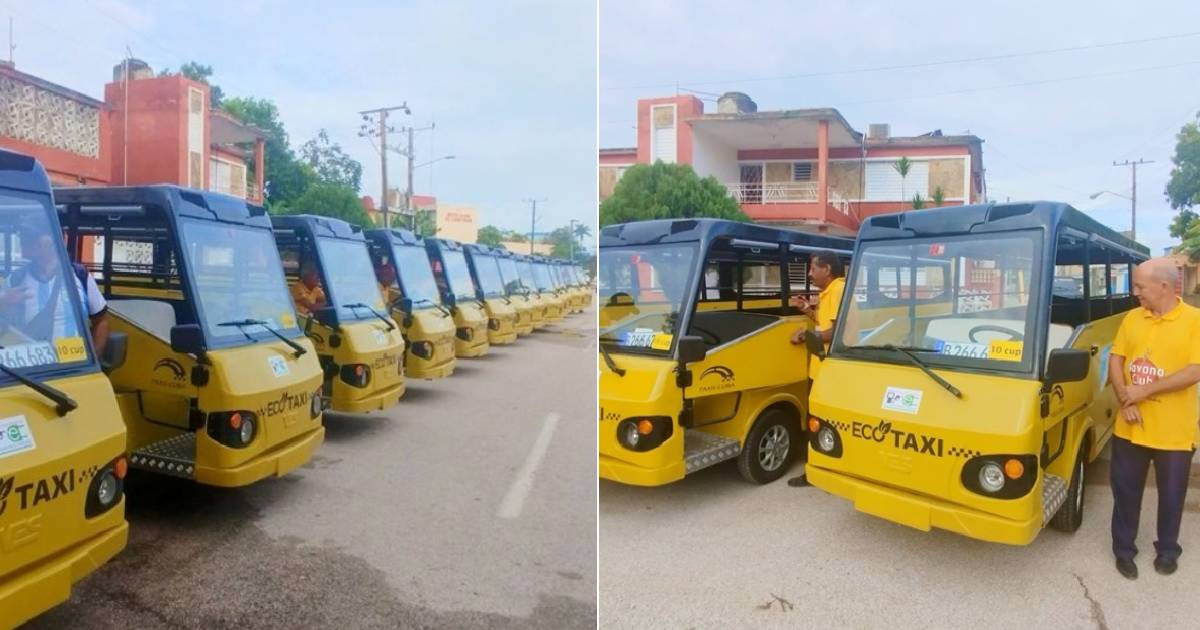
In response to Cuba's worsening transportation crisis, authorities in Sancti Spíritus have allocated 13 additional Ecomóvil electric vehicles to drivers affiliated with TaxisCuba across the municipalities of Jatibonico, Taguasco, Fomento, and Cabaiguán.
With these newly added vehicles, the province's total Ecomóvil fleet now stands at 61, as confirmed by José Lorenzo García, Director of the Provincial Transportation Administration under the People's Power, in an interview published by the official newspaper, Escambray, on Saturday.
García stated that by the end of the year, all eight municipalities in Sancti Spíritus are expected to have these vehicles, bringing the provincial total to 73. This move is part of the government's broader strategy to enhance regional mobility.
The ceremony was attended by Jorge Luis Tapia Fonseca, Vice President of the Council of Ministers, Deivy Pérez Martín, the First Secretary of the Communist Party in the province, and Governor Alexis Lorente Jiménez.
Ecomóviles are electric minibuses assembled at the Coronel Francisco Aguiar Rodríguez Military-Industrial Company, funded by the Ministry of Transportation's Public Transport Development Fund and the Energy Transition Project, which includes collaboration from the University of Sancti Spíritus José Martí.
Each of these vehicles can carry 11 passengers and operates on high-demand urban routes at a fare of 10 Cuban pesos. The key advantage of Ecomóviles over traditional transportation is their reliance on electricity, eliminating the need for diesel or gasoline.
The initiative started in April 2023 with the launch of the first prototype. By June 2024, five vehicles were operational, and by September 2025, 28 vehicles were serving the provincial capital with an additional five in Trinidad.
In June of this year, the province resumed production with the goal of manufacturing 50 more units. Despite these governmental efforts, the scale of the program is still insufficient to address the severe mobility issues facing the public.
The rollout of these vehicles occurs amid a dramatic collapse in public transportation. The Ministry of Transportation has significantly reduced services, cutting bus, train, and ferry operations. Interprovincial bus journeys from Havana are limited to three weekly departures, trains run every two weeks, and the ferry to Isla de la Juventud operates only on Saturdays.
Concurrently, the government has eased restrictions on private electric transport operators. By the end of July, approximately 1,900 individuals with electric vehicles were authorized for passenger and cargo transport, and the country boasted over 10,000 self-employed workers in this sector.
FAQs About Electric Vehicles in Sancti Spíritus
What is the current total of Ecomóvil vehicles in Sancti Spíritus?
As of now, Sancti Spíritus has a total of 61 Ecomóvil vehicles, with plans to increase this number to 73 by year's end.
Who assembles the Ecomóvil vehicles?
The Ecomóvil vehicles are assembled at the Coronel Francisco Aguiar Rodríguez Military-Industrial Company.
What are the benefits of Ecomóviles compared to traditional transportation?
Ecomóviles run on electricity, making them eco-friendly and exempt from fuel costs associated with diesel or gasoline.
How has the government responded to the transportation crisis?
The government has reduced public transport services but also relaxed rules to allow private electric vehicle operators to help mitigate the crisis.