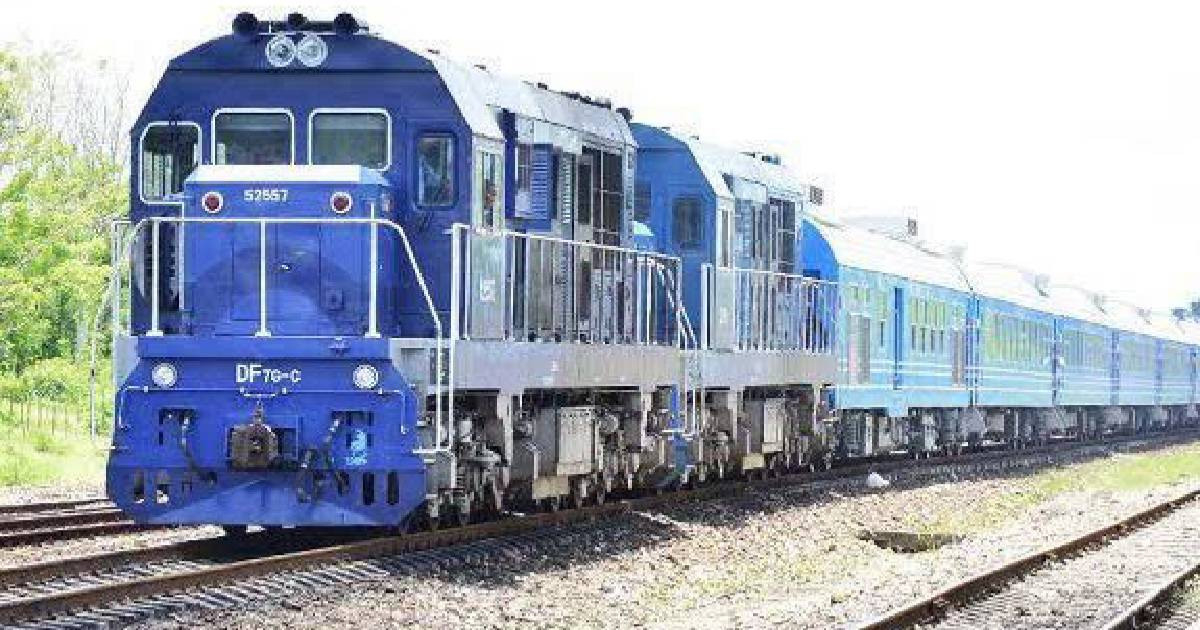
The Cuban Railways Union in Guantánamo has revealed plans to modify train fare structures, yet officials have conceded that the specific pricing for local and interprovincial train routes remains undecided.
Pedro Durruti Martínez, the deputy director of the provincial railway entity, stated that the process of calculating the new fares is ongoing. Before these prices can be made public, they must receive approval from the Ministry of Finance and Prices.
"Currently, we are working on the cost sheet creation and calculation, focusing on passenger costs per person-kilometer traveled. This approach diverges from the traditional cost sheet method because initial calculations exceeded the intended fare proposals for our trains," Durruti explained, as reported by Radio Guantánamo.
This new formula aims to set fares lower than those derived from conventional calculations. According to Durruti, initial cost sheet assessments showed values "far above" the prices authorities aim to establish for railway services.
The fare adjustment is linked to the introduction of the "select operational card," a mechanism that facilitates the purchase of fuel in foreign currency for specific transportation units.
"The select card is used to purchase fuel in foreign currency. While this fuel is quite expensive, the railway only incurs the equivalent cost in national currency, which is reflected in the passenger fare," the official clarified.
Durruti anticipates that approval from Finance and Prices could be secured by the end of this week or early next. Only post-approval will the new fares for motor cars, urban trains, and interprovincial trains be announced.
Services highlighted include the Caimanera-Guantánamo route and connections to Santiago de Cuba, Cuneira, and Holguín. These routes are in demand, but fuel shortages have hindered their operation, according to Durruti.
The deputy director assured the public would be kept informed once the Ministry of Finance and Prices grants approval, though no definitive timeline was provided.
The announcement of fare adjustments comes at a time when the railway sector itself acknowledges the uncertainty surrounding travel costs, a situation exacerbated by fuel availability issues.
Since February, the Ministry of Transportation (Mitrans) has implemented a series of adjustments and suspensions in national and local transportation services due to the energy crisis.
This included drastically reducing train services to eastern Cuba, initially to one departure every eight days and later, since June, to one every 16 days for routes to Santiago de Cuba, Guantánamo, Holguín, and Bayamo-Manzanillo.
In July, it was revealed that monthly operations of national trains plummeted by 74%, from 62 services to just 16 per month. By August, Mitrans admitted that even these minimal frequencies could not always be guaranteed due to diesel shortages.
Guantánamo, in particular, faces a severe fuel shortage that has halted public transportation and prevented the shipment of over 140 tons of rice and 51 tons of beans from Santiago de Cuba's port.
The discussion on train fare pricing is a national issue. The Morón-Camagüey train was announced with a fare of 1,500 pesos, a price that sparked widespread public backlash, deemed unaffordable for wage earners, retirees, and pensioners.
Understanding the Train Fare Changes in Guantánamo
What is the reason behind the train fare changes in Guantánamo?
The fare changes are part of an effort to adjust pricing structures using a new calculation formula that focuses on passenger costs per person-kilometer, aiming to set fares below traditional cost assessments.
How will the new fare system affect ticket prices?
The new system intends to introduce fares lower than those derived from traditional calculations by utilizing the "select operational card" for fuel purchases, reflecting only the national currency equivalent in passenger fares.