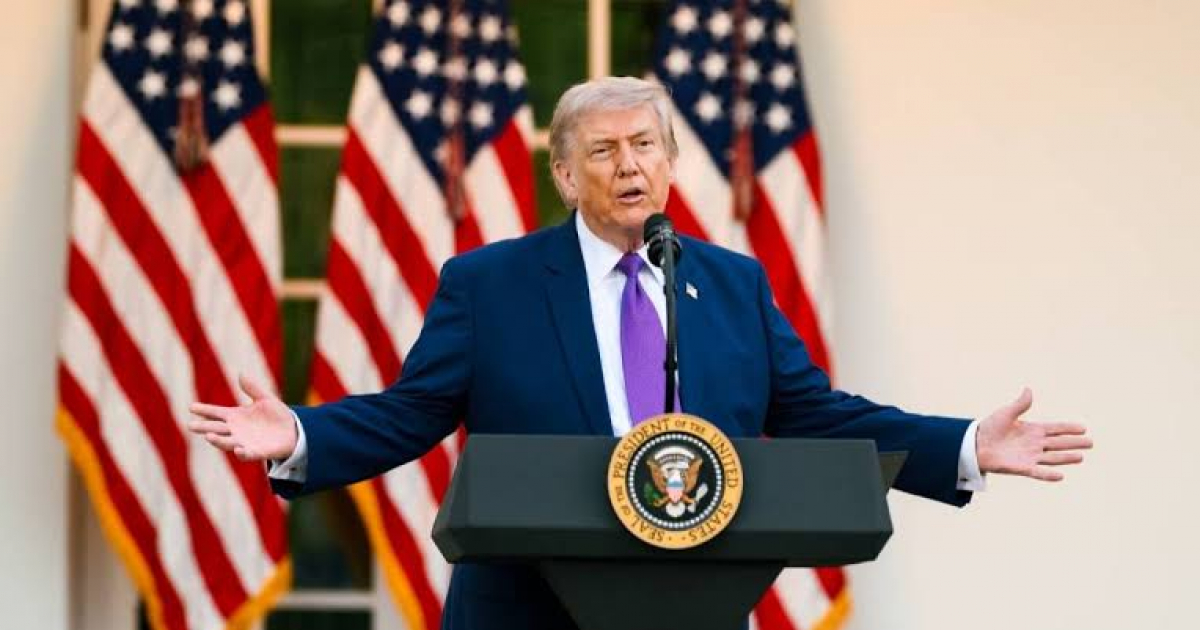
On Saturday, President Donald Trump dismissed the idea of a military intervention in Cuba, opting instead for a negotiated resolution. This stance came in response to questions regarding reports of U.S. military reserves possibly being mobilized in connection with the Southern Command.
"Cuba and the U.S. will reach an understanding. I don't believe we need to resort to military measures. Cuba is failing spectacularly. We want to help Cuba. We want to open it up to our people. We have many Cuban Americans eager to return," Trump stated to the press.
These comments followed a day after CBS News disclosed an internal memo from the U.S. Army Reserve, which evaluated the availability of military police, medical, engineering, and logistics units for the Southern Command within a 90 to 120-day timeframe.
The document did not mandate any deployment nor explicitly mention Cuba, with officials describing it as contingency planning.
While Trump did not categorically rule out any options—a hallmark of his negotiating style—his tone clearly favored diplomatic engagement over military force.
The previous week was marked by heightened rhetoric. On September 22, Trump labeled Cuba as a "completely failed state" at the UN General Assembly, predicting its downfall as the Cuban delegation walked out during his speech.
In that same forum, Trump noted that Secretary of State Marco Rubio was "leading negotiations" with Havana, though the Cuban government denied any formal talks, agreements, or roadmaps were underway.
Washington's strategy combines maximum economic pressure with diplomatic overtures. On September 17, the State Department announced sanctions against 11 entities and individuals linked to the Cuban military and nickel sector.
Earlier in September, the U.S. had already sanctioned Fidel Ernesto Castro Calis, a grandson of Raúl Castro, along with other banking and financial entities. The annual total now exceeds 40 entities and at least 38 individuals sanctioned.
Rubio, the main architect of U.S. policy towards Cuba, has asserted that pressure will persist until the regime "sees the writing on the wall."
In response, the Cuban government declared 2026 the "Year of Defense Preparation" and continues to conduct weekly military exercises across various provinces.
On September 12, Díaz-Canel stated that "the threat of aggression remains," linking the regime's defensive posture to Washington's rhetoric.
Eric Daugherty, an analyst who shared the video of Trump's remarks, summarized the president's stance: "Military action is never off the table for the 47th president, but it's evident he prefers a deal. Marco Rubio is crippling the communist regime with relentless sanctions, hoping to compel them to recognize the writing on the wall through unyielding economic pressure."
Exploring U.S.-Cuba Relations and Diplomatic Dynamics
Why did Trump reject military action against Cuba?
President Trump believed that a diplomatic agreement could be reached without resorting to military measures, as he aimed to help Cuba open up and engage with the U.S.
How has the U.S. exerted pressure on Cuba?
The U.S. has applied maximum economic pressure through sanctions targeting Cuban entities and individuals associated with the military and nickel sectors, with over 40 entities sanctioned in a year.
What is the Cuban government's response to U.S. actions?
In response, Cuba declared 2026 as the "Year of Defense Preparation" and has been conducting regular military exercises, positioning itself defensively against perceived U.S. aggression.