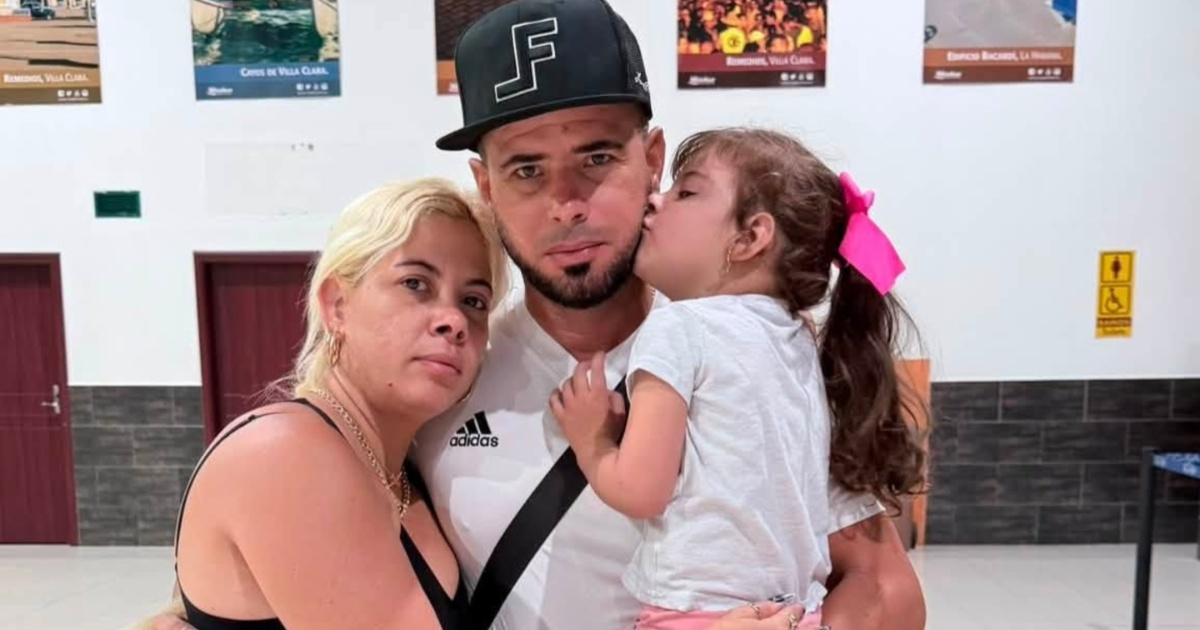
Over a year after voluntarily leaving the United States, Deivy Alemán Oropesa remains in Cuba as his three-year-old daughter prepares for another open-heart surgery. His family is urgently requesting a humanitarian visa to ensure he can be by her side during this critical time.
In a recent interview with journalist Javier Díaz for Univision 23, the case saw a glimmer of hope this week. The U.S. Citizenship and Immigration Services (USCIS) has moved forward with an expedited processing of Alemán's case, as confirmed by his wife, Yisel Miguel Sarduy, a U.S. citizen.
"I called USCIS today, and they told us our expedited case was approved," Yisel shared. Despite this progress, it doesn't guarantee Alemán's return or provide a specific return date. He remains in Cuba, and the uncertainty lingers.
Javier Díaz, who has been closely following the story, noted that immigration experts believe Alemán might eventually return to the U.S., but "the exact timeline remains uncertain."
The Family's Immediate Plea
The family's request is simple yet urgent: "We are only asking for someone to help us, even if it's just a humanitarian visa for two or three months, so he can be here for the procedure. After that, if he needs to return to Cuba, he will," stated Yisel.
The Migration Journey
This family's ordeal became public in August 2025 when it was revealed that Alemán, residing in Orlando without a criminal record and under immigration supervision, faced an order from ICE to leave the country.
The family submitted medical reports and letters from specialists to halt the deportation on humanitarian grounds, but the decision stood firm. On September 14, 2025, Alemán chose to self-deport rather than face detention, separating from his wife and their daughter, Keira, who was born with a severe heart condition requiring multiple surgeries at Johns Hopkins All Children's Hospital.
Now at three years old, Keira needs a third surgery. "The surgery is approaching soon. It's a challenging process that worries me because we've been through this before," Alemán expressed from Cuba.
Resilience and Community Support
In Orlando, Yisel is managing the situation on her own. Without her husband's income, she has turned to social media to generate content and cover basic expenses, receiving overwhelming support from the Cuban exile community.
"I've received incredible support from people who don't know me, who have never seen me," she shared.
In October 2025, Keira traveled to Cuba to reunite with her father, facilitated by a travel agency—a decision met with criticism on social media.
Yisel responded firmly: "I understand the criticism. If I were in a different situation, I wouldn't travel to Cuba with a child either. But only a parent who's been hospitalized with my daughter for months would understand why I make these choices."
Understanding Humanitarian Visa Requests for Medical Emergencies
What is a humanitarian visa?
A humanitarian visa is a special type of visa that allows individuals to enter a country temporarily due to emergency situations, such as medical needs, family crises, or other urgent humanitarian reasons.
How can someone apply for a humanitarian visa in the U.S.?
To apply for a humanitarian visa in the U.S., individuals usually need to contact the U.S. Citizenship and Immigration Services (USCIS) or a U.S. Embassy or Consulate. They must provide documentation supporting the urgent need for entry, such as medical reports or letters from healthcare providers.