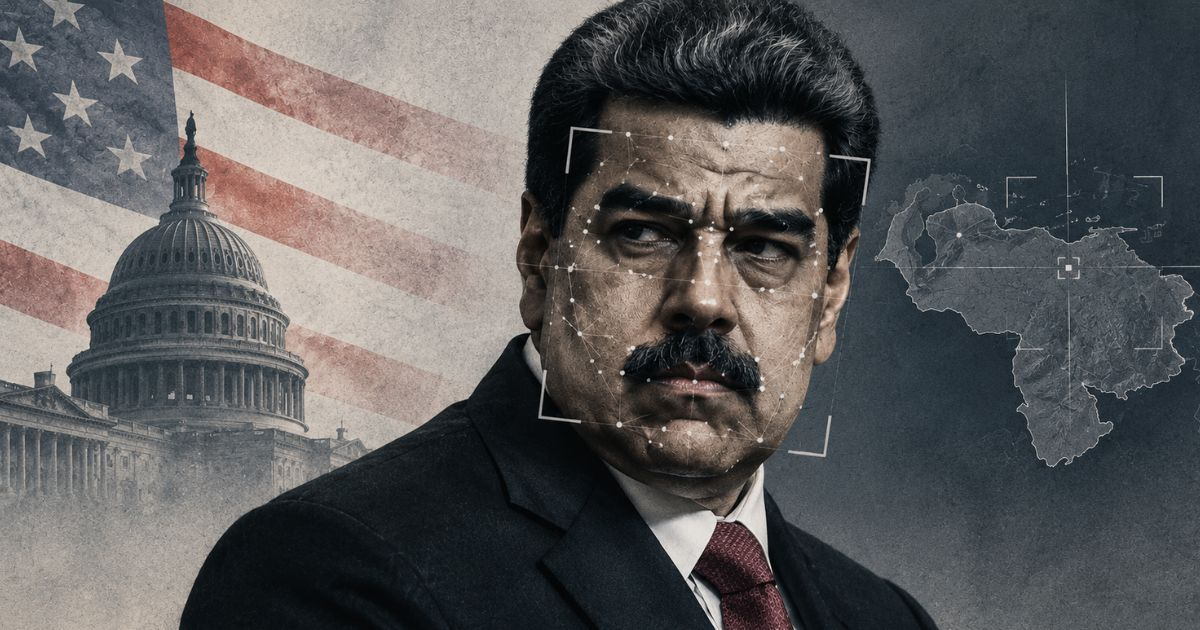
Recent federal court documents have shed light on the role of artificial intelligence used by the United States during a military mission that concluded with the capture of Nicolás Maduro in Venezuela on January 3. However, the specific function of the technology within the operation remains undisclosed.
David Alandete, a White House correspondent, reported on X that the court ruling confirmed the involvement of Claude, an AI model developed by Anthropic, in the technological framework employed by the Pentagon through Palantir.
On September 25, the U.S. Court of Appeals for the District of Columbia Circuit issued a decision in the case involving Anthropic's lawsuit against the Pentagon's decision to exclude the company from its supply chain due to restrictions on certain military uses of Claude.
The ruling reveals that in early 2026, an Anthropic executive raised concerns about the use of Claude by a contractor in a "sensitive overseas military operation." This intervention prompted the Department of Defense to question whether the model's limitations could impact its performance during an ongoing mission.
Controversy Over AI Usage in Military Operations
The court did not specifically identify the operation in question, but Anthropic included media reports suggesting that the company had expressed concerns to Palantir about its technology's role in the January 3 mission to capture Maduro.
The ruling later mentions the possibility that the incident occurred during a "kinetic operation" aimed at capturing a foreign head of state, as suggested by Anthropic.
Back in February, Reuters highlighted a report from The Wall Street Journal indicating that Claude was utilized during the U.S. operation in Venezuela through Anthropic's collaboration with Palantir Technologies, whose platforms are widely used by the Pentagon and federal agencies.
Anthropic's Legal Dispute with the Pentagon
This recent ruling confirms that the dispute between Anthropic, Palantir, and the Pentagon regarding Claude's performance in a foreign military operation has been formally documented in the judicial record. Anthropic itself introduced reports about the Maduro mission into the case.
Claude was not new to the U.S. national security community. Since 2024, the Department of Defense and intelligence agencies have utilized commercial versions of the model in classified systems through contractors.
The tasks outlined in the court documents include processing classified documents, summarizing threat assessments, and translating intercepted materials.
Anthropic later developed specific versions of Claude for national security clients, designed for strategic planning, operational support, intelligence analysis, and threat evaluation within classified environments.
The company has publicly acknowledged that Claude has been employed in U.S. security for intelligence analysis, modeling and simulation, operational planning, and cyber operations.
Implications for U.S. National Security
Alandete noted that in the Venezuelan case, Claude's potential functions could have included processing large volumes of intelligence, analyzing surveillance information, tracking individuals or vehicles, and supporting operational planning.
The dispute arose due to Anthropic's restrictions on military use of its models. The documents show that the company expanded permitted uses for the government, including foreign intelligence analysis, weapons systems design, and offensive cyber operations, but maintained two restrictions: using Claude for fully autonomous lethal weapons and mass surveillance of Americans.
The Pentagon later required that its suppliers allow models to be used for "any lawful purpose." Anthropic refused to lift these two restrictions, and in March, Secretary Pete Hegseth ordered the exclusion of the company's products from military systems and prohibited contractors from using them for department work.
The appeals court supported the Pentagon's decision, concluding that Anthropic's restrictions posed a potential risk to national security operations if Claude failed to perform as expected during a mission. The decision was made by a 2-1 vote.
Following the conflict, the Department of Defense began expanding its contractual relationship with OpenAI, as noted in the court documents.
This revelation adds a new technological dimension to the U.S. operation that resulted in Maduro's capture and subsequent transfer to New York on January 3.
Days after his arrival in the United States, Maduro appeared in federal court and pleaded not guilty to the charges against him. He remains in U.S. custody as the legal proceedings continue.
Key Insights About the U.S. Operation Involving AI
What role did AI play in the capture of Nicolás Maduro?
AI, specifically the Claude model developed by Anthropic, was part of the technological framework used by the Pentagon during the mission. Though the exact role remains undisclosed, it likely involved processing intelligence and supporting operational planning.
Why did the Pentagon exclude Anthropic from its supply chain?
The Pentagon excluded Anthropic due to the company's restrictions on using its models for fully autonomous lethal weapons and mass surveillance of Americans, which the Pentagon deemed could pose risks to national security operations.
What changes occurred in the Pentagon's AI partnerships following the dispute with Anthropic?
Following the dispute, the Department of Defense began expanding its contractual relationship with OpenAI to enhance their AI capabilities for military operations.