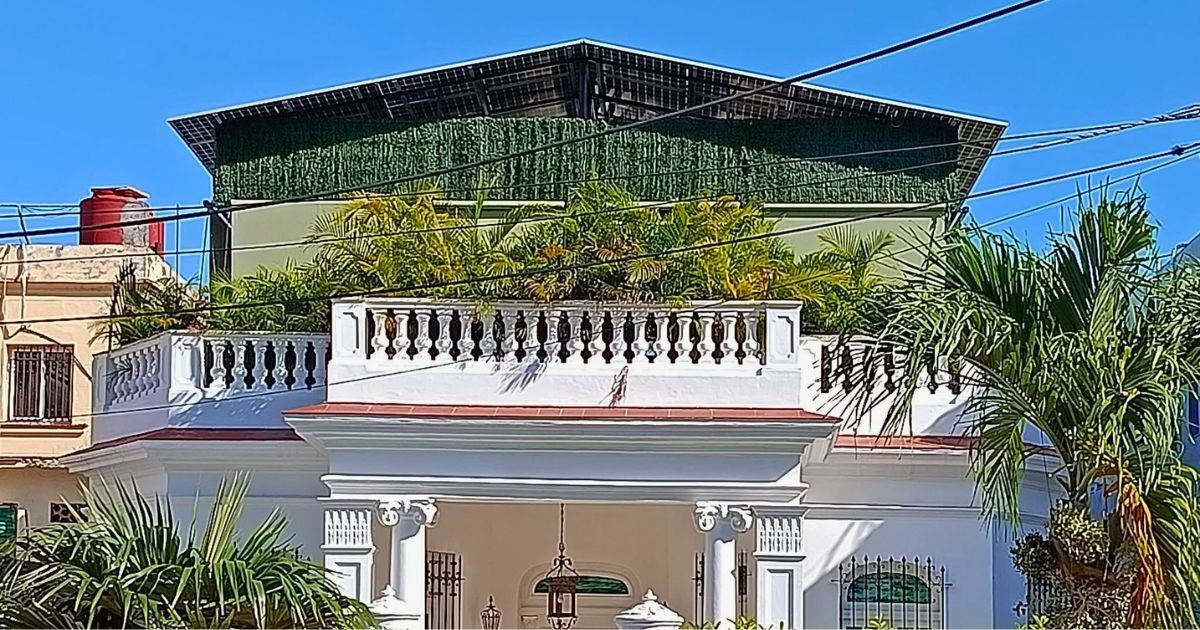
Renowned Cuban architect and professor, Humberto Ramírez, recently published an in-depth analysis addressing common mistakes in the installation of photovoltaic solar panels on buildings throughout Cuba. He cautions that while solar energy presents a viable solution to the ongoing energy crisis, improper execution can lead to significant technical issues.
Shared on Facebook by fellow architect and professor Abel Tablada, the analysis is titled "Photovoltaic Panels: A Great Solution That Can Create New Problems."
Ramírez, recognized with the 2022 Life and Work Award by the National Union of Architects and Construction Engineers of Cuba, acknowledges the rapid and beneficial expansion of solar energy—describing it as a "fortunate and relatively quick expansion that can alleviate our constant power struggles." However, he warns that alongside state-run enterprises and private micro-businesses, unqualified groups have entered the market, producing concerning outcomes.
Critical Flaws in Solar Panel Orientation and Inclination
The first major issue Ramírez identifies is orientation. While most panels are correctly positioned facing south, he has observed some oriented towards the north or, more alarmingly, installed in a "ridge" fashion with half the modules facing the wrong way, as reported on Cuban television.
The second issue is the angle of inclination, with variations ranging from nearly flat to about 60 degrees. According to architect Dania González Couret, a professor at CUJAE and founder of Cuba Solar, the optimal angle for Cuba's latitude is between 15 and 30 degrees from the horizontal.
Structural Concerns and the Threat of Theft
Structural integrity is another critical concern, especially in a hurricane-prone region. Ramírez notes the importance of robust support structures to secure the investment, observing some installations with inadequate bracing and improper anchoring, which could lead to catastrophic failures.
Poor waterproofing of roof anchors presents additional risks, potentially causing leaks that affect neighboring properties rather than the installer’s own. Moreover, thefts of solar panels are on the rise, described by Ramírez as a "rapidly growing new criminal phenomenon." Recent thefts have targeted clinics, banks, and private homes, with the Supreme People's Court classifying these acts as sabotage, carrying severe penalties.
Urgency for Professional Oversight
Ramírez's analysis is part of a broader discussion as the government attempts to regulate the burgeoning solar panel sector. The energy crisis of 2026, characterized by frequent blackouts and severe power deficits, has spiked the demand for individual photovoltaic systems.
In conclusion, Ramírez stresses the necessity for entities involved in solar panel installations to possess adequate knowledge and access to professional guidance. Without this, the full potential of these systems may not be realized, and we might witness surreal scenarios of panels soaring like kites across towns and cities.
FAQs on Solar Panel Installation Challenges in Cuba
What are the common installation mistakes for solar panels in Cuba?
Common mistakes include incorrect orientation, improper inclination, inadequate structural support, insufficient waterproofing, and susceptibility to theft.
Why is the angle of solar panels important?
The angle is crucial for maximizing solar exposure. For Cuba, the ideal inclination is between 15 and 30 degrees to optimize energy capture.
How is the Cuban government addressing the surge in solar panel installations?
The government is striving to impose regulations and ensure that installations are carried out with professional oversight to prevent technical failures and maximize efficiency.