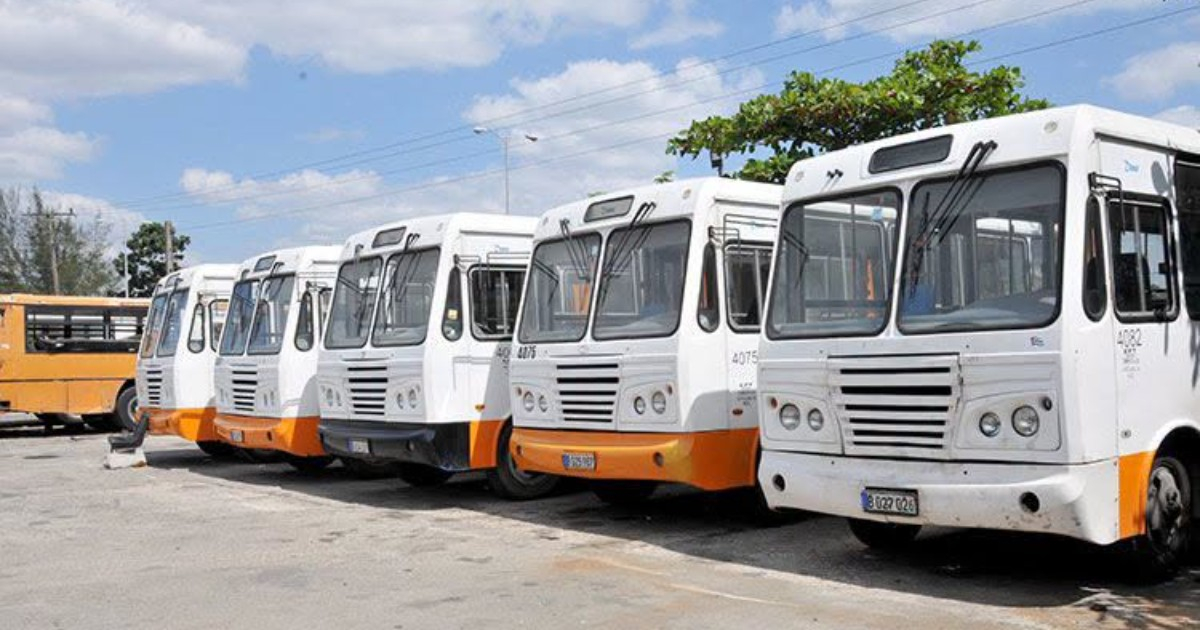
Starting October 1st, Cienfuegos may witness a resurgence in urban transportation as a phased plan is set to roll out. The initiative involves private individuals supplying fuel and operating buses contracted by the state-run company.
On Thursday, journalist Jesús Álvarez López shared via Facebook that Orlando Valdés Pérez from the Provincial Directorate of Transport announced the plan on Radio Ciudad del Mar.
The disclosed details reveal that private parties will be supplying the necessary fuel through a partnership with the state enterprise. However, the initial announcement lacked specifics regarding who will provide the fuel, the amount available, or the final cost to passengers.
Later, Directorio Cubano offered more insights, citing Orlando Valdés, the head of the Basic Passenger Unit of the Provincial Transport Company. The recovery plan will initially include five urban routes: Route 1 connecting Pastorita, O’Bourke, and Punta Gorda; Route 3 towards Reina and Junco Sur; Route 5 heading to Tulipán; Route 200 covering Paraíso, Pueblo Grifo, and Venta del Río; and Route 207 leading to Caunao.
Departures will continue from Villuendas Park. Initially, the company plans to ensure at least one service in the morning and another in the afternoon. Valdés mentioned that if the new model functions sustainably, more frequent services could be added on high-demand routes.
The Provincial Transport Company also received new tires, mainly for the Diana buses, which need installation before the routes commence.
Public Concerns and Questions
Addressing a major concern among users, Valdés noted that official fares will be announced later and promised they will be lower than the initial technical estimates.
The recovery efforts extend beyond Cienfuegos city. Efforts are underway to restore connections to other provincial municipalities using contracted transporters. Cumanayagua has the most operators ready to link with the provincial capital, with potential future services to Lajas, Cartagena, Rodas, and Aguada de Pasajeros.
Some contracted buses with micro, small and medium enterprises (mipymes) are already traveling to municipal capitals and Santa Clara, albeit with different rates and no subsidies. During the radio program where these measures were discussed, listeners raised concerns about fares exceeding a thousand pesos on certain routes.
Challenges in State-run Transportation
The state fleet faces significant challenges. Diesel shortages have rendered most buses inactive, except for those serving Health and Education employees. Some connections continue weekly in the Plan Turquino areas, with scheduled departures from Cumanayagua to Cuatro Vientos, El Nicho, and Yaguanabo Arriba on specific days.
However, the maritime crossing of the bay remains suspended due to fuel scarcity. The vessel currently lacks the diesel needed to restore the El Castillo-CEN to Pasacaballo route.
News of the urban transport revival sparked varied reactions among residents. Some expressed optimism about the potential return of bus services, though others recalled the long-standing limited operation and costly private alternatives.
Many remain skeptical about the longevity of the new system, highlighting past experiences where similar initiatives quickly faltered. There were also pressing concerns about ticket prices, with calls for affordability considering the low wages of workers, students, and retirees.
Fuel Source and Economic Viability
Questions arose regarding the fuel source, with citizens wondering how private individuals can access sufficient fuel when the state cannot secure it directly. The project's viability hinges on fuel cost, taxes, repairs, parts, vehicle maintenance, and the ultimate fare passengers must pay.
Residents requested clear publication of departure times, frequencies, and segment prices to understand how each route will operate.
This development comes amid increasing openness to private solutions due to the declining state transport system. Recently, over 1,900 people received authorization to operate electric transport in Cuba after the Ministry of Transport eased licensing requirements.
Cienfuegos, along with Havana and Matanzas, is noted as one of the provinces where these relaxations have significantly impacted. The Ministry has also acknowledged successful partnerships between the state and private sectors for passenger and small cargo transport.
The transportation situation in Cienfuegos has particularly deteriorated since the year's start. In February, provincial authorities suspended intermunicipal and rural routes due to the worsening energy crisis, also halting bay crossings and limiting embarkation points within the territory.
The partnership between the state enterprise and private operators has seen previous challenges in the province. In July 2025, authorities withdrew 42 buses leased to private operators, reintegrating them into the state system after many had been inactive for almost a year.
Key Concerns about Cienfuegos Urban Transport Revival
Who is providing the fuel for the new transport initiative?
Private individuals are partnering with the state enterprise to supply the necessary fuel for the buses.
What are the initial routes included in the transport recovery plan?
The initial recovery plan includes five routes: Route 1, Route 3, Route 5, Route 200, and Route 207.
How will fare prices be determined?
Official fares will be announced later, but they are promised to be lower than the initial estimates outlined in the technical documents.
What are the challenges facing the state-run transport system?
The state-run transport system suffers from diesel shortages, which have left most buses non-operational, except for those serving essential services.