Luz Mely Reyes, a renowned Venezuelan journalist and political analyst, co-founder and director of Efecto Cocuyo, recently penned a powerful op-ed for El País. In her piece titled "Venezuela Has No One to Write for It," she dismantles the narratives from both sides of Venezuela's political spectrum, concluding that amidst geopolitical pragmatism and extensive oil deals, "the whole nation was ultimately broken."
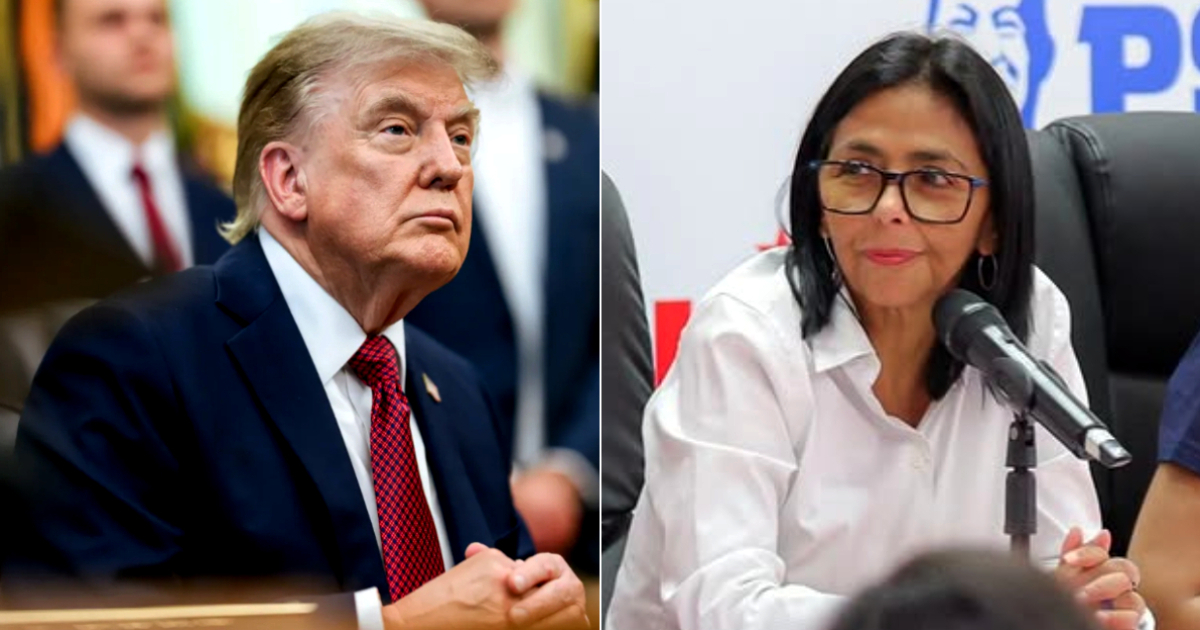
The article begins with an event in New York the previous day, where Delcy Rodríguez met with Donald Trump on the sidelines of the UN General Assembly. This marked the first in-person interaction between leaders of both nations in over eleven years. Simultaneously, Nobel Peace Prize laureate María Corina Machado faced her seventh thwarted attempt to return to Venezuela this year.
Behind the Scenes of Venezuelan Politics
Reyes compares recent Venezuelan politics to a reality TV show, where "almost everything we see on screen is due to special effects, while true political and economic interests lurk beneath the surface and behind the scenes."
The columnist highlights the pursuit of Venezuelan energy resources as the core of these interests. Trump, in his address to the General Assembly, candidly stated: "The U.S. Armed Forces conducted a massive operation in Venezuela. We arrested a criminal, Nicolás Maduro. Since then, hundreds of Venezuelan political prisoners have been freed. [...] Last month, we signed the largest oil agreement in history, covering 65 billion barrels of oil [...] To the victor belongs the spoils," Reyes quotes.
Collective Self-Deceit
Reyes describes the attitude of all parties as a collective self-deceit. Collaborating opposition members attempt to justify their actions "to avoid admitting they have been relegated to supporting roles," while the chavista leadership comforts itself with the idea of "bending to avoid breaking." Rodríguez assured the UN that elections would be held in Venezuela, yet she did not specify a date or timeline and made no mention of Maduro in her nearly 19-minute speech.
What looms ahead, the columnist warns, is not a democratic opening but "the formal dismantling of what remains of Petróleos de Venezuela." The agreement, she notes, is so opaque that "there is still no certainty if the South American nation has signed a 100-year concession for exploiting its oil fields."
Impact on Cuba and Beyond
This analysis holds particular significance for Cuba. For over two decades, Venezuela supported the island with subsidized oil—estimated at thousands of barrels daily—in exchange for political cooperation and other services. Since Maduro's capture on January 3, 2026, this flow has stopped or drastically reduced, worsening Cuba's already severe energy crisis.
The new Venezuelan oil framework, aimed at the U.S. and international markets, makes restoring this historic subsidy virtually impossible.
With the garciamarquian irony that titles her column, Reyes depicts Trump and Rodríguez celebrating their alliance while "a real country witnesses rusted oil pumps and towns in ruins." She concludes with an image encapsulating a generation's exhaustion: like the colonel awaiting a pension the state would never pay, Venezuelans have spent years waiting for a democratic promise that, judging by this week's events in New York, remains undelivered.
Understanding Venezuela's Political Landscape
What was the significance of the meeting between Delcy Rodríguez and Donald Trump?
The meeting marked the first direct contact between Venezuelan and U.S. leaders in over a decade, indicating potential shifts in diplomatic and geopolitical relations.
How has Venezuela's new oil policy affected Cuba?
Venezuela's shift towards the U.S. and international oil markets has significantly reduced the subsidized oil flow to Cuba, worsening its energy crisis.
What is the core argument of Luz Mely Reyes's column?
Reyes argues that while geopolitical deals are being made, the ordinary Venezuelan citizens are the ones suffering, as the nation's resources are controlled by external interests.