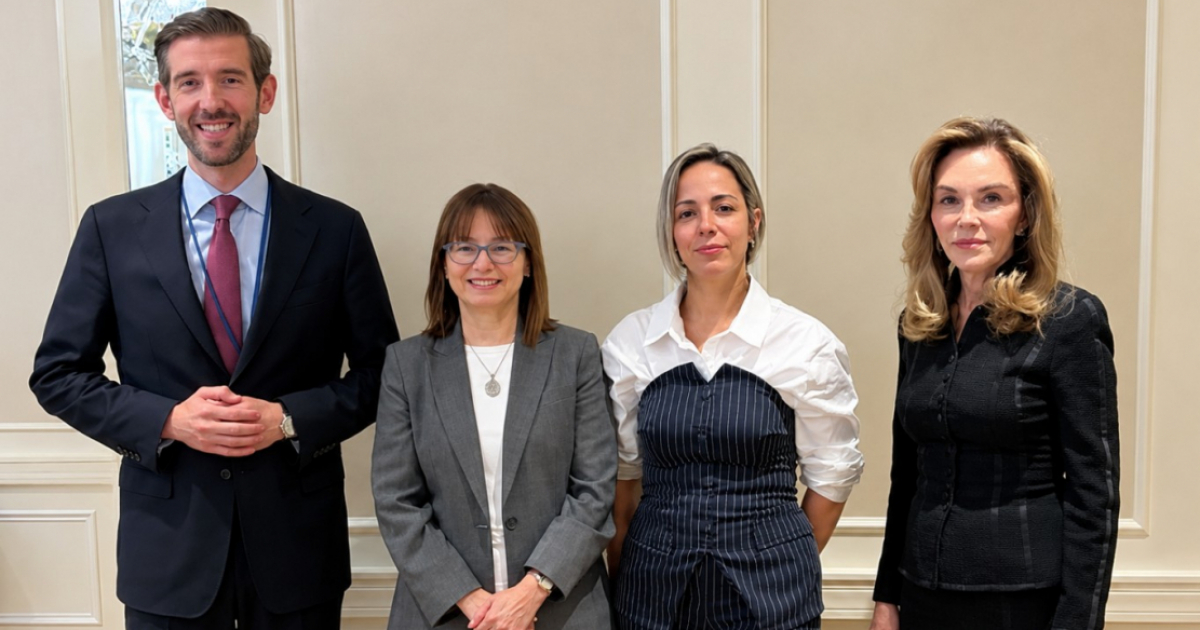
On Thursday, Juan Pablo Segura, the U.S. Deputy Assistant Secretary of State for Western Hemisphere Affairs, listened to the account of a former participant in Cuba’s medical missions. Following the testimony, Segura reiterated Washington's call for countries involved to terminate these agreements.
In a statement on his official X account, Segura characterized the Cuban regime's so-called medical brigades as a "human trafficking program" that "coerces and mistreats Cuban workers to generate revenue which funds state repression."
The official urged governments that have these agreements to "ethically hire these workers and cease funding human rights abuses committed by the regime by ending these exploitative agreements."
U.S. Diplomatic Efforts Intensify
The testimony was part of the United Nations General Assembly in New York, where Segura engaged in a series of bilateral meetings throughout the week. This statement comes amid a sustained diplomatic push from Washington against these Cuban medical missions.
In August, the State Department presented Congress with the report "Coerced-and-Trafficked-Labor of Cuban Medical Professionals," which documented between 15,000 and 18,000 Cuban health professionals deployed in 51 countries, a significant decrease from the 24,000 operating in over 58 countries at the beginning of 2025.
The report highlighted systemic patterns of forced labor, surveillance, wage retention, document confiscation, and restricted movement. Data from independent organizations corroborate the State Department's allegations. A Prisoners Defenders dossier based on 1,402 testimonies found that 89.79% of respondents reported being compelled to participate under coercive conditions, working up to 71.89 hours weekly.
Growing International Backlash
The same dossier revealed that 60.84% of participants were forced to artificially inflate healthcare statistics. In countries like Botswana, the Cuban regime reportedly received 3,500 euros per specialist monthly, while the professionals themselves earned only $1,000.
In Brazil, 3,500 Cuban doctors who worked under the Mais Médicos program from 2013 to 2018 have sued the Pan American Health Organization for $129 million, claiming Cuba received over $2.3 billion while they received less than 10% of that revenue.
Washington's pressure has prompted several countries to withdraw from the program. In the early months of 2026, Honduras, Guatemala, Jamaica, and Guyana either canceled or chose not to renew their agreements, collectively removing over 1,000 Cuban health professionals.
Belize faces a deadline by the end of September to decide the fate of 92 Cuban healthcare professionals operating in the country. Meanwhile, Uruguay considers a direct payment mechanism to doctors to avoid formally breaking its agreement with Cuba, though the U.S. has warned it might lose international assistance if it maintains the current arrangement.
Human Rights Concerns
In April, the Inter-American Commission on Human Rights recommended that countries across the continent withdraw from the program, citing severe indications of forced labor, human trafficking, and modern slavery.
Dr. Raícesa Mora, who publicly denounced the program’s conditions, labeled it as "trafficking of Cuban medical professionals," asserting that workers are "exploited, blackmailed, and coerced."
Understanding the Controversy Around Cuban Medical Missions
What is the main criticism of Cuban medical missions?
The primary criticism is that these missions are essentially a form of human trafficking, where Cuban medical professionals are coerced into labor under exploitative conditions to generate income for the Cuban government.
How has the U.S. responded to Cuban medical missions?
The U.S. has launched a diplomatic campaign urging countries to terminate agreements with Cuba, citing human rights abuses such as forced labor and trafficking within these missions.
Which countries have withdrawn from the Cuban medical program?
Countries such as Honduras, Guatemala, Jamaica, and Guyana have either canceled or not renewed their agreements with Cuba, removing more than 1,000 Cuban health professionals from their territories.