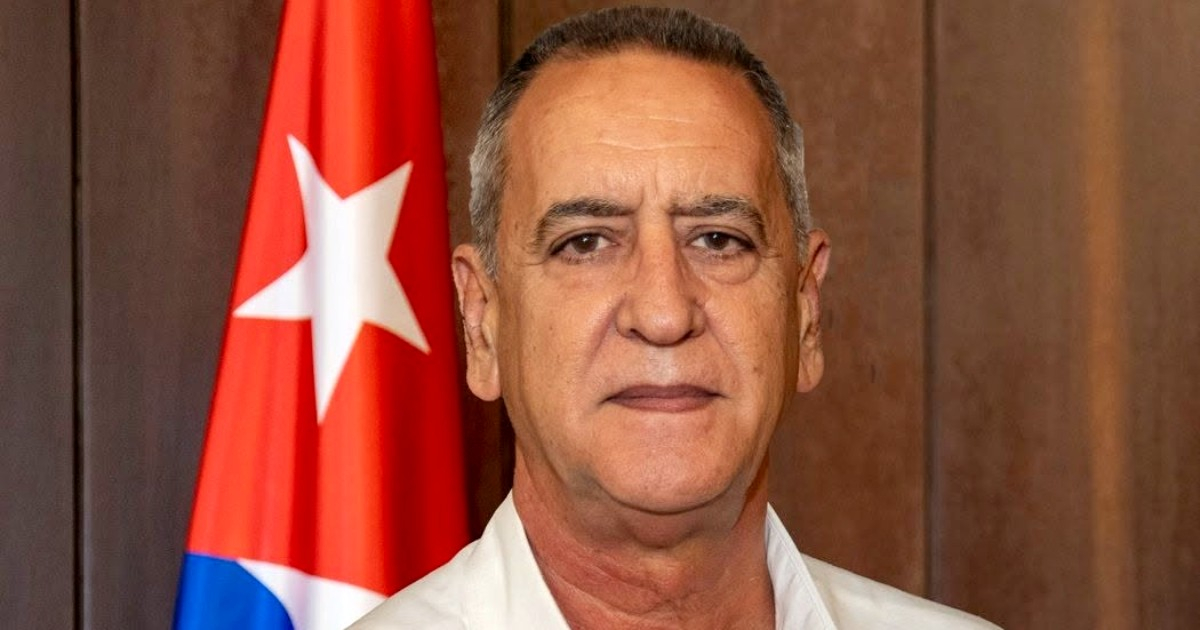
Joaquín Alonso Vázquez, Cuba's Minister of Economy and Planning, took to Facebook to express his anger over Delcy Rodríguez's speech at the United Nations General Assembly, writing, "Betrayal has but one name: Betrayal." However, this fiery comment was removed from his profile just hours later.
The post was initially captured by Cuban state journalist Pedro Jorge Velázquez, also known as El Necio, before Alonso Vázquez either deleted it or limited its visibility.
Later, a screenshot showed the message "This content is not available at this time," even though the original post had already garnered seven reactions and seven shares.
This act of retraction highlights the tension within the Cuban government. While discontent is evident, voicing it publicly carries significant risks.
Political Tensions and Economic Strain
The catalyst for this controversy was Rodríguez's actions in New York during the General Assembly week. On September 22, she met with Donald Trump at the Lotte New York Palace Hotel, calling the meeting "historic." The following day, she delivered a speech at the UN, announcing "equal condition" elections and expressing gratitude to Trump for his support without once mentioning Nicolás Maduro or the Bolivarian Revolution.
Alonso Vázquez's reaction was specifically triggered by a post from a Facebook user named Vicente Leal, who summarized the incident with harsh criticism: "Delcy Rodríguez witnessed Trump calling Maduro a 'criminal' at the UN and boasting about his capture. She didn't stand up. She said nothing... The one who once shouted 'imperialism' now hands oil to the Empire. It's not diplomacy. It's the inventory of a surrender."
The discontent wasn't limited to the minister. Henry Omar Pérez, a journalist with the Cuban News Agency, declared that "the Bolivarian Revolution is dead" and that "the traitors" had taken its dignity with them.
Economic Implications of Betrayal
El Necio pointed out that Rodríguez's speech made no mention of Nicolás Maduro, describing it as a complete erasure of "Venezuela's primary political demand" at the UN.
Beneath this political outrage lies a tangible economic wound. Venezuela used to supply Cuba with between 25,000 and 70,000 barrels of subsidized oil daily until shipments ceased between December 2025 and January 2026 after Maduro was captured by U.S. forces.
Since then, Cuba's energy crisis has worsened, with power outages lasting over 24 hours in many regions and a daily generation shortfall exceeding 2,000 MW.
Rodríguez's shift towards Washington—which includes announcing elections, publicly thanking Trump, and remaining silent on Maduro—is viewed by parts of the Cuban regime as a betrayal that deepens Havana's energy and political isolation.
U.S. Secretary of State Marco Rubio revealed that the conversation between Trump and Rodríguez included discussions on debt restructuring, economic stabilization, and transitioning towards free elections in Venezuela, an agenda that excludes Havana's interests.
This incident, where a Cuban minister insults an ally and then retracts his words, accurately portrays the Cuban regime's predicament: caught between anger over Venezuela's abandonment and the inability to publicly break ties with the only government that might resume oil shipments to the island.
Key Questions on Cuba's Political and Economic Challenges
Why did Joaquín Alonso Vázquez delete his Facebook post?
Alonso Vázquez deleted his post likely due to the political risks associated with publicly expressing discontent within the Cuban government.
What was the reaction to Delcy Rodríguez's UN speech?
Rodríguez's speech, which omitted any mention of Nicolás Maduro or the Bolivarian Revolution, was met with criticism and seen as a betrayal by Cuban officials and journalists.
How has Venezuela's oil supply cut affected Cuba?
The halt in Venezuela's subsidized oil shipments has severely impacted Cuba, leading to extended power outages and a significant energy deficit.