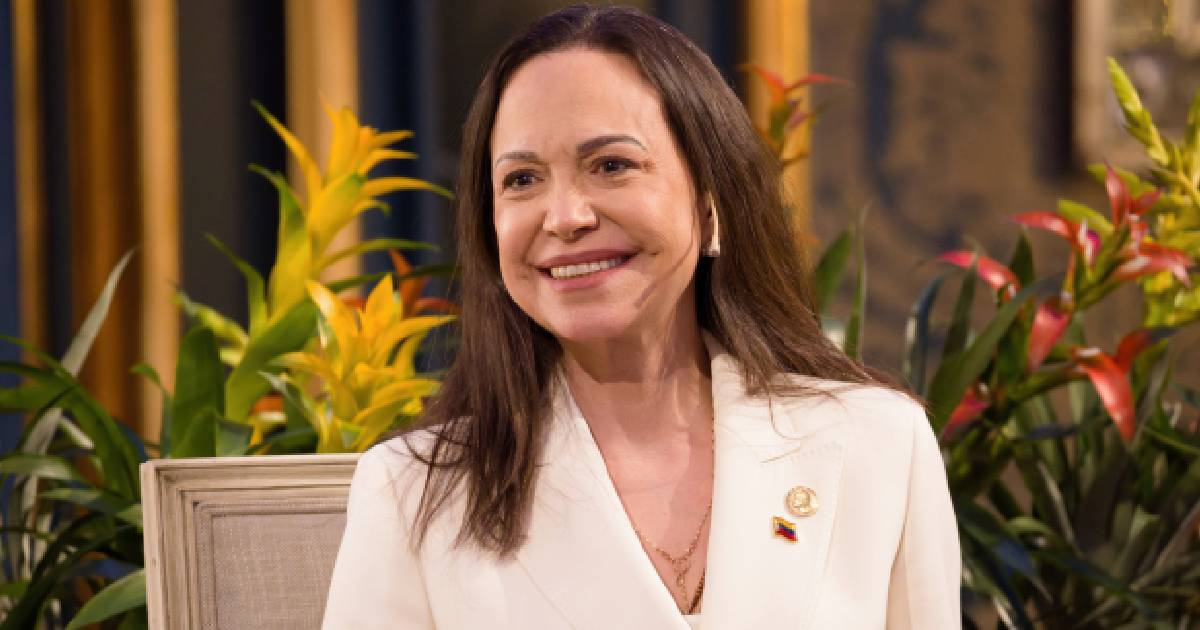
María Corina Machado is contemplating a significant shift in her strategy to return to Venezuela. Instead of using discreet routes, she aims to make her comeback a major political event, surrounded by international figures and delegations, as reported by ABC.es this Thursday.
This strategic pivot follows Machado’s seven unsuccessful attempts to re-enter the country since her secret departure in December 2025. She is not only an opposition leader but also a Nobel Peace Prize laureate of 2025.
The three most recent attempts took place on September 21 and 22, all originating from Panama City. These included an aborted sea departure due to alleged mechanical failures and two blocked or unauthorized flights—one to Aruba and another to Curaçao.
Shifting Strategies for Political Impact
"The idea is to move away from discreet routes and turn the return into a visible event," ABC.es noted, highlighting that Machado's team is exploring logistical options from Panama and considering an international delegation accompanying her back to Venezuela.
The rationale behind this new approach is to increase the diplomatic cost of any blockade. If the Chavista regime prevents the entry of a delegation of foreign politicians and personalities, the international repercussions would be significantly greater than those of a thwarted clandestine attempt.
Machado’s Urgent Call for Change
On September 19, Machado expressed her desire to return "imminently" because she could no longer lead the democratic transition from abroad. "My return will be a force to help organize and channel an electoral process," she asserted.
The failed attempts on September 21 and 22 coincided with the presence of Venezuelan interim president Delcy Rodríguez in New York, where she participated in the UN General Assembly.
On September 23, Rodríguez met with President Donald Trump—describing the meeting as "historic"—and assured that "there will be elections in Venezuela at the right time," though no date was set.
Secretary of State Marco Rubio characterized the meeting as focused on debt restructuring, economic stabilization, and a political transition toward free and fair elections.
Machado’s Journey and Future Prospects
In early September, Trump stated that Venezuela "is not yet ready" to hold elections. Machado left Venezuela on December 11, 2025, after 16 months in hiding, supported by a U.S.-backed operation through Curaçao and a subsequent flight to Europe.
Her daughter, Ana Corina Sosa, accepted the Nobel Prize in Oslo a day before because Machado couldn’t arrive in time for the ceremony.
Since then, multiple return attempts have failed: in March 2026, she vowed to come back "in a few weeks"; in June, two attempts from Curaçao and Panama were unsuccessful.
Panama reportedly granted Machado a special humanitarian diplomatic status to facilitate her international mobility, although this has not guaranteed her entry into Venezuela.
Ana Corina Sosa warned on Wednesday about the conditions of her mother's return amid ongoing negotiations between Washington and Caracas regarding the country's political future.
Understanding the Challenges of María Corina Machado's Return
Why is María Corina Machado planning a public return to Venezuela?
Machado aims to make her return a high-profile political event to increase international diplomatic pressure and visibility, as a way to challenge any potential blockades by the Venezuelan regime.
What challenges has Machado faced in her attempts to return to Venezuela?
Machado has encountered multiple challenges, including blocked or unauthorized flights and logistical issues, which have prevented her from successfully returning to Venezuela despite multiple attempts.
What is the significance of an international delegation accompanying Machado?
An international delegation would increase the diplomatic stakes, as any attempt by the Venezuelan regime to block their entry would have significant international repercussions, potentially increasing pressure for change.