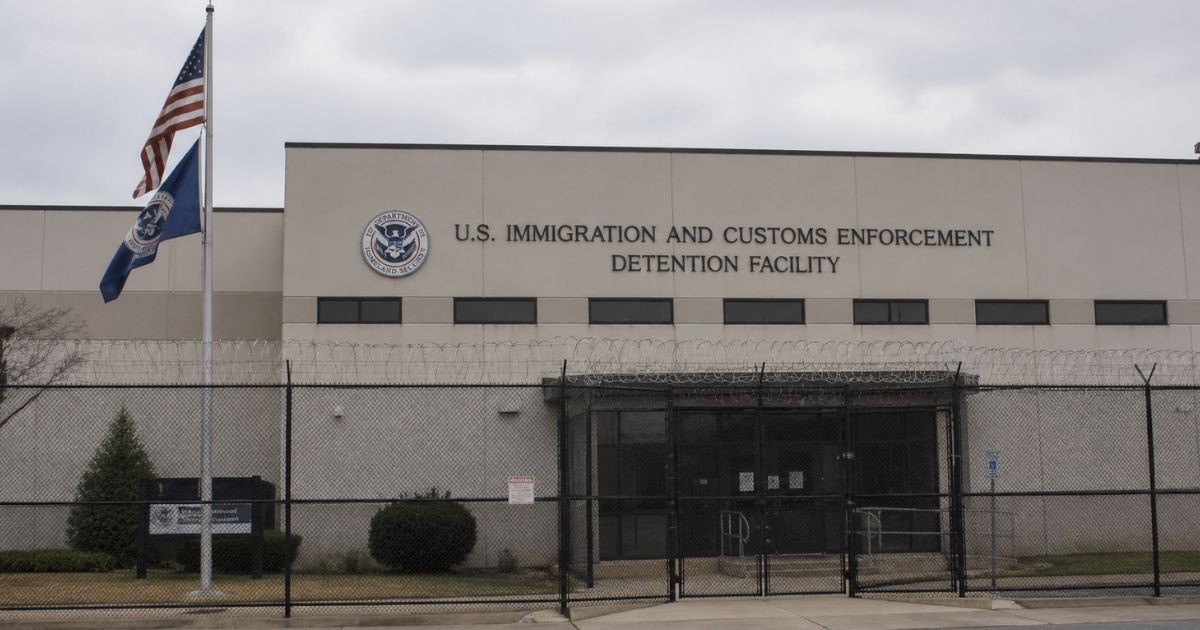
A Cuban migrant, known as Mayito and a stylist living in South Florida, has accused U.S. Immigration and Customs Enforcement (ICE) of denying him access to his antiretroviral medication while he was held at the ICE-ERO Center in Miramar, Florida. This information was shared by Rosanna Sopo-Elias, a close friend of the detainee, to Local 10.
Residing in Hollywood, Sopo-Elias described Mayito as part of her "chosen family." She recounted how, at first, he seemed resigned to being deported to Mexico, handing over his pet dog to her and assuring her that everything would be alright.
However, within three days, the situation took a dramatic turn.
Highlighting the Plight of Detained Migrants
Mayito's case sheds light on the harsh conditions faced by migrants detained by ICE. For updates on detentions, deportations, and immigration rights, visit our U.S. Immigration section.
"He sounded unlike I've ever heard him. He was hysterical, crying uncontrollably, and begging me, 'Please help me,'" Sopo-Elias recounted.
According to her account, the Cuban migrant was forced to sleep on the floor of a cell with 60 other men, lacking beds, showers, or any means to clean himself after soiling himself.
What alarmed Sopo-Elias the most was the absence of medical care: Mayito lives with HIV and other conditions requiring daily medication, yet ICE provided no treatment.
When she advised him to seek help from the facility's staff, his response was blunt: "There is no medical staff here."
"These are critical medications you cannot abruptly stop taking," Sopo-Elias cautioned, fearing for her friend's life.
"My biggest fear is that he could die in there," she stated, plainly summarizing the situation: "This is inhumane; this is wrong. Regardless of your legal status, everyone deserves to be treated with human dignity."
The Wider Issue
Mayito's ordeal is not isolated. An investigation by the Miami Herald in August revealed a Honduran migrant at the same facility also required daily HIV medication but was unable to access it, even though it was in his confiscated backpack.
Sopo-Elias's revelations came days after leaked photos by an anonymous whistleblower exposed dire conditions at the facility: detainees sleeping on the floor of a non-ventilated garage, overflowing portable toilets, piles of garbage near dining areas, and individuals brushing their teeth with a garden hose outdoors.
The center, designed for routine administrative appointments with a maximum capacity of 50 people, was reportedly housing 342 detainees simultaneously, exceeding its limit sixfold.
Political Response and Oversight
In response, Democratic lawmakers from the House Oversight Committee—Robert Garcia, Bennie Thompson, and Maxwell Frost—released those images on September 21 and sent a formal letter to ICE Acting Director David J. Venturella and Department of Homeland Security (DHS) Inspector General Joseph V. Cuffari, demanding record preservation and delivery by October 5.
Back in July, Congresswoman Debbie Wasserman Schultz conducted a surprise inspection of the Miramar ICE center, finding over 150 individuals in four rooms meant for 56, with an average of one medical emergency per day requiring a 911 call.
Thomas Kennedy, spokesperson for the Florida Immigrant Coalition, stated unequivocally: "They are illegally detaining. More than the 12 hours allowed by law. It is not a detention center; these are ICE administrative offices being used as a detention center."
In response to the allegations, a DHS spokesperson did not address the specific conditions of the facility but noted that the government offers $3,000 and a free flight to those who choose voluntary self-deportation via the CBP Home app. "Detention is a choice," the spokesperson said.
Key Issues Surrounding ICE Detentions
What are the conditions like at the ICE-ERO Center in Miramar?
Reports indicate overcrowding, lack of medical care, inadequate sleeping conditions, and unsanitary facilities, such as detainees forced to sleep on floors and brush their teeth with outdoor hoses.
How has the government responded to these allegations?
Democratic lawmakers have demanded records from ICE and DHS officials, while the DHS offers voluntary self-deportation incentives instead of addressing specific conditions.
What are the health concerns for detainees like Mayito?
Detainees with conditions like HIV require daily medication, which has reportedly been denied, posing serious health risks and potentially life-threatening situations.