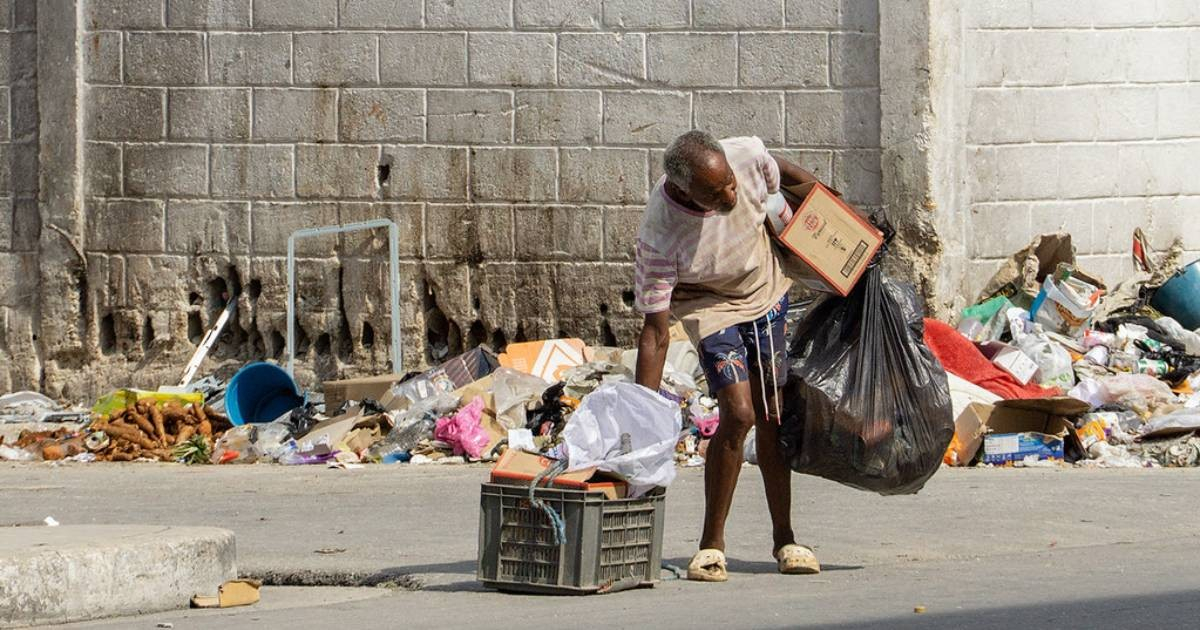
Amílcar Pérez-Riverol, a renowned Cuban scientist and communicator, took to Facebook to sound the alarm on Cuba's critical food crisis. He painted a grim picture of widespread hunger, severe nutritional deficiencies, and inadequate diets affecting the majority of the island's residents.
Pérez-Riverol declared on September 2nd, "In Cuba, we live without food," joining a growing chorus of scientists and intellectuals documenting the rapid decline of food security in the country throughout 2026.
The national survey titled "Hunger in Cuba 2025," conducted by the Food Monitor Program (FMP) and Cuido60, revealed that 96.91% of the Cuban population lacks adequate access to food, based on 2,513 valid responses from 16 provinces.
A troubling 33.9% of households reported at least one family member going to bed hungry in the 30 days preceding the survey, a significant increase from the 24.6% recorded in 2024.
The Cuban Observatory for Human Rights reported that 80% of the population skips at least one meal daily due to scarcity and low income, with over 80% of households spending beyond their means on food.
Even the regime has conceded the collapse of the basic ration system. In June, Alberto López Díaz, Minister of the Food Industry, publicly acknowledged, "This year we haven't been able to provide oil, chicken, or yogurt."
The FMP summarized the systemic disaster with a telling phrase: "The chain is broken," illustrating the simultaneous collapse of food production, importation, preservation, transportation, and distribution on the island.
Between 2018 and 2023, national agricultural production has plummeted: pork farming decreased by 95%, rice by 87%, beans by 70%, and milk by 58%.
According to the UN's World Food Program, Cuba imports about 80% of its consumed food, making it extremely vulnerable to any foreign exchange or external credit restrictions.
Feeding oneself has become a luxury for the vast majority. The FMP calculated that two adults in Havana require 41,735 pesos monthly—nearly 20 minimum wages—for barely adequate nutrition. Economists estimate that as of September 2026, covering basic needs demands around 96,000 pesos monthly, far exceeding the official median salary.
The FMP identified critical levels of food insecurity in five provinces: Havana, Matanzas, Cienfuegos, Guantánamo, and Santiago de Cuba.
Malnutrition disproportionately affects women, nearly double that of men, leading to documented issues such as childhood calcium deficiency, obesity from scarcity, diabetes, and chronic stress.
Notably, 79.75% of FMP respondents blamed the shortage on poor state management rather than the U.S. embargo, highlighting the regime's responsibility in managing food resources.
A staggering 80% of Cubans believe the current crisis is worse than the Special Period of the 1990s when the Soviet Union's collapse plunged the island into a devastating economic crisis.
In May, the World Food Program delivered 106 tons of food as humanitarian aid to Cuba, implicitly acknowledging the emergency facing the population.
Understanding Cuba's Food Crisis
What is the current food situation in Cuba?
Cuba is experiencing a severe food crisis with widespread hunger and nutritional deficiencies affecting the majority of the population. The situation has escalated to the point where more than 80% of the population faces significant nutrient shortages.
Who is Amílcar Pérez-Riverol?
Amílcar Pérez-Riverol is a Cuban scientist and communicator who has publicly raised concerns about the critical food situation in Cuba. He is among the voices documenting the country's declining food security.
How does the food crisis impact women in Cuba?
The food crisis in Cuba disproportionately affects women, who suffer from malnutrition at nearly twice the rate of men. This has resulted in health issues such as childhood calcium deficiency, obesity, diabetes, and chronic stress.
What role does the Cuban government play in this crisis?
The Cuban government is largely blamed for the food crisis due to poor management of food resources. A significant majority of Cubans attribute the shortage to state mismanagement rather than the U.S. embargo.