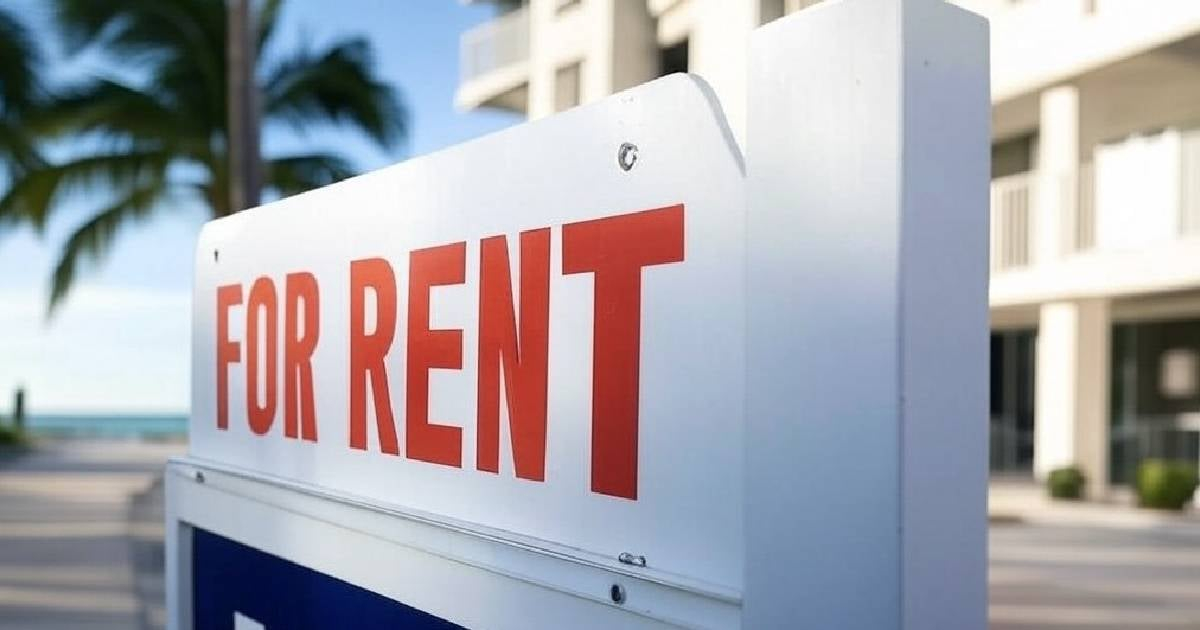
Florida's renters could potentially bear some of the financial burden from a tax reform aimed at reducing property taxes for homeowners if voters approve Amendment 3 this November, according to a new analysis detailing its potential impact on rental properties.
Research from Jared Walczak, a senior researcher at the Tax Foundation, suggests that increasing the homestead exemption for primary residences could shift a larger portion of the tax burden onto properties that do not qualify for this exemption, including rental properties.
Previously, the Tax Foundation had indicated that significantly lowering the taxable base of primary residences could lead to higher tax rates on properties that remain taxable, such as apartment complexes and other non-homestead properties.
Walczak's projections estimate that the average property tax on an apartment could rise by about $406 annually by 2028, while rental homes might see an increase of approximately $1,081 per year.
For owner-occupied homes not qualifying for the homestead exemption, the projected increase would be $1,196.
However, these figures do not imply automatic increases. The calculation assumes that local tax authorities will raise rates, within legal limits, to offset some revenue losses due to the expanded exemption.
Under this scenario, the Tax Foundation estimates that the overall tax burden on residential rental properties could increase by 14.1% when the new exemption is fully implemented in 2028, with the non-school tax portion potentially rising by 22.6%.
Implications for Renters and Housing Development
Walczak believes a significant portion of these increased costs would eventually be passed on to tenants through higher rents. He also warned that this could impact the construction of new housing and the development of affordable housing projects.
Understanding Amendment 3
Amendment 3 is a proposed change to the Florida Constitution scheduled for a vote in the general elections on November 3, 2026. It requires at least 60% voter approval to be enacted into the state constitution.
According to the official text, the proposal would raise the homestead exemption for non-school-related property taxes to $150,000 in 2027 and $250,000 in 2028, with subsequent adjustments for inflation.
This homestead exemption benefits the homeowner's primary residence, meaning rental properties, second homes, and commercial properties would not receive this expanded exemption.
The proposal also includes a provision directly affecting these properties: reducing the annual growth cap on their assessed value for tax purposes from 10% to 5%.
Additionally, it establishes a mechanism allowing counties and municipalities to further expand the exemption on primary residences, potentially up to the full assessed value, and sets specific rules regarding the use of local property tax revenues.
The measure would not impact taxes allocated to school districts and, if approved, would take effect on January 1, 2027.
Current Housing Costs in South Florida
The debate comes at a time when housing costs continue to heavily burden many households in South Florida.
As of July 2026, the median rent in the city of Miami was around $2,957 per month, while the broader metropolitan area saw rents at approximately $2,279, marking a 5% decrease from the previous year.
Significant disparities exist within the market itself. In Brickell, the median rent was about $3,986 per month in August, according to data from Realtor.com.
The high cost of housing is also affecting the independence of younger residents.
Earlier this year, young adults in South Florida reported challenges in leaving their family homes, citing rent prices and the high cost of living as key factors.
This context highlights the importance of any tax changes that could impact rental property owners and, potentially, the rent paid by residents.
Public Opinion on Amendment 3
A St. Pete Polls survey conducted from September 15 to 17 among 913 likely Florida voters showed 44.9% support for Amendment 3, with 30.4% opposed and 24.8% undecided. The poll has a margin of error of ±3.2 percentage points.
The survey reflects opinions at the time of polling. The proposal needs at least 60% voter approval in November to be incorporated into the Florida Constitution.
Frequently Asked Questions about Amendment 3 and Its Impact
How would Amendment 3 affect rental property taxes?
If Amendment 3 is approved, rental property taxes could increase as the tax burden shifts to properties not qualifying for the homestead exemption. This could result in higher rents as landlords pass on these costs to tenants.
What changes does Amendment 3 propose?
Amendment 3 proposes increasing the homestead exemption for non-school property taxes and reducing the annual growth cap on the assessed value of non-homestead properties. It aims to provide tax relief to primary homeowners while potentially raising taxes on rental and commercial properties.
When will Amendment 3 take effect if approved?
If approved by voters, Amendment 3 would take effect on January 1, 2027.