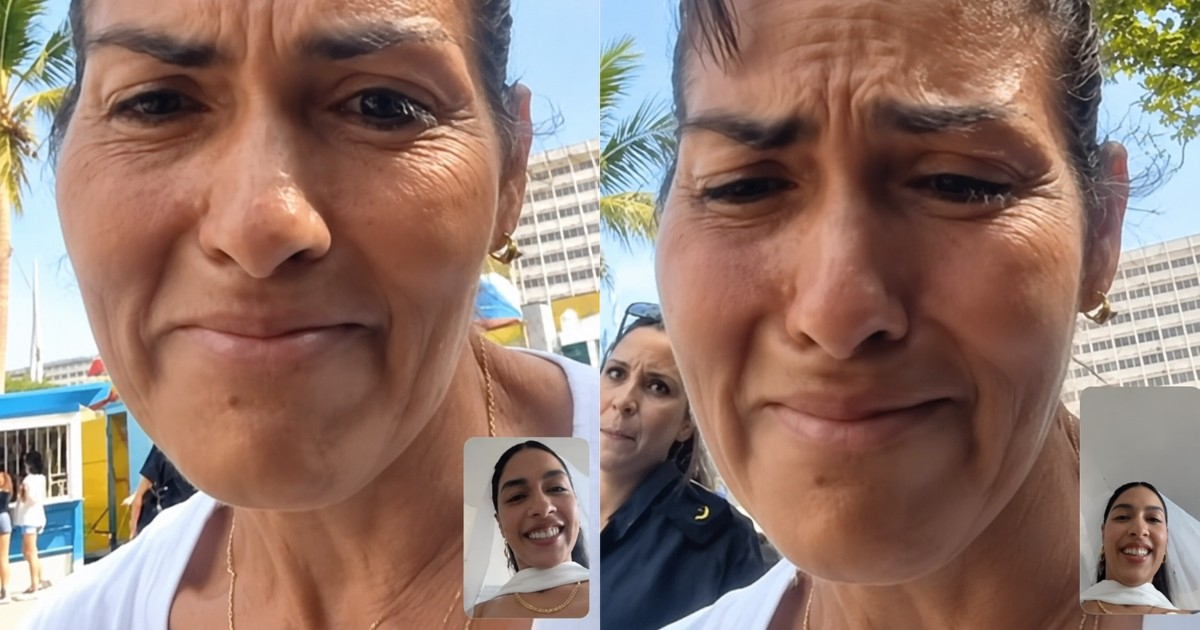
A Cuban woman living in New York shared a heartwarming video on TikTok that has deeply moved thousands: it captures her mother, who remains in Cuba, seeing her daughter's wedding dress for the first time through a video call. The mother, sitting outdoors, struggles to hold back tears as she gazes at her daughter dressed in white on the phone screen.
The brief 29-second clip was posted on September 17 by the account @yenifferlopez303 with a poignant caption: "And it hurts."
The background music in the video complements the moment with lyrics that seem tailor-made for the occasion, speaking of the pain caused by distance and having a loved one hundreds of miles away.
The Impact of Distance on Cuban Families
This video struck a chord with the Cuban diaspora community, prompting a flood of comments from users who saw their own stories reflected in the image.
"Crying over strangers is my passion. Congratulations on your wedding, many blessings, but I saw your mom and how her expression changed as she tried not to cry, and then she couldn't hold back," one follower commented.
Another shared an even more heartbreaking experience: "I had to cry. I've been through so many events, like the birth of my baby, alone, with my mom on a camera. When I went into the C-section, she was crying and on her knees, praying to God that we both came out okay…"
Recurring Themes of Separation
This scene is not an isolated incident but a reflection of a reality faced by countless Cuban families separated by emigration. Recently, a Cuban bride in Florida prepared for her wedding day alone because her mother was in Cuba, in a video that garnered nearly 15 million views. Earlier this year, another young Cuban woman experienced a similar moment when her mother reacted emotionally to seeing her dressed as a bride through a screen from the island.
The pattern is familiar: weddings, births, quinceañeras, and farewells. Some of life's most significant moments are experienced through a screen. In July, a Cuban mother followed her daughter's quinceañera photos via video call from the United States, unable to travel due to her immigration status.
Video Calls: A Lifeline for Cuban Families
In 2024, the Cuban Foreign Ministry acknowledged that 38% of Cuban families have at least one member living abroad, in a context marked by the largest exodus in the island's recent history.
For many of these families, video calls have become the only possible lifeline. However, as this video illustrates, that lifeline often makes the pain of separation even more palpable.
Recently, other videos of reunions and farewells among Cubans have also stirred emotions on social media: from a mother's heart-wrenching cries upon seeing her son to a grandmother's hug before boarding a plane, never to see her again. These stories resonate with many Cubans because they reflect family separation experiences that countless individuals have lived through personally.
Understanding the Emotional Impact of Family Separation
Why do these videos resonate so strongly with the Cuban community?
These videos resonate because they capture the emotional strain of family separation, a reality for many Cuban families due to widespread emigration. They reflect shared experiences and evoke empathy and understanding among those who have lived through similar situations.
How has the Cuban government's acknowledgment of the diaspora affected families?
The Cuban government's acknowledgment highlights the significant impact of emigration on family dynamics, recognizing the challenges many face in maintaining connections with loved ones abroad. It underscores the widespread nature of this issue, affecting nearly 38% of families.
What role do video calls play for separated families?
Video calls serve as a crucial communication tool for separated families, enabling them to share significant life events and maintain connections despite physical distance. However, they also highlight the emotional pain of not being able to be physically present.