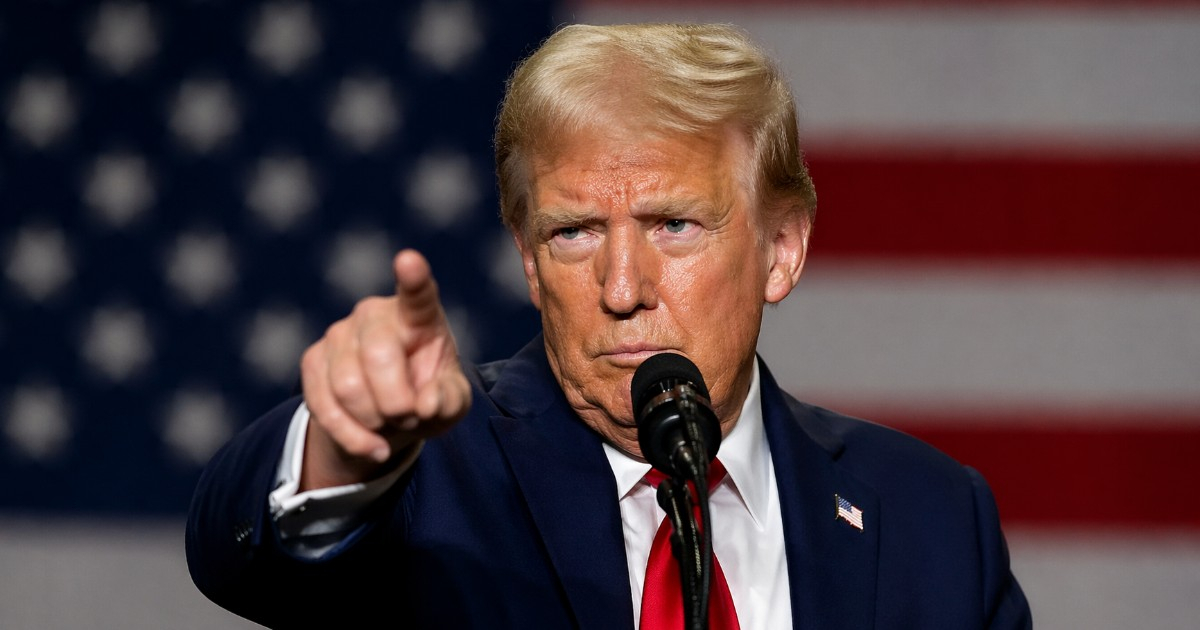
In a forceful address at the United Nations, President Donald Trump delivered a stark ultimatum to Iran: negotiate a new deal with the United States or face the potential "destruction" of the Islamic Republic.
Speaking at the 81st General Assembly of the UN, Trump emphasized the critical choice confronting Iran, contrasting the possibility of a diplomatic agreement with the looming threat of military escalation.
"Will Iran choose to forge an agreement that allows them to rebuild and become a leading nation in the Middle East, or even the world? Or will I decimate the Islamic Republic, ending their ability to harm and destroy other nations and people?" Trump declared, underscoring the gravity of the situation.
Despite the harsh warning, Trump expressed confidence that an agreement would eventually be reached, envisioning a resolution after the U.S. legislative elections on November 3.
"I believe a deal will materialize right after the elections because it would be nonsensical for them not to," he remarked.
Trump suggested that Iranian officials were awaiting the election outcome, though he clarified that he himself was not a candidate in these polls. He reiterated Washington's non-negotiable condition: preventing Iran from acquiring a nuclear weapon.
The president also defended U.S. military actions against Tehran, claiming significant damage to Iran's naval, aerial, missile, and drone capabilities.
He urged other nations to join the economic isolation of Iran until Tehran ceases its attacks on commercial navigation, abandons its nuclear aspirations, and stops supporting groups labeled as terrorists by Washington.
Later, Trump adopted a more diplomatic tone, revealing that the U.S. and Iran had engaged in discussions on the same day as his UN address. "I think a deal will be reached," he told reporters after meeting with British Prime Minister Andy Burnham. "They want to talk to us. They've been talking to us, even today," he added, reiterating the U.S. stance against a nuclear-armed Iran, according to Reuters.
From Tehran, there were indications of a possible thaw. An Iranian official told Reuters that Iran might reopen the Strait of Hormuz within days if the U.S. lifts its blockade and eases military pressure, viewing the General Assembly as a "golden opportunity" for renewed diplomacy.
The ultimatum followed weeks of fluctuating rhetoric from Trump, alternating between military threats and hints at a negotiated settlement.
On September 13, Trump warned of an American withdrawal from Iran unless they seize the country's oil, drawing a parallel with Venezuela, while the U.S. maintained its pressure on Tehran.
Earlier, Trump linked rising oil and gas prices to the conflict with Iran, predicting a decline in prices after the midterm elections.
The pressure on Tehran intensified since August. Trump announced an "economic war" against Iran, threatening "severe consequences" for nations aiding the Iranian regime.
This tough stance came after a prior attempt at negotiation. In early August, Trump claimed progress on a deal with Iran and called off a planned military strike, stating it was ready to proceed.
However, within weeks, he stated that talks had ceased, and the naval blockade of Hormuz remained firmly in place.
Key Questions About the U.S.-Iran Relations
What is the main condition set by the U.S. for Iran?
The United States demands that Iran must not develop or obtain a nuclear weapon.
What potential action did Trump mention if no agreement is reached?
President Trump mentioned the possibility of "destruction" of the Islamic Republic if no agreement is reached.
Why is the Strait of Hormuz significant in U.S.-Iran relations?
The Strait of Hormuz is a vital waterway for global oil shipments, and its control is a strategic point of contention between the U.S. and Iran.