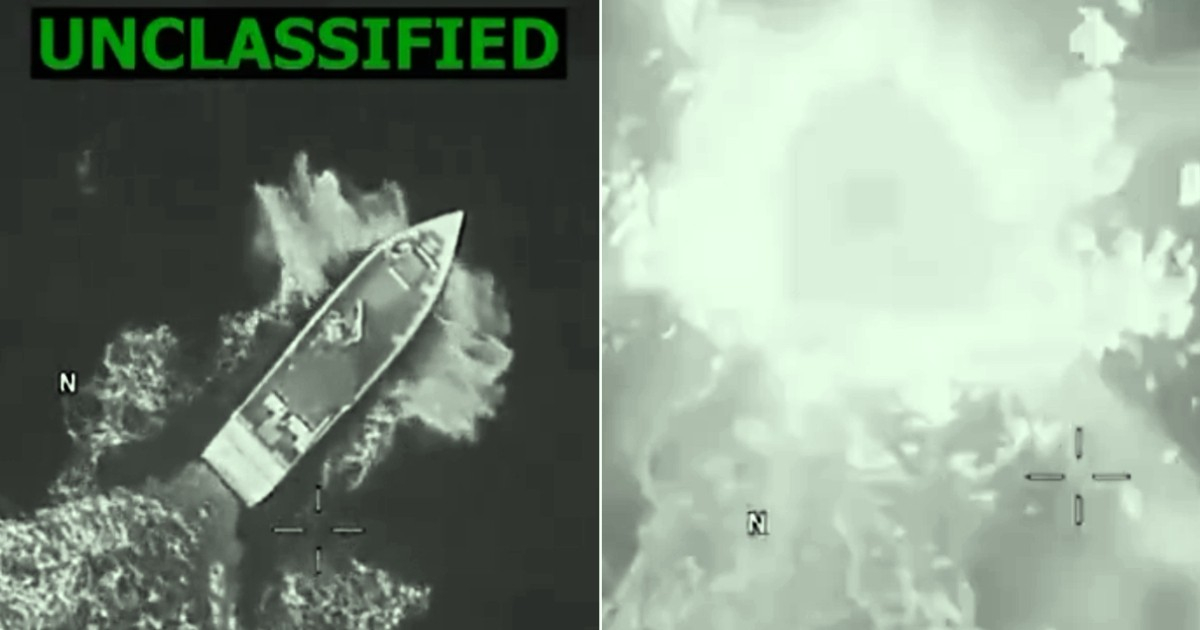
A recent update from the United Nations Human Rights Council has raised significant concerns about U.S. airstrikes on boats suspected of drug trafficking in the Caribbean and eastern Pacific. According to a report by special rapporteur Ben Saul, these actions could potentially be classified as crimes against humanity, as reported by BBC News.
The document outlines at least 68 strikes conducted from September 2025 in international waters, beyond the jurisdiction of U.S. territorial boundaries, resulting in the deaths of 223 individuals.
Saul offered a critical legal assessment, stating, "These actions represent a series of extrajudicial executions that violate the right to life," noting they lack justification under national or individual self-defense, international humanitarian law, maritime law, drug control treaties, or international counterterrorism law.
The report further emphasizes, "There are reasonable grounds to believe that these 68 documented attacks, which resulted in 223 fatalities, constitute crimes against humanity by homicide under customary international law."
The findings were released shortly after the U.S. Southern Command announced another strike against a vessel in the Caribbean, which left four individuals dead. These individuals were labeled as "narcoterrorists" based on "confirmed intelligence."
The operation, officially named Southern Spear, commenced in September 2025 and was formally authorized by Defense Secretary Pete Hegseth on November 13 of the same year. Hegseth has defended the operation as a mission to "eradicate narcoterrorists from our hemisphere" and to protect the U.S. from "drugs that are killing our people."
Nevertheless, special rapporteur Ben Saul has highlighted the lack of conclusive evidence from U.S. authorities that all targeted vessels were involved in illicit trafficking. Neither the White House nor the State Department has responded to requests for comments regarding the UN report.
Legal experts and human rights organizations have questioned the legality of the operation since its inception, and several Latin American governments, whose citizens were among the victims, have voiced their disapproval.
Former Colombian President Gustavo Petro condemned the strikes as "murder" and suspended intelligence cooperation with Washington, a stance that strained diplomatic relations for several months. Petro stepped down in August 2026 after a candidate backed by Donald Trump won the June election, which eased Latin American governmental resistance to the operation.
Cuban Foreign Minister Bruno Rodríguez Parrilla also criticized the U.S. anti-drug campaign, calling it a "farce" linked to political and military goals in the region.
Saul's report represents the most formal accusation issued by the United Nations system to date, escalating international pressure on the Trump administration to either justify or halt an operation that has resulted in a year of deadly strikes in the western hemisphere's waters.
Moreover, Saul argued that even if the targets were identified as members of terrorist groups, none had launched an armed attack against the United States that would justify invoking self-defense under international law, undermining the central legal justification of the operation.
Key Concerns Regarding U.S. Strikes on Drug Boats
What are the main allegations against the U.S. strikes on suspected drug boats?
The main allegations are that the U.S. airstrikes could constitute crimes against humanity, as they represent extrajudicial executions violating the right to life without justification under international law.
How many attacks have been documented in the UN report?
The UN report documents at least 68 attacks conducted since September 2025, resulting in the deaths of 223 individuals.
What has been the response from U.S. authorities regarding the report?
As of now, neither the White House nor the State Department has publicly responded to the UN report's findings or the requests for comments.