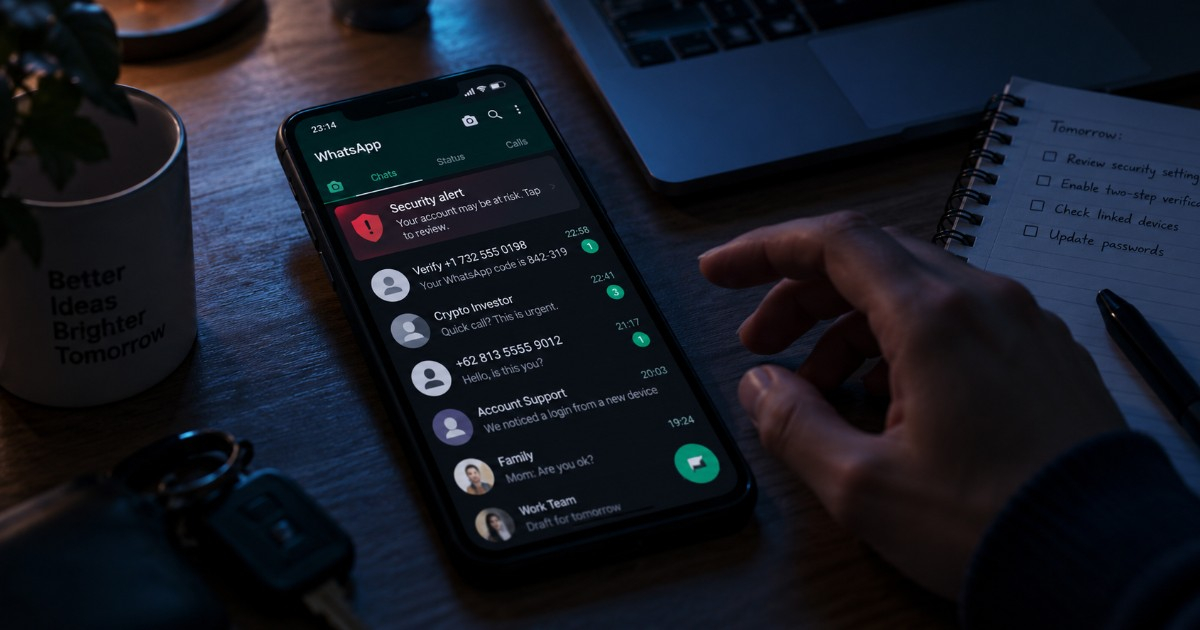
Criminals who manage to seize control of WhatsApp accounts are exploiting the identities of their victims to request money transfers from family and friends. This fraudulent tactic, referred to as "carding," has been identified by authorities in Sancti Spíritus as one of the leading forms of digital fraud currently being detected in the region.
The state-run news portal Cubadebate has highlighted this issue, citing information from the Technical Investigation Directorate (DTI) of the Ministry of the Interior and detailing specific cases of individuals who have fallen victim to these scams.
WhatsApp Account Hijacking: A Growing Concern
According to Lieutenant Colonel Sonlit Fernández Montiel, head of Information and Analysis at the DTI in Sancti Spíritus, the most prevalent form of tech-supported fraud involves the hijacking of WhatsApp accounts. "The most common method we're seeing today involves hacking into WhatsApp accounts," he explained.
This "carding" scheme involves taking over someone's account and capitalizing on the pre-existing trust between that person and their contacts. When contacts receive a message, they see the familiar number, name, and photo, making it unlikely they will suspect a fraudster is behind the communication.
Real-Life Cases Illustrate the Threat
One case involved a man, referred to as Antonio, who discovered he had lost access to his WhatsApp account. His contacts began receiving messages falsely requesting money on his behalf. The scammer would propose a bank transfer, promising to repay the amount in cash later. Some contacts, believing they were assisting a friend, sent sums as high as 30,000 to 40,000 pesos.
Authorities have described the tactics used to gain access to these accounts. One method involves social media ads for products. The victim contacts a supposed seller and receives a link as part of the transaction process. Fernández noted that these links can contain malware designed to compromise the app.
Preventative Measures and Broader Scams
Fernández advised that victims often inadvertently provide personal information or phone data that facilitates illegal access. The primary advice to avoid falling victim is to verify any unexpected money request through a secondary communication method, such as a phone call or video chat, to confirm the identity of the requester.
WhatsApp hijacking isn't the only scam. Reports also mention fake sales, currency exchange frauds, and advance payments for undelivered goods. One case involved a 65-year-old woman named Ana, who encountered a supposed small business advertising solar energy systems on Facebook. After contacting the alleged sellers, she was told that the equipment was en route to her home and only needed payment via Zelle. Her decision to wait before transferring the $3,000 saved her from financial loss.
Similar scams involving energy equipment have been reported. In July, a Cuban man exposed an attempt to hijack his WhatsApp account under the guise of selling solar panels. The scammer tried to guide him through linking his device to the app. Another tactic involves advertising non-existent products and demanding an advance payment before completing the supposed transaction.
Owen Hernández Rodríguez, head of the DTI in Sancti Spíritus, warned, "The scammer always asks for an advance." This principle also applies to currency exchanges, where victims transfer Cuban pesos expecting foreign currency in return, but the second part of the exchange never occurs.
Scammers Exploit Vulnerabilities and Trust
Investigations have also uncovered scams targeting families of incarcerated individuals. The scammer poses as a prison official, inventing a story about a fight or damage to equipment, and requests a transfer to resolve the issue. This particular scam was mostly reported between the end of 2025 and the start of this year.
The DTI noted that many individuals involved in these scams are young, with no criminal record but possessing skills in technology and social media. Hernández pointed out that the cases do not necessarily indicate an organized network but rather individual scammers.
Sancti Spíritus, Trinidad, Cabaiguán, and Yaguajay are among the areas with the highest number of complaints, though authorities report that these crimes occur across all municipalities. Investigators noted that identifying the owner of a phone line or bank card does not always lead to the perpetrator, as some accounts are registered to emigrated or deceased individuals, requiring a detailed reconstruction of communications and financial activities.
The number of cases has increased throughout 2026. In August, a Cuban woman living in the United States reported losing $1,900 after scammers took over her friend's WhatsApp account to solicit funds. In May, another victim lost 70,000 pesos by transferring them to a compromised WhatsApp account, believing she was helping a known contact.
In April, Bandec warned of WhatsApp fraud tactics capable of compromising accounts and causing financial losses, including techniques where victims unknowingly provide codes necessary for registering or linking their account to another device.
Understanding WhatsApp Fraud in Cuba
What is the "carding" scam in Cuba?
"Carding" is a scam where criminals hijack WhatsApp accounts and use the victim's identity to request money from their contacts, exploiting the trust between them.
How do scammers gain access to WhatsApp accounts?
Scammers often use malware links or social engineering tactics to gain access to WhatsApp accounts. Victims may inadvertently provide codes or personal information, facilitating the hijack.
How can individuals protect themselves from this type of fraud?
To protect against fraud, verify any unusual money requests through a secondary communication method, such as a phone call, to confirm the identity of the requester.