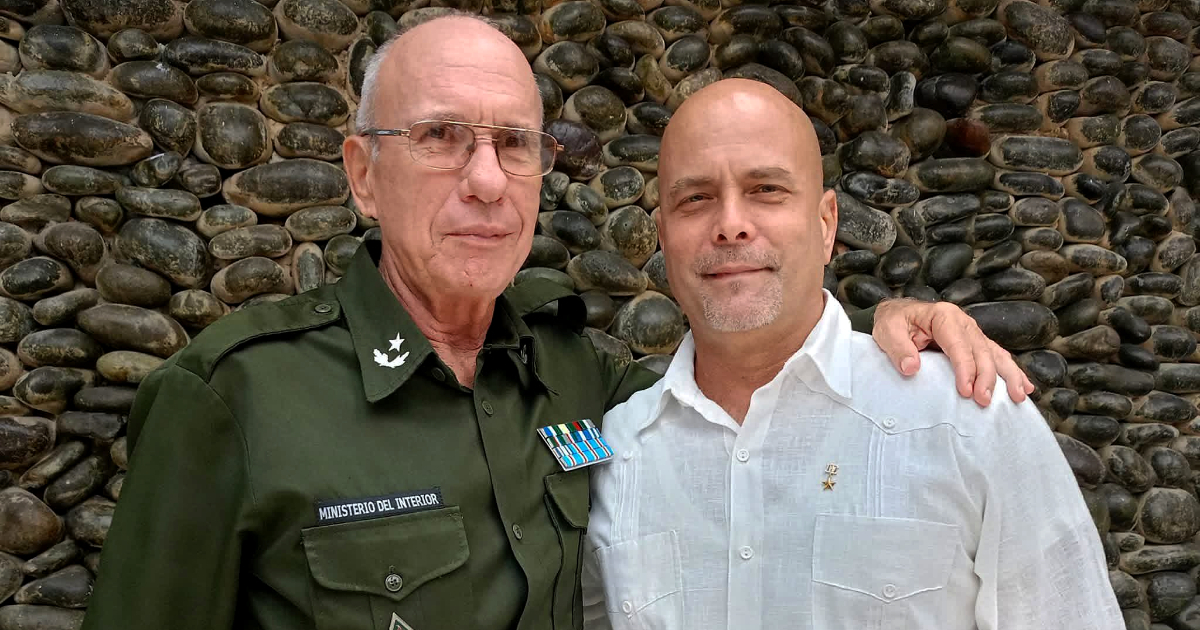
Gerardo Hernández Nordelo, the national coordinator of the Committees for the Defense of the Revolution (CDR), recently extended public congratulations to Brigadier General Óscar Alejandro Callejas Valcarce on his birthday. Callejas Valcarce, a high-ranking official in Cuba's Ministry of the Interior (MININT), faced sanctions from the United States due to his role in leading the Revolutionary National Police (PNR) during the July 11, 2021 protests.
In a post on social media platform X, Hernández expressed his admiration, stating, "A lifetime dedicated to the Revolution from the illustrious ranks of @minint_cuba. Happy Birthday to General Callejas, Head of the Political Directorate of the Ministry of the Interior!"
This gesture brings Callejas Valcarce back into the spotlight. He has held significant positions within Cuban police structures for years and currently serves as the head of the Political Directorate of the MININT.
U.S. Sanctions and Their Implications
The U.S. Department of the Treasury imposed sanctions on the Cuban general on July 30, 2021, shortly after the unprecedented anti-government demonstrations. The sanctions targeted the PNR and two of its top officials: Callejas Valcarce, who was then the director of the police, and Eddy Manuel Sierra Arias, his deputy.
Washington justified the sanctions by citing the police's actions during the protests and the subsequent arrests of demonstrators. The U.S. accused the PNR of engaging in violent actions against citizens who took to the streets and of arresting dissidents and protestors.
As a result, Callejas Valcarce's assets under U.S. jurisdiction were frozen, and there were restrictions on transactions with U.S. individuals and entities.
Further U.S. Measures and CDR Involvement
In May 2026, amid a new expansion of measures by Washington against Cuban government structures, the Office of Foreign Assets Control (OFAC) updated its designations related to the MININT and the PNR as part of the Cuba sanctions program.
Following Hernández Nordelo's congratulatory message, the United States added the CDR to its list of Specially Designated Nationals (SDN) on June 4, 2026. Although the measure affects the organization, Hernández Nordelo himself is not personally sanctioned by the OFAC.
The CDR, established by dictator Fidel Castro in September 1960, have been spread across neighborhoods throughout the country. Officially engaged in community activities, they have historically played roles in political surveillance and mobilization in support of the government.
Gerardo Hernández: A Controversial Figure
Hernández Nordelo has publicly advocated for strengthening so-called "revolutionary vigilance" in neighborhoods. Before leading the CDR, he was one of the most prominent members of the Wasp Network, a Cuban intelligence operation dismantled by U.S. authorities in the 1990s.
Convicted in the United States in 2001, Hernández was sentenced to two life terms plus 15 years in prison. He returned to Cuba in December 2014 after being released in the context of the rapprochement between the Obama and Castro administrations.
This recent public acknowledgment links two figures deeply involved in Cuba's security and political control mechanisms: Hernández Nordelo, at the helm of the U.S.-sanctioned CDR, and Callejas Valcarce, the current political leader of the MININT and sanctioned individually since 2021.
Understanding U.S. Sanctions on Cuban Officials
What are the implications of U.S. sanctions on Cuban officials?
U.S. sanctions can freeze the assets of sanctioned individuals under U.S. jurisdiction and restrict their ability to conduct transactions with U.S. persons and entities.
Why was General Óscar Callejas Valcarce sanctioned by the U.S.?
He was sanctioned due to his leadership role in the Revolutionary National Police during the July 11, 2021 protests, where the police were accused of violent actions against protestors.
How have the Committees for the Defense of the Revolution been affected by U.S. sanctions?
The organization was added to the U.S. list of Specially Designated Nationals, impacting its financial and operational interactions with U.S. entities, but its leader, Gerardo Hernández, has not been personally sanctioned.