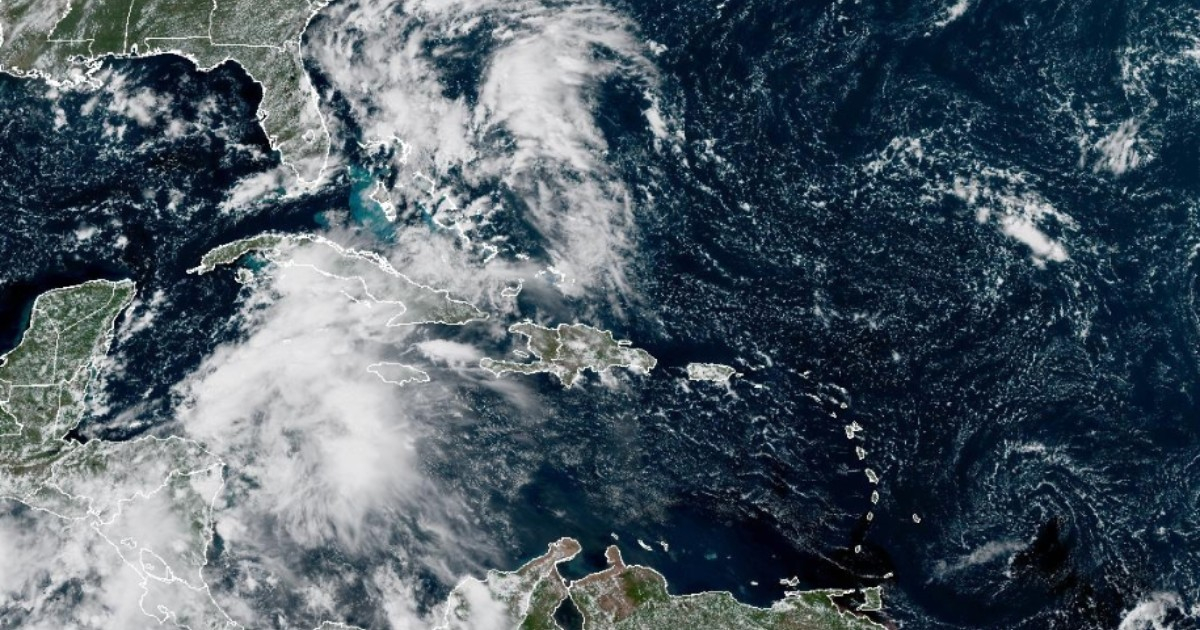
The 2026 hurricane season in the Atlantic is presenting an extraordinary scenario: as of Monday, September 21, none of the six tropical storms that have formed thus far have escalated to hurricane status.
Meteorologist Matt Devitt highlighted the exceptional nature of this calm period, noting in a Facebook post that the last time the season extended this far without a hurricane was back in 1914.
"The last time we reached this point in the season with zero hurricanes in the Atlantic was during World War I, in 1914. I've never seen anything like it," Devitt remarked.
Devitt attributed this unusual situation largely to the powerful El Niño phenomenon and the lack of instability in the Atlantic. He posed an intriguing question: "Will we conclude the season without a hurricane? Let's maintain this streak as long as we can."
Data from the U.S. National Hurricane Center (NHC) confirms that up to this Monday, storms Arthur, Bertha, Cristobal, Dolly, Edouard, and Fay have all remained at the tropical storm level.
Comparatively, this situation is particularly rare. According to the NHC, in an average season, the first hurricane typically forms between early and mid-August, and by September 19, two major hurricanes would usually have developed.
The precedent set in 1914 is remarkable on its own: historical records from the National Oceanic and Atmospheric Administration (NOAA) indicate that year ended with only one tropical storm and no hurricanes, making it the calmest hurricane season recorded in the Atlantic basin.
The calm of 2026 had already made history earlier. On September 11, the Atlantic broke the satellite era record for the latest formation of the first hurricane in a season, surpassing the previous records held by 2002 and 2013.
El Niño is seen as a major factor contributing to the low activity. NOAA explains that this phenomenon tends to increase vertical wind shear over the Atlantic, a condition that hinders the organization and strengthening of storms into hurricanes.
Due to the intensity of El Niño, NOAA revised its forecast in August, raising the likelihood to 75% that 2026 will conclude with a below-normal season. The agency anticipates between seven and 13 named storms, of which two to six might become hurricanes, and up to two could reach major intensity.
The absence of hurricanes has also drawn attention from Cuban meteorologists since August, when experts explained why the Atlantic remained unusually tranquil despite being in the climatologically busiest period of the year.
However, the tranquility experienced so far does not imply that the threat has passed. The official Atlantic hurricane season extends until November 30, leaving ample time for more intense systems to develop.
Understanding the 2026 Atlantic Hurricane Season
Why is the 2026 Atlantic hurricane season so calm?
The unusual calm is largely attributed to the strong El Niño, which increases vertical wind shear over the Atlantic, hindering the development of hurricanes.
Has there been a similar calm period in the past?
Yes, the last time a similar situation occurred was in 1914, when the season ended with only one tropical storm and no hurricanes.
What is the forecast for the rest of the 2026 hurricane season?
NOAA predicts between seven and 13 named storms, with two to six potentially becoming hurricanes, and up to two reaching major hurricane status.